
Economy August 31, 2026 03:56 AM

Turkish GDP Climbs 2.3% Year-on-Year in Q2, Growth Momentum Weakens

Quarterly expansion beats a flat line but falls short of forecasts as agriculture and information and communication drive gains; official revisions nudge prior-year figures higher

By Caleb Monroe
Share
Twitter Reddit Facebook LinkedIn

Official figures show the Turkish economy expanded 2.3% year-on-year in the second quarter, with quarter-on-quarter growth of 1.1% after seasonal and calendar adjustment. The reading was below estimates from a recent poll and marks the fourth consecutive quarter of slowing growth. Agriculture, forestry and fishing, and information and communication were the strongest-performing sectors. Authorities also revised up 2025 growth and first-quarter figures, and the government has signalled an updated medium-term programme to be released on September 7.

Turkish GDP Climbs 2.3% Year-on-Year in Q2, Growth Momentum Weakens
Summarize with
ChatGPT Perplexity Claude Grok Gemini

Key Points

  • Q2 GDP rose 2.3% year-on-year and 1.1% quarter-on-quarter (seasonally and calendar-adjusted), marking a fourth consecutive quarter of slowing growth.
  • Agriculture, forestry and fishing (13.3%) and information and communication (8.6%) were the strongest sectors, suggesting sectoral concentration in the quarter's expansion.
  • Official revisions nudged 2025 growth to 3.7% and Q1 growth to 2.6%; the government’s current medium-term programme projects 3.8% growth for 2026 and a new programme will be published on September 7.

Official statistics released on Monday show Turkey's economy grew 2.3% compared with the same quarter a year earlier, recording a slowdown for the fourth straight quarter. On a seasonally and calendar-adjusted basis, second-quarter gross domestic product rose 1.1% from the previous quarter.

A recent poll had pointed to a stronger outcome for the quarter, estimating growth at 2.9% year-on-year and projecting expansion of 3.05% in 2026. The official outturn therefore came in below that polling consensus.

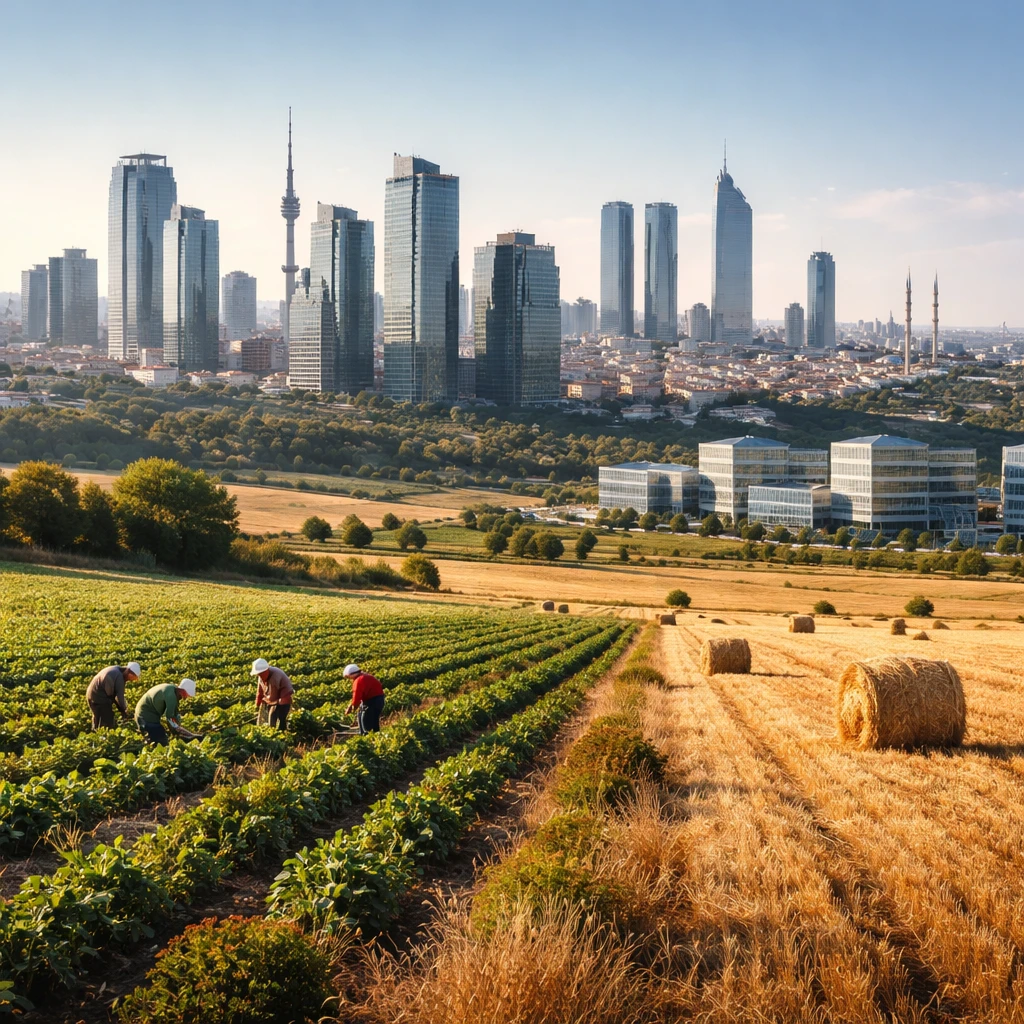
The breakdown by activity highlights that agriculture, forestry and fishing posted the most robust expansion, with growth of 13.3%. Information and communication was the next-fastest-growing sector, climbing 8.6%, according to the data.

Statisticians also revised earlier figures. Growth for 2025 was adjusted upward to 3.7% from the previously reported 3.6%. First-quarter growth was revised to 2.6% from 2.5%.

The government's standing medium-term programme currently projects growth of 3.8% in 2026. Officials have said a new medium-term programme will be published on September 7.

Taken together, the data show a continuation of decelerating momentum despite pockets of strength across specific activities. The divergence between the poll-based expectations and the official numbers, along with the modest upward revisions to past growth, frames the near-term statistical picture ahead of the government's updated medium-term programme.


Data snapshot

  • Year-on-year GDP growth in Q2: 2.3%
  • Quarter-on-quarter growth (seasonally and calendar-adjusted): 1.1%
  • Top sector performers: Agriculture, forestry and fishing (+13.3%); Information and communication (+8.6%)
  • Revisions: 2025 growth revised to 3.7% (from 3.6%); Q1 growth revised to 2.6% (from 2.5%)
  • Government projected growth for 2026 (current programme): 3.8%
  • New medium-term programme release date: September 7

Risks

  • Economic momentum is moderating for a fourth straight quarter, which could weigh on demand-sensitive sectors such as retail and broader consumer-facing industries.
  • The official outturn was below poll-based expectations, creating uncertainty about near-term growth trajectories and the assumptions used in forecasts.
  • Concentration of growth in a few sectors increases vulnerability if those sectors weaken, potentially affecting related supply chains and labour demand.

More from Economy

FSB Head Warns Frontier AI Models Could Destabilize Global Finance Aug 31, 2026 Barclays Sees Two More Fed Hikes After Warsh’s Jackson Hole Remarks Aug 31, 2026 UK Price Cap Rise Tightens Focus on Energy’s Role in Inflation Aug 31, 2026 Summer Break Ends as a Packed Economic Calendar Awaits Markets Aug 31, 2026 European policymakers leave Jackson Hole uneasy over recent U.S. financial moves Aug 31, 2026