
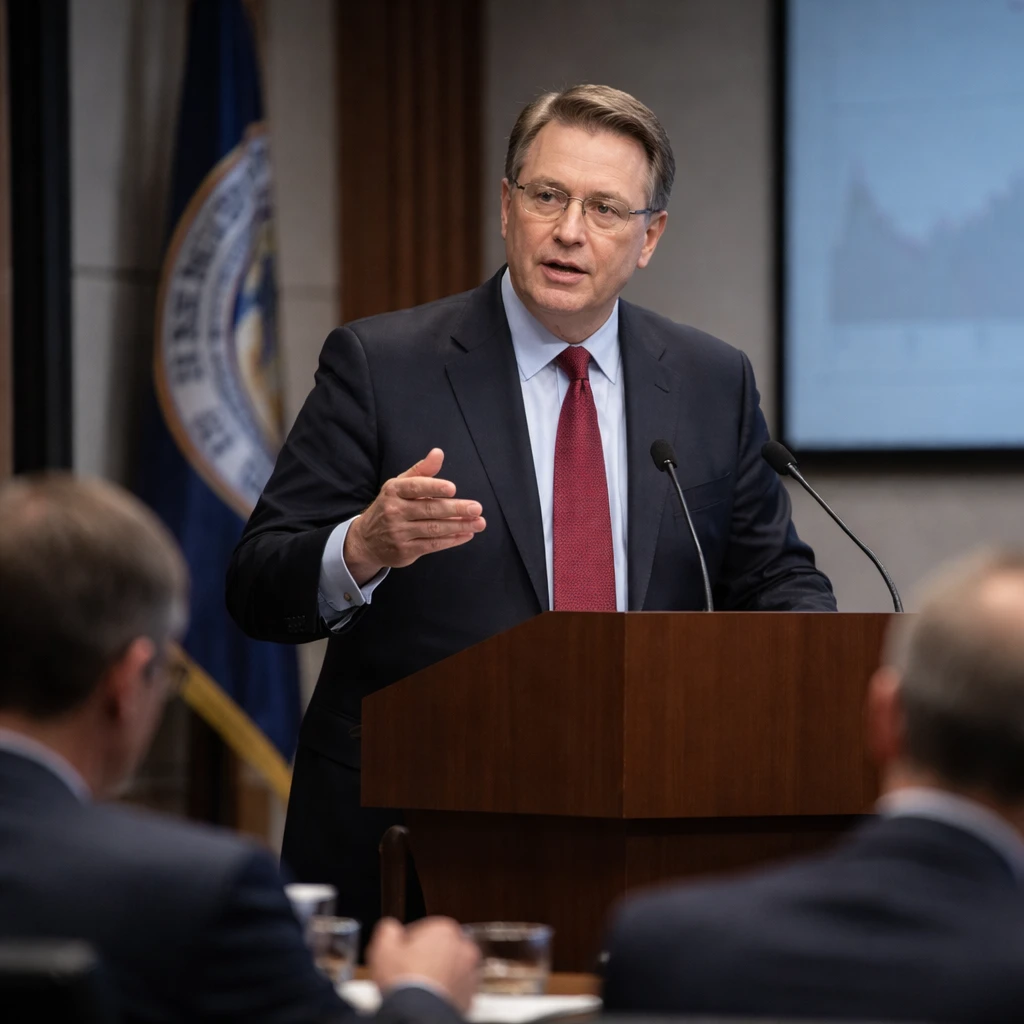
Federal Reserve Bank of New York President John Williams said on Thursday that, in his view, the recent revival of hostilities in the Middle East is unlikely to produce a prolonged surge in energy costs through the rest of the year.
Speaking at a conference hosted by his bank, Williams noted market expectations around oil and offered what he described as a sensible baseline for policymakers. "The markets still expect oil prices to come down over the next six to 12 months. I think that’s a pretty reasonable baseline," he said. He added: "I still feel kind of the fundamentals are that energy prices are likely to be around their peak and then to come down over time."
Williams was asked how the Federal Reserve might react to the recent events during the upcoming Federal Open Market Committee meeting, scheduled for July 28-29. On that topic he emphasized that the committee had not yet begun its formal analytical work. "We haven’t even started the process of doing an analysis," he said, and reminded listeners of the Fed’s policy cadence: "We meet every six weeks. This isn’t like we’re making decisions forever."
His remarks came a day after the release of the minutes from the Fed’s mid-June monetary policy meeting, where officials had held the federal funds rate target range steady at 3.5% to 3.75%. The minutes showed that while some forecasts from that gathering still had officials penciling in further rate increases this year amid inflation that remains above the central bank’s target, the committee’s communications around the outlook were cautious. The chairman at the time, Kevin Warsh, who led his first FOMC meeting, did not offer forward guidance and declined to explain how incoming data might shift his policy perspective.
Williams’ confidence that energy prices will abate followed comments he made in a television interview earlier in the week when he said he had grown more optimistic that elevated inflation would ease as energy prices fell tied to what appeared to be a resolution of the Middle East conflict. That outlook was quickly tested, however, when hostilities resumed and again threatened to disrupt flows of energy and other goods.
The restart of conflict has increased the risks that energy prices and inflation could trend higher through the remainder of the year, and that in turn raises the probability the Fed may need to lift interest rates further to control price pressures, according to the sequence Williams described.
Williams also commented on internal deliberations about the Fed’s interest rate toolkit and the central bank balance sheet. He noted that some of the leading proposals under consideration focus on allowing financial institutions to hold less emergency cash on hand. Proponents see that as a way to reduce the size of the Fed’s balance sheet, while critics worry such a change could leave banks more exposed to shocks and increase their reliance on borrowing from the Fed in times of stress.
There are voices within the Fed that question whether shrinking the balance sheet is necessary, arguing that the central bank’s primary goals of managing short-term interest rates and ensuring market liquidity have been met effectively. Williams cited the current scale of Fed holdings, which are around $6.7 trillion, as part of the context of that internal debate.
On priorities for any changes, Williams said the focus should not be on achieving a particular amount of balance sheet reduction. "I don’t think the driver of this should be" the pursuit of a specific reduction target, he said, adding: "It really should be how do we improve and make and strengthen our financial system." He emphasized that any adjustment should place the safety and stability of the banking system first.
Clear summary
John Williams of the New York Fed stated he does not expect a sustained rise in energy prices over the rest of the year despite renewed Middle East fighting, citing market expectations that oil will decline over the next six to 12 months. He noted the Fed has not begun formal analysis ahead of the July 28-29 FOMC meeting, referenced mid-June minutes that left open the possibility of further rate increases, and urged that any balance sheet policy changes prioritize banking system stability.
Key points
- Williams believes market expectations that oil prices will fall over the next six to 12 months form a reasonable baseline, and he expects energy prices to have peaked and decline over time.
- The Fed has not yet started its formal analysis for the July 28-29 FOMC meeting; Williams emphasized the committee’s regular six-week meeting rhythm and cautioned against assuming permanent decisions.
- Internal Fed discussions continue over managing the interest rate toolkit and whether to reduce the central bank’s roughly $6.7 trillion balance sheet, with Williams arguing that safety and stability of the banking system should guide any reforms.
Risks and uncertainties
- Renewed hostilities in the Middle East could disrupt energy and goods flows, which raises the risk of higher energy prices and stronger inflation - a development that would affect the energy sector and the inflation-sensitive consumer goods sector.
- Proposals to allow banks to hold less emergency cash could leave financial institutions more vulnerable to shocks and increase reliance on Fed borrowing, posing risks to the banking sector and broader market liquidity.
- If inflation were to remain elevated, the Fed may have to raise interest rates further, a scenario that would influence fixed-income markets, corporate borrowing costs, and interest-rate-sensitive sectors.
Williams’ remarks framed a cautious baseline view on energy prices while reiterating the Fed’s methodical approach to policy decisions and an insistence that financial stability should underlie any operational changes to the central bank’s toolkit.