
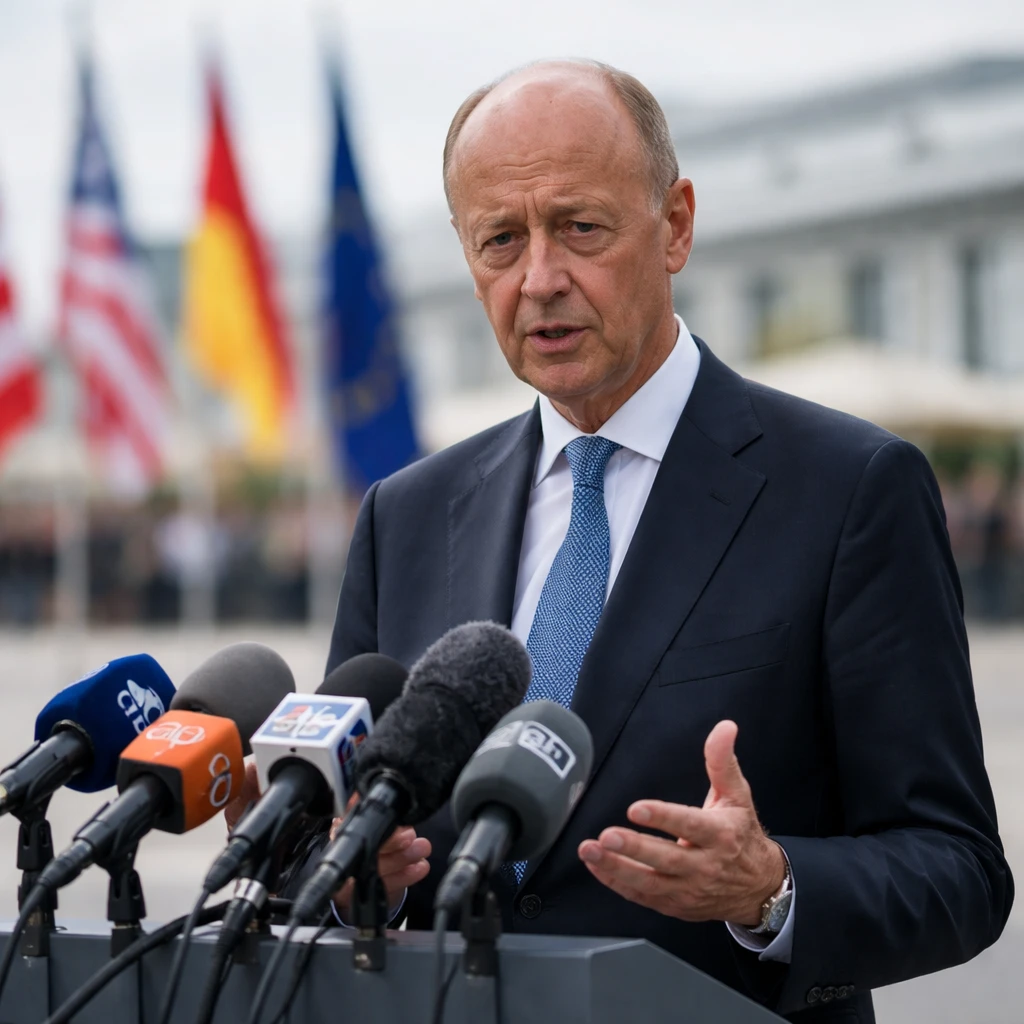
German Chancellor Friedrich Merz said on Monday that a peace agreement between the United States and Iran could contribute to stabilizing the global economy, and he emphasized that any accord should be applied to Lebanon as well.
Merz offered the remarks in the run-up to a Group of Seven meeting taking place in France this week. He framed the potential U.S.-Iran diplomatic outcome as a factor that could restore elements of international economic calm.
Alongside his comments on the U.S.-Iran matter, Merz addressed the conflict in Ukraine. He said a diplomatic opening has appeared with respect to the Ukraine war and that he plans to raise the issue directly with U.S. President Donald Trump at the summit.
On the battlefield situation, Merz described Ukraine as occupying a new position of strength. He also expressed the view that Russia is unable to achieve victory through military means.
Merz's remarks linked two distinct diplomatic developments: the prospects for a U.S.-Iran settlement - which he said should explicitly include Lebanon - and evolving diplomatic dynamics around Ukraine that he expects to discuss with the American president at the G7 meeting.
The chancellor's comments highlight his view that negotiated outcomes in the Middle East could have broader effects on global economic stability, and that developments in Ukraine present a shifting strategic picture that merits discussion among G7 leaders.
Contextual note: These statements were delivered publicly in advance of the Group of Seven gathering in France, where Merz said he intends to speak with President Trump about the situation in Ukraine. Beyond these remarks, no additional details about proposed agreements or timelines were provided by the chancellor.