
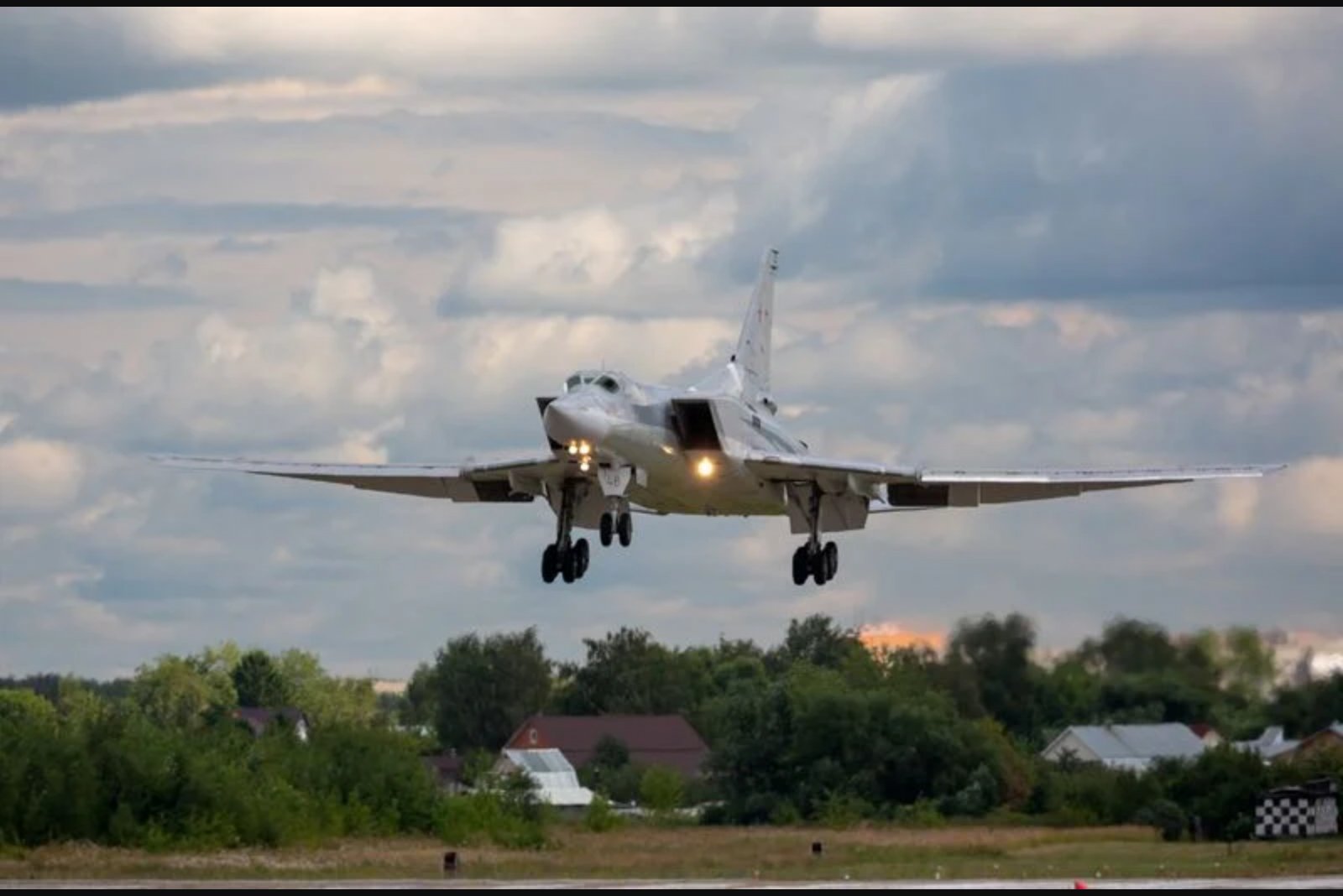
A Russian Tu-22M3 long-range bomber came down on Monday in the Irkutsk region of Siberia while conducting a training flight, officials said. The aircraft's four-person crew managed to eject and were subsequently taken to hospital with injuries that authorities described as not life-threatening.
The Defence Ministry, as cited by Interfax, reported that the crew ejected and that there was "no threat to the pilots' lives or health." The ministry added that the aircraft was flying without a combat load and that there was no damage on the ground.
Local authorities said the crash occurred near the village of Kamenka, close to the banks of the Angara river. Unverified social media footage circulated after the incident showed a plane plunging nose-first into a densely wooded area near the river, followed by a large column of smoke rising from the treeline.
Irkutsk governor Igor Kobzev said emergency teams were at the scene. Fire crews were working to extinguish a blaze caused by the crash, and all four crew members were transported to hospital with injuries described by officials as non-life-threatening.
Preliminary information available to local officials pointed to engine failure as the likely cause of the accident, Kobzev said. Authorities have not announced a final determination and investigations were ongoing.
The Tu-22M3 is a modernised variant of the Soviet-era Tu-22 supersonic bomber. The platform has been used by Russia in combat operations elsewhere, and it is capable of carrying a range of air-launched weapons. The aircraft can deliver Kh-22 air-launched cruise missiles and is also compatible with the air-launched hypersonic Kinzhal system. NATO assigns the Tu-22 the reporting name "Backfire."
Officials stressed that the aircraft was not carrying a combat load at the time of the training flight, and there were no reports of damage to infrastructure or civilians on the ground. Investigators and emergency services remained at the crash site as authorities worked to extinguish the fire and determine the precise sequence of events that led to the aircraft's descent.