
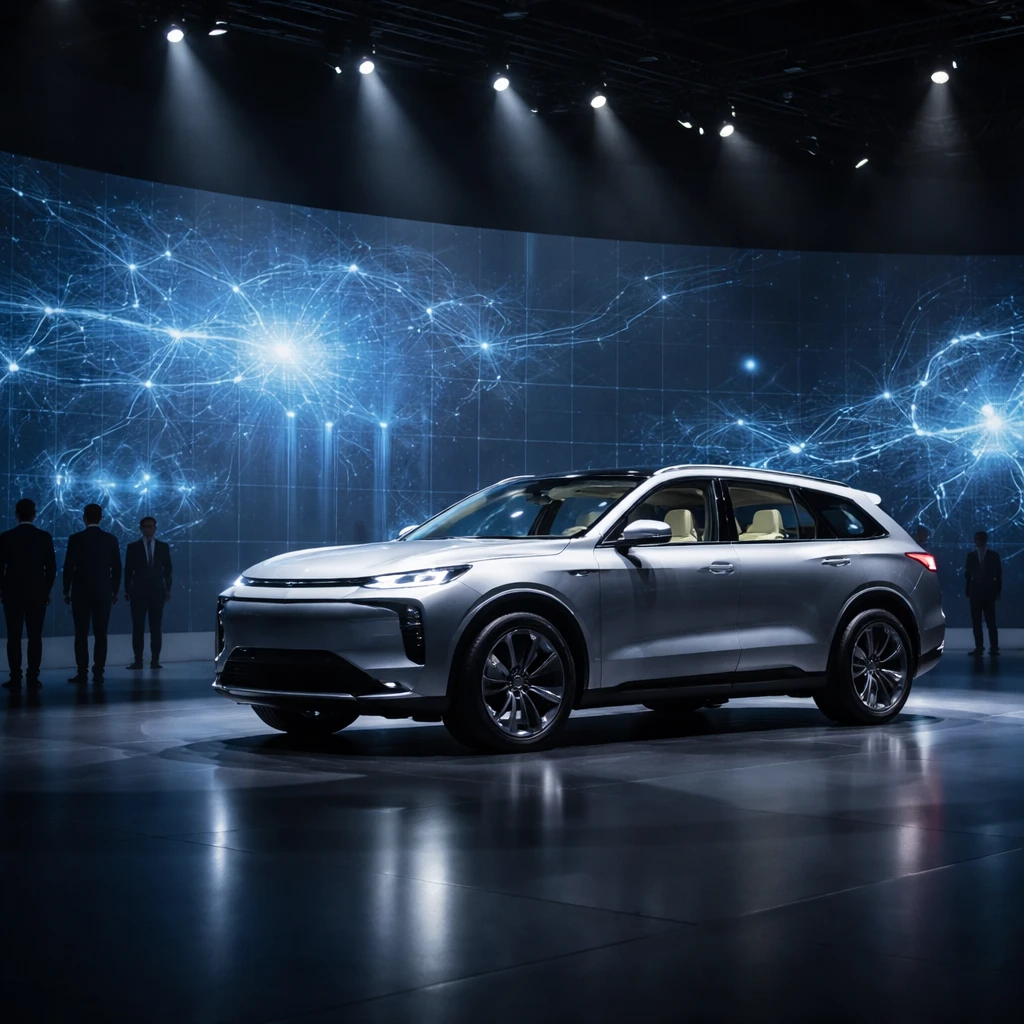
Li Auto staged a Livis Day Summit prior to the commercial introduction of the L8, presenting what Morgan Stanley described as an "embodied AI" strategy for its vehicles. The automaker framed the car not simply as transportation but as a unified platform that merges an electric vehicle, a professional chauffeur, an AI supercomputer and a life concierge into a single agent able to execute complex tasks for users.
According to Morgan Stanley, the Livis agent’s architecture rests on proprietary AI chips and a cloud-edge deployment of foundation models that the company plans to integrate into both vehicle software and hardware. Those components are designed, the bank said, to surpass human performance constraints in specific driving and task scenarios.
The combination of foundation models and drive-by-wire technology is expected to lower response times relative to human drivers and, as noted by Morgan Stanley, achieve capabilities comparable to Tesla FSD V14 by the fourth quarter of 2026. Beyond driving performance, the system is positioned to manage everyday activities such as arranging travel plans or organizing user tasks, effectively operating as an AI assistant that extends the broader Livis ecosystem.
Morgan Stanley suggested the demonstrations shown at Livis Day should help stimulate demand interest for the forthcoming L9 Livis and provide investors clearer line of sight into Li Auto’s AI objectives. The bank emphasized that near-term focus will remain on order flow for the L9 and the imminent L8, with over-the-air updates cited as additional potential catalysts for product improvement and customer experience enhancement.
Against the product-focused narrative, several institutional investors have expressed caution. HSBC reduced its price target on Li Auto on June 10, citing intensifying competition and ongoing concerns around profitability. Barclays had previously cut its target after the company reported first-quarter results. Around the same timeframe, J.P. Morgan maintained a Sell rating and Bernstein remained at Hold. Morgan Stanley described this cluster of conservative analyst positions as a headwind that has restrained substantial buying interest.
Operational metrics provided only limited relief to the more guarded fundamental view. Deliveries in May 2026 totaled 33,350 units; Morgan Stanley noted momentum in the Li i6 model but also observed that monthly volumes were still well below the stronger levels seen earlier in the year. As a result, the uplift from that model’s performance was insufficient to counterbalance the negative narrative on margins and demand.
Taken together, unresolved margin pressures, a cautious analyst community, below-trend delivery volumes and a macroeconomic backdrop characterized by tepid Chinese credit growth have kept Li Auto trading toward the lower end of its recent range. Those factors prevented the stock from participating meaningfully in the broader market’s tentative stabilization on the day.
Investors and observers cited by Morgan Stanley view upcoming order flow for the L8 and L9, and the pace and effectiveness of over-the-air software updates, as the principal near-term indicators to watch for shifts in the company’s trajectory.