
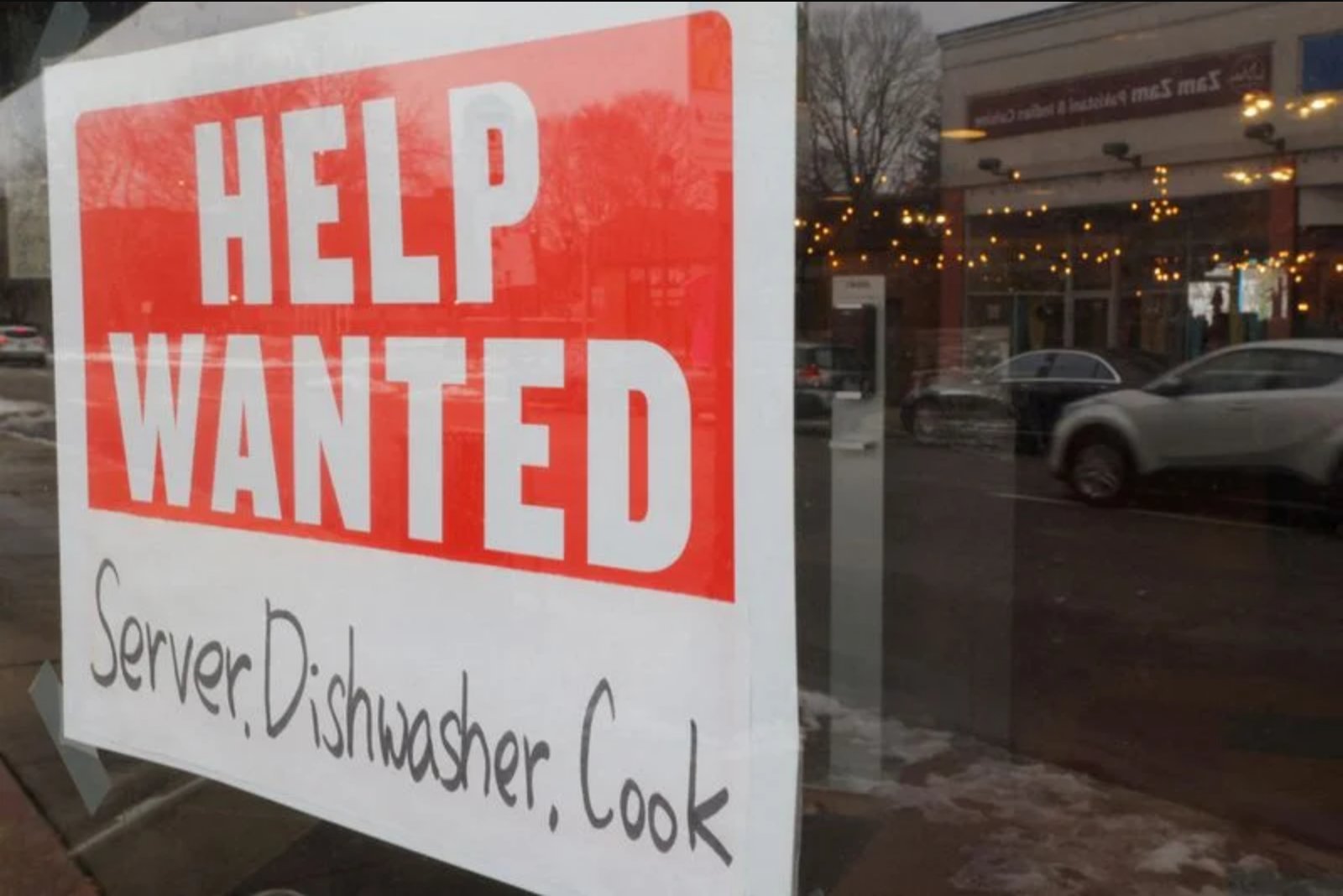
U.S. employment momentum eased in June, with nonfarm payrolls rising by 57,000, and the prior month’s figure revised down to a 129,000 increase, the Labor Department’s Bureau of Labor Statistics reported. Economists surveyed by Reuters had expected payrolls to climb by 110,000 after May’s initially reported 172,000 gain.
Despite the softer-than-anticipated advance in payrolls, the unemployment rate declined to 4.2%, a reading that market participants interpreted as evidence that the labor market retains elements of stability even as job growth moderates.
Market reaction
Financial markets moved on the data. U.S. equity futures rose, with S&P E-minis moved higher and were last up 27.5 points, or 0.37%. Treasury yields eased, with the benchmark U.S. 10-year note down 1.4 basis points to 4.461%. The dollar index weakened and was last down 0.78% to 100.61.
What the data shows
The headline payrolls figure of a 57,000 increase indicates a clear slowdown from the stronger monthly averages observed earlier in the year. May’s downward revision to 129,000 from the previously reported 172,000 adds to the view that hiring has lost some steam. Still, the fall in the unemployment rate to 4.2% and wage growth remain part of the broader labor picture that policymakers and investors watch closely.
Commentary from market participants and strategists
Responses from economists and money managers highlighted the ways the data could influence Federal Reserve policy and investor behavior.
BRIAN JACOBSEN, CHIEF ECONOMIST, ANNEX WEALTH MANAGEMENT, MENOMONEE FALLS, WISCONSIN: "(Fed Chairman) Warsh can wipe his brow. The labor market isn’t overheating. Inflation expectations are moderating. It means the Fed can take the whole summer off it wants as it won’t have to hike or cut."
ROBERT PAVLIK, SENIOR PORTFOLIO MANAGER, DAKOTA WEALTH IN FAIRFIELD, CONNECTICUT "The weaker jobs number sort of speaks to the uncertainty that’s been going on because of the war involving the U.S., Israel, and Iran and you can see, you can understand why there’s been some difficulty in new hirings. I don’t think the economy is so weak that you have to start worrying about it. But rate cuts with lower oil prices, I think, is a good environment for stock investors right now."It speaks to the fact that the market has taken this information as another step towards possibly getting a rate cut later this year. You get a weaker jobs number, which implies that the economy isn’t so strong, meaning that the Fed is less likely to raise rates and more likely to maybe cut rates going forward.It makes borrowing cheaper and it makes doing business less expensive and so the stock market welcomes the weaker data because it might lead to rate cuts. "The consumer discretionary area, which is having a difficult time because of higher energy prices. It could also continue to benefit the technology space because so many of the hyperscalers are borrowing money and then trying to build out data centers and projects."
SHAWN SNYDER, ECONOMIC STRATEGIST, POTOMAC FUND MANAGEMENT, BETHESDA, MARYLAND: “With the Federal Reserve considering rate hikes, this is not necessarily a bad report for the stock market. Lower bond yields would likely be welcomed by technology investors, who have become increasingly concerned about the rising cost of the AI buildout. “The headline gain of 57,000 jobs is clearly disappointing, but it follows a familiar pattern. In 2024 and 2025, job growth averaged about 124,000 per month between March and May before slowing to an average of just 34,000 jobs in June. That pattern was one of the reasons the Fed opted for a 50 basis point insurance rate cut in September 2024. Ironically, today’s report may be one reason the Fed does not deliver insurance rate hikes at the September FOMC meeting.
“This report alone is not enough to take a rate hike off the table, but it may be enough to push the timing out. “The most surprising element of the report was the loss of 61,000 jobs in the leisure and hospitality sector. That is the largest monthly decline since December 2020 and runs counter to expectations that the sector would receive a boost from the World Cup.”
MARK HACKETT, CHIEF MARKET STRATEGIST, NATIONWIDE INVESTMENT MANAGEMENT GROUP, PHILADELPHIA: "Slightly weak, but the numbers have been somewhat unpredictable and volatile lately. The big delta versus consensus was leisure and hospitality, which many thought would jump because of the World Cup. Market reacting slightly positive because of the dovish implications for the Fed, but the relatively modest reaction is evidence that the payroll report is losing its grip on investor attention."
PETER CARDILLO, CHIEF MARKET ECONOMIST, SPARTAN CAPITAL SECURITIES, NEW YORK: “What we’re seeing here is a report that certainly was a little bit cooler than market expectations and certainly cooler than we were looking for, but with the unemployment rate dropping to 4.2% and yearly hourly wages at 3.5%, this could be considered a Goldilocks report. “It reinforces the notion that the Fed has to fight inflation, but not an overly heating jobs market. It buys time to hold off on raising interest rates at least in July.” “(A rate hike) is still on the table, but I am looking more towards the first quarter of 2027. But the market seems to be betting for at least one rate hike sometime this year that probably could take place in the last quarter of the year.
“Yesterday, at the ECB Forum, Chief Warsh was very clear. He did not commit himself to hiking rates, but he did say inflation is high, and oil prices have come down. So I think he’s going to hold off and probably begin to look at a different metric of measuring inflation.” “In terms of the markets today, we’re seeing that they’re responding on a positive side. This is a good report that will boost investor optimism.”
KAY HAIGH, GLOBAL HEAD AND CIO OF FIXED INCOME AND LIQUIDITY SOLUTIONS, GOLDMAN SACHS ASSET MANAGEMENT, LONDON (via email): “Ongoing labor market stability likely leaves the FOMC focusing on upcoming inflation data to determine its appetite for tightening policy. We still see a path for the Fed to stay on hold for the rest of the year, however any further upside surprises to inflation could convince the committee to hike sooner rather than later.”
Sector and market implications
Strategists highlighted several sectoral effects and market dynamics stemming from the report. Technology stocks, in particular, could benefit if lower bond yields ease borrowing costs for hyperscalers and other capital-intensive companies expanding data centers and other projects. Conversely, the leisure and hospitality sector showed unexpected weakness, with a reported loss of 61,000 positions in June, a drop noted as the largest monthly decline since December 2020 and surprising given expectations of a boost from the World Cup.
The mix of a slowing payrolls trend alongside a still-low unemployment rate shapes the debate over the Federal Reserve’s next moves. Several commentators said the report makes near-term rate hikes less likely while keeping the possibility of cuts later in the year on the radar for some investors.
Conclusion
June’s employment report offered a nuanced picture: weaker headline job gains and a notable sectoral decline in leisure and hospitality set against a falling unemployment rate. Markets reacted modestly, pricing in slightly more accommodation from policymakers while awaiting upcoming inflation readings that strategists said will be critical for the Fed’s course. The data has prompted a range of interpretations from panelists and may influence the timing of future monetary policy moves, even as the overall labor market retains signs of resilience.