
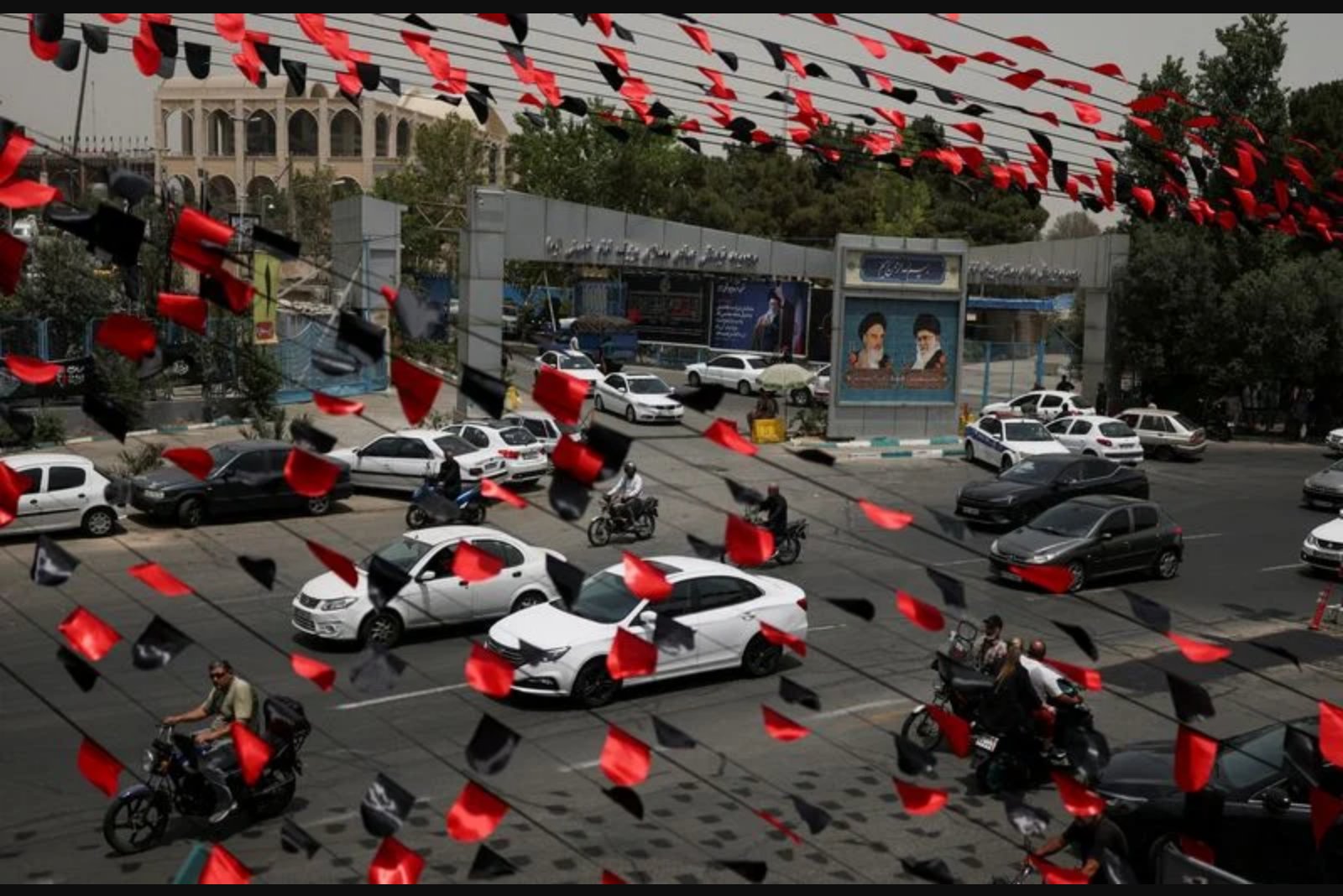
DUBAI, July 2 - Iran's theocratic leadership has set in motion a week-long sequence of public mourning and funeral processions for Ayatollah Ali Khamenei, framing the events as both an expression of national devotion and proof of the Islamic Republic's sustained revolutionary spirit. The supreme leader was killed in U.S. and Israeli strikes - described as the first attacks of the war - and state authorities plan to begin ceremonies over the coming weekend in Tehran, followed by large processions next week in Qom and Mashhad and additional ceremonies in Iraq.
In Qom, the city central to Iran's Shi'ite clerical establishment, Ayatollah Mohammad Saidi, the Friday prayer leader, told state media that the expected mass turnout will amount to "another referendum for the Islamic Republic." State organisers are treating the gatherings as a test of popular backing and are actively preparing to mobilise millions of people to attend.
Authorities have announced measures to facilitate attendance, arranging transport, accommodation and food to encourage large numbers of supporters to travel to mourning events. Their stated aim is to affirm the strength of the theocratic state after what officials describe as an existential conflict that ended with the death of the country's top leader.
The killing of Khamenei, and the succession of his son Mojtaba as Iran's third supreme leader in the midst of a confrontation with the country's principal adversaries, is being portrayed by state officials as a watershed moment in the Islamic Republic's 47-year history. Reports indicate Mojtaba was dangerously wounded in the strike that killed his father, and there has been no release of any new imagery of him since the outbreak of the war.
Despite official displays of unity, analysts cited by officials say public support for the Islamic Republic has become fragile. Many Iranians are reportedly weary of prolonged economic pain under sanctions and resentful of political repression exercised in the name of a 1979 revolution that most of the country's young population did not experience directly. During protests in December and January driven by inflation, demonstrators chanted for the death of Khamenei, and the state suppressed those demonstrations using lethal force, shooting thousands of protesters, according to accounts referenced by officials.
Following initial reports of the supreme leader's death in the early days of the war, some neighbourhoods in Tehran recorded outbursts of cheering from behind windows and apartment blocks. But as the official funeral preparations take shape, Tehran has shifted into a tense and subdued atmosphere, a stark contrast to the huge, emotionally charged burial of Ayatollah Ruhollah Khomeini decades earlier, when millions rushed the funeral procession and chaotic scenes unfolded as crowds overwhelmed security efforts.
Some residents are choosing not to participate in the state-organised events. Samira, 35, whose husband runs a restaurant in Tehran, said her family planned to leave the capital for the week and avoid funeral gatherings, describing the city as feeling as if "life has stopped" and noting the presence of Basijis - the volunteer militia associated with the Revolutionary Guards.
Religious symbolism and public displays
Within Iran's system of governance, the supreme leader serves not only as head of state and leader of the revolutionary movement but is also presented as the earthly representative of Shi'ite Islam's 12th imam, a religious figure who is believed to have gone into occultation. Khamenei's death as a result of an enemy attack resonates with Shi'ite traditions of martyrdom and mourning, customs that feature prominently in processions where participants don black and engage in ritualized mourning practices.
Evidence of that symbolism is visible across Iranian cities, where black funeral flags hang above streets and mourning ceremonies have invoked the martyrdom of Shi'ism's third imam, Hossein. State workers have been installing posters in Tehran that depict the late Khamenei with a raised revolutionary fist and images supporting the new leader, Mojtaba.
For staunch supporters of the Islamic Republic, the language of martyrdom is deeply felt. Mohsen, 24, a Basij member in Tehran, said these days are among the hardest of his life and likened the nation's current mourning to the grief that followed Khomeini's death, as recounted by his father.
Planned schedule and logistics
Officials and visiting foreign dignitaries, including representatives from Russia and China, are scheduled to offer condolences at events on Friday. The state has outlined a multi-city funerary tour: on Saturday Khamenei's remains will be taken to a Tehran mosque to begin a national procession; on Monday authorities plan a major central Tehran procession; on Tuesday the remains will be taken to Qom for ceremonies; on Wednesday ceremonies are planned in Iraq's shrine cities of Najaf and Kerbala; and the burial is scheduled for Thursday in Mashhad, near the tomb of Imam Reza.
The bodies of the supreme leader's daughter, son-in-law and granddaughter, as well as the widow of the new leader, his son Mojtaba, who were all killed in the same strike, will be carried alongside Khamenei's remains during portions of the tour, according to official plans.
To support the expected influx of mourners, hotels are reporting discounts, and public spaces including schools, mosques and sports halls have been prepared to house attendees. Bus and rail services are being redirected to serve principal events, and temporary airspace restrictions will be in place over Tehran and other cities to manage security.
Security posture and rhetoric
Security will be stringent at funeral events, with authorities warning of a forceful response should U.S. or Israeli strikes resume. The government publicly frames the mass ceremonies as both a display of internal cohesion and a message of deterrence. Hossein Kheiri, 63, a veteran of the 1980-88 war with Iraq, expressed that sentiment while standing under a poster of Khamenei in Tehran, saying, "We are showing our power to America and others in our own way."
As Iran moves through this period of national mourning, state institutions are marshaling religious symbolism, logistics and security measures to project continuity and resilience. At the same time, public ambivalence and prior episodes of unrest underscore the uncertainties facing the regime during this pivotal moment.
Note: This report presents the official schedule and public statements as conveyed by Iranian authorities and reported accounts. Some details about individuals' conditions and appearances were described by officials and witnesses amid ongoing developments.