
Economy July 15, 2026 10:03 AM

IMF Strategy Director Warns Governments to Guard Price Stability as Uncertainty Mounts

Christian Mumssen urges credible fiscal and monetary policy and greater resilience to supply shocks amid simultaneous structural and technological shifts

By Priya Menon
Share
Twitter Reddit Facebook LinkedIn

The International Monetary Fund's newly appointed director of strategy, Christian Mumssen, told policymakers they must sustain credibility in fiscal and monetary policy to preserve price stability as the global economy faces overlapping shocks, rapid technological change and a fracturing geopolitical order.

IMF Strategy Director Warns Governments to Guard Price Stability as Uncertainty Mounts
Summarize with
ChatGPT Perplexity Claude Grok Gemini

Key Points

  • IMF strategy director Christian Mumssen called for credible fiscal and monetary policy to preserve price stability amid continuing global uncertainty - Sectors impacted: public finance and fixed-income markets.
  • Mumssen highlighted multiple recent shocks - pandemic, cost-of-living crises, trade frictions and wars - and cautioned that frequent supply disruptions threaten price stability - Sectors impacted: supply chains, manufacturing, and commodities.
  • Rapid advances in artificial intelligence and digital finance require policy attention to ensure the technological shift supports inclusive growth while geopolitical fragmentation complicates international cooperation - Sectors impacted: technology and financial services.

Overview

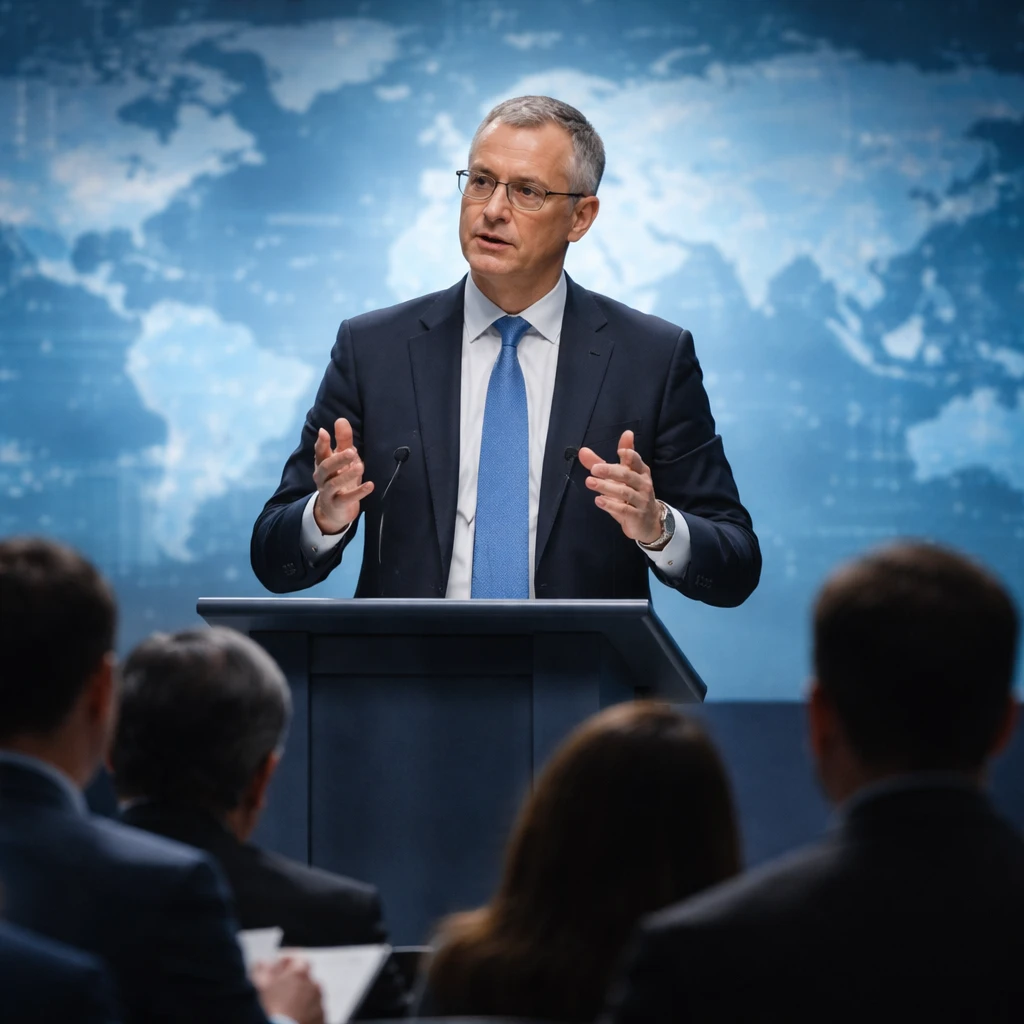
Christian Mumssen, the International Monetary Fund's new director of strategy, urged government officials on Wednesday to preserve credibility in fiscal and monetary frameworks to keep inflation under control while global economic uncertainty persists. Speaking at the Atlantic Council, Mumssen framed recent years as a sequence of major shocks that have strained economies and policy frameworks.

Recent shocks and current context

He cited a string of disruptive events that have affected the global outlook - the coronavirus pandemic, cost-of-living crises, trade frictions and wars in Ukraine and the Middle East. On the technological front, he noted rapid advances in artificial intelligence and digital finance. Geopolitically, he said that "the post-war global order is giving way to a more fragmented, multipolar world."

Resilience and uncertainty

Mumssen acknowledged the resilience the global economy has shown in response to these pressures, but he warned that the combination and scale of these shifts have produced "an exceptionally high degree of uncertainty - and we should expect the unexpected."

Policy priorities

He urged governments to maintain careful stewardship of public finances and debt while attending to inflation, jobs and growth. Mumssen warned that price stability is likely to be challenged by recurring supply disruptions, and he called for steps to enhance resilience to such shocks and to global political tensions.

Technology and inclusion

On technology, Mumssen stressed the need to respond to rapid technical changes so that the quick pace of AI-driven transformation contributes to inclusive growth. He described the current situation as distinct because multiple large-scale transformations are occurring simultaneously.

International cooperation at risk

He concluded with a caution on global governance: "The problem is: just when massive structural challenges and a new technological revolution would call for greater international cooperation, the global governance system is fragmenting," Mumssen said.


This account reflects Mumssen's remarks and the policy priorities he outlined at the Atlantic Council event.

Risks

  • Recurring supply disruptions may undermine price stability and affect sectors reliant on global supply chains, including manufacturing and logistics.
  • A fragmenting global governance system could impede coordinated responses to massive structural challenges, increasing uncertainty for trade-exposed industries and international finance.
  • Rapid technological change, particularly in AI and digital finance, may accelerate disruption without policy measures to ensure inclusive benefits, affecting labor markets and financial-services firms.

More from Economy

IMF Strategy Chief Calls for Policy Credibility to Safeguard Price Stability Jul 15, 2026 House Republicans unveil $95 billion budget plan to fund defense and parts of Trump’s SAVE Act Jul 15, 2026 Bank of Canada Keeps Policy Rate at 2.25% as Soft Patch Shows Signs of Recovery Jul 15, 2026 U.S. Producer Prices Slip in June as Goods and Energy Costs Drop Jul 15, 2026 Williams Says Elevated Inflation May Have Peaked, Expects Gradual Decline Jul 15, 2026