
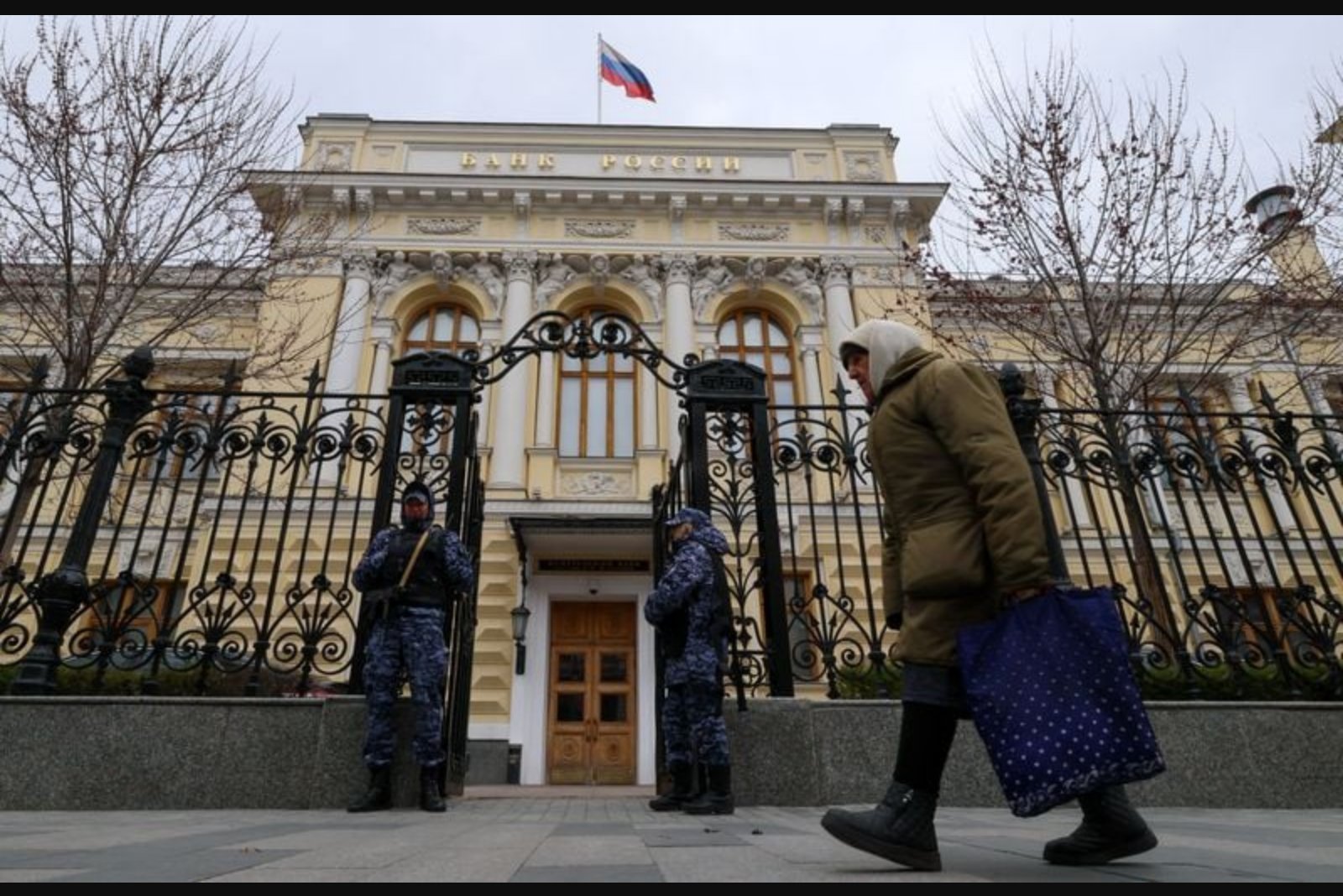
A two-page European intelligence assessment prepared in recent weeks warns that Russia’s banking system is vulnerable to a severe shock as lenders have been tasked with shouldering much of the financial burden of the country’s war economy. The document, circulated to inform European officials about the condition of Russian banks, underscores the potential for a banking crisis if stresses intensify or further Western curbs are imposed.
The report, titled "Note on the probability of a banking crisis in Russia in 2026," describes a situation in which banks have been driven to provide preferential lending to defence companies, regional state-backed projects and households. Those actions, it says, have increased the volume of credit that may ultimately prove unrecoverable. State-backed credit programmes, loan restructurings and ad hoc government support have, in the report’s assessment, masked the true scale of vulnerability within the sector.
The intelligence note estimates that roughly 10% of corporate loans have become doubtful, a marked deterioration from the position in 2024. It also records that some large banks reported retail non-performing loan ratios as high as 15% in 2025. Household stress is illustrated by the report’s finding that more than 500,000 Russians filed for bankruptcy in 2025, an increase of almost a third compared with the previous year, and that state-driven programmes encouraged in excess of 13 million citizens to hold at least three loans at the same time.
These credit pressures come as official forecasts for growth have been trimmed. The Economy Ministry reduced its gross domestic product growth projection for 2026 to 0.4% from a prior forecast of 1.3%, and for 2027 to 1.4% from 2.8%, reflecting the fiscal strain of a four-year war and the resulting drain on state coffers.
European diplomats are preparing a new sanctions package, the 21st by the union, which they hope to finalise in July. The measures under discussion include additional restrictions on banks and cryptocurrency networks, and would also target drone production, oil traders and refiners. The proposed measures would place scores more individuals and entities on the sanctions list and add nearly 90 lenders to the roll of blacklisted banks, bringing the total to more than 100 - more than half of the banks in Russia that maintain international connections, according to the report.
Central bank officials have pushed back on the idea that the situation is critical. Russian central bank Deputy Governor Filipp Gabunia said recently that "vulnerabilities in the financial sector are not critical," pointing to what he described as the highest level of capital buffers in three years. He also said corporate bad loans stood at around 4%, a level that had not shifted in the last year and a half.
Independent analysts and some market commentators offer differing takes. The report quotes a consultant who argued that the state-dominated structure of the economy and continued defence spending reduce the chance of an immediate systemic collapse, noting that defence expenditure has helped keep unemployment low and wages elevated. At the same time, the intelligence assessment cautions that an ambitious additional package of sanctions aimed at banks could be the kind of economic shock that triggers an acute crisis by exposing the hidden loan losses and the erosion of asset quality.
There are already observable strains in the funding profile of banks. Central bank data cited in the intelligence note show that cash held outside the formal banking system has expanded by more than 17% year-on-year, rising to in excess of 19 trillion roubles, equivalent to approximately $243 billion so far this year. The accumulation of currency and cash outside banks puts pressure on financial institutions that rely on deposits to finance lending operations.
Senior executives at major banks have acknowledged the persistent impact of sanctions. Taras Skvortsov, chief financial officer of Russia’s largest bank, said that the stress experienced when sanctions were first introduced in 2022 was significant but that, by 2026, clients and institutions had adapted. "Many clients of the sanctioned banks do not even know about sanctions," he said, adding that the sector had grown accustomed to operating under restrictive conditions.
At the same time, lenders are taking steps to bolster their resilience. Russia’s second-largest bank, VTB, said its management plans to increase reserves to protect against higher energy costs and potential loan losses, a move presented as precautionary in light of the broader pressures described in the intelligence assessment.
The intelligence note highlights a shift in how the state has used the banking system to prop up economic actors. With state resources stretched by the prolonged conflict, authorities have relied more heavily on banks to channel subsidised credit to defence contractors, homeowners and regional projects. That reliance, the report warns, has effectively transferred fiscal and economic risk onto banks’ balance sheets, creating concentrations of risk that are difficult to fully assess given government support measures that can obscure underlying asset quality.
While the European Union has imposed broad sanctions aimed at curbing profits, international money movements, and trade in energy and defence-related goods, the note notes that Russia has demonstrated resilience to many prior measures. The report also points out enforcement challenges within Europe, where coordinating and implementing sanctions across member states can be complicated by the lack of a single enforcement authority.
The intelligence assessment frames the present condition as precarious: it says the current arrangement produces the appearance of a functioning, dynamic economy while concealing forces that could produce an "explosive situation" if subjected to a sufficiently large shock. Policymakers facing decisions about further restrictions will weigh that assessment as they consider whether additional targeted measures could unintentionally precipitate a banking crisis by stripping away the supports currently hiding banks’ weak positions.
What this means for markets and sectors
- Banking sector - heightened sensitivity to further sanctions and to deposit flight into cash.
- Defence and state-backed projects - increased reliance on bank financing raises concentration of credit risk.
- Household finance and real estate - rising retail non-performing loans and multiple-loan household customers point to consumer stress.