
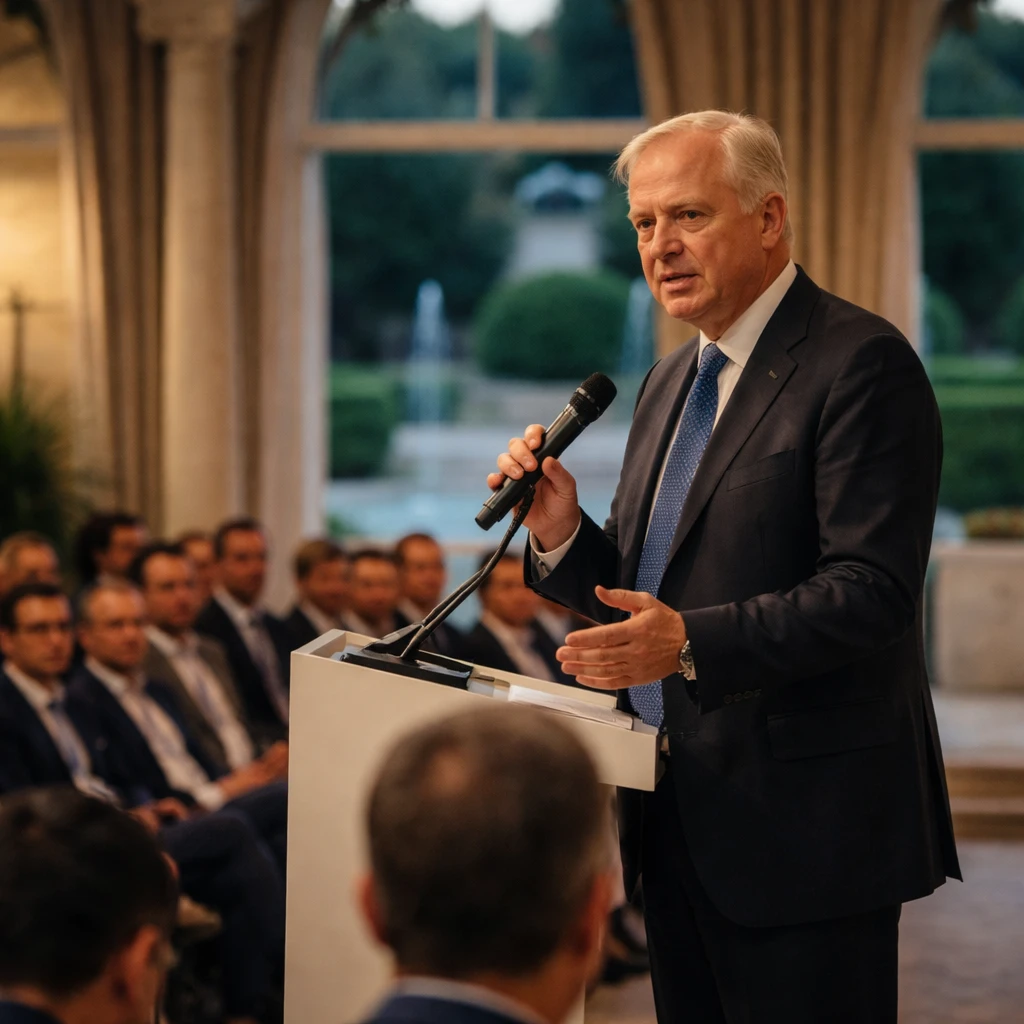
European Central Bank Governing Council member Olli Rehn said the conflict in the Middle East is simultaneously driving inflation higher and slowing economic growth, creating stagflation-like dynamics, though not on the scale of the 1970s.
Rehn made the comments during an interview with Bloomberg Television in Sintra, Portugal. He described the recent energy shock as having stagflationary characteristics, but stressed it is not as deep or broad as the historical episode of the 1970s. He added that he does not anticipate significant second-round inflation effects and judged that inflation expectations remain anchored.
The ECB is entering a critical juncture with its July meeting little more than three weeks away. Officials are assessing whether another rate increase is warranted after a prior hike this month. That earlier move had been widely expected following a surge in oil prices and euro-zone inflation tied to fighting in Iran, but subsequent signs that a peaceful resolution could emerge have moderated expectations for further tightening.
Rehn emphasized that the decisions of monetary policymakers will be guided by incoming data. He noted that if a ceasefire in Iran holds, price pressures would be lower, but he also warned that geopolitical uncertainty is likely to persist.
Summing up his stance, Rehn said the current outlook highlights the need for the ECB to take policy choices on a meeting-by-meeting basis, reflecting evolving data and geopolitical developments. Officials under President Christine Lagarde, he said, are focused on allowing fresh information to shape the course of policy rather than committing to a predetermined path.
Context provided in the interview
- Rehn described the recent energy shock as stagflationary in nature, though not as severe as the 1970s.
- He said he does not see major second-round effects and that inflation expectations remain anchored.
- Rehn noted that price pressures would ease if an Iran ceasefire holds, but cautioned that geopolitical uncertainty will remain.