
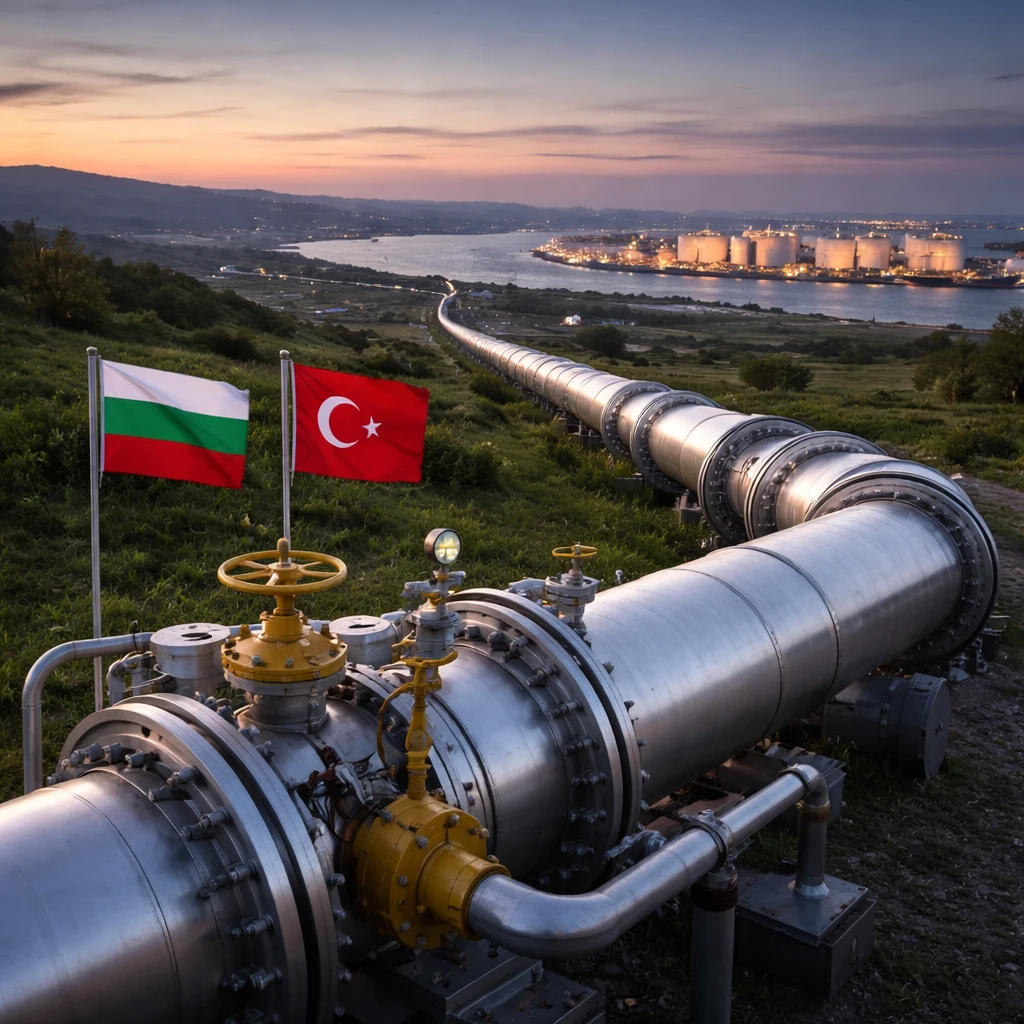
Bulgaria's state gas supplier Bulgargaz and Turkey's state-owned gas company BOTAŞ formalized a protocol today that freezes the current terms of their long-term gas contract for a 15-month period, the Bulgarian government press office said.
The move pauses the present contractual conditions while the two companies renegotiate terms to reflect prevailing market conditions. Under the protocol, Bulgargaz will pay only for the gas import capacity it actually uses - and will do so under improved terms rather than the pricing and payment structure set out in the existing contract, the statement said.
The agreement follows a 13-year deal struck in 2023 that provided Bulgaria with access to Turkey's gas network and liquefied natural gas terminals as a means of diversifying supply routes. Prior to that deal, Bulgaria had been nearly entirely dependent on Russian gas.
According to the government statement, the protocol was signed after discussions between Bulgaria's Prime Minister Rumen Radev and Turkish President Recep Tayyip Erdoğan held ahead of a NATO summit in Ankara. The leaders agreed that both countries have a shared interest in making full use of the maximum natural gas transmission capacity.
The press office said the two sides will continue to work on renegotiating the contract between Bulgargaz and BOTAŞ to align the agreement with current market conditions during the 15-month period.
In addition to energy-sector matters, the leaders noted a positive trend in bilateral trade, with turnover reaching 9 billion ($10.30 billion). They discussed prospective projects of mutual interest, and Bulgaria signaled its interest in attracting more high-value-added Turkish investment, the statement added.
Context and next steps
The protocol establishes a temporary framework governing payments and capacity usage while the companies negotiate a longer-term arrangement. The duration of the freeze, 15 months, provides a defined interval for these discussions. During that time, payment obligations for import capacity will be limited to capacity actually utilized by Bulgargaz and will be governed by improved terms relative to the current contract.
Diplomatic and economic signals
The signing took place after a bilateral meeting between the two countries' leaders on the sidelines of a NATO summit in Ankara. The joint statement emphasized both countries' interest in maximizing transmission capacity and highlighted the growth in trade turnover to 9 billion ($10.30 billion). Bulgaria also expressed a desire to attract more Turkish investment focused on high value-added activities.
All details in this report are drawn from the Bulgarian government's press office statement and the companies' announced protocol. No additional facts have been added.