
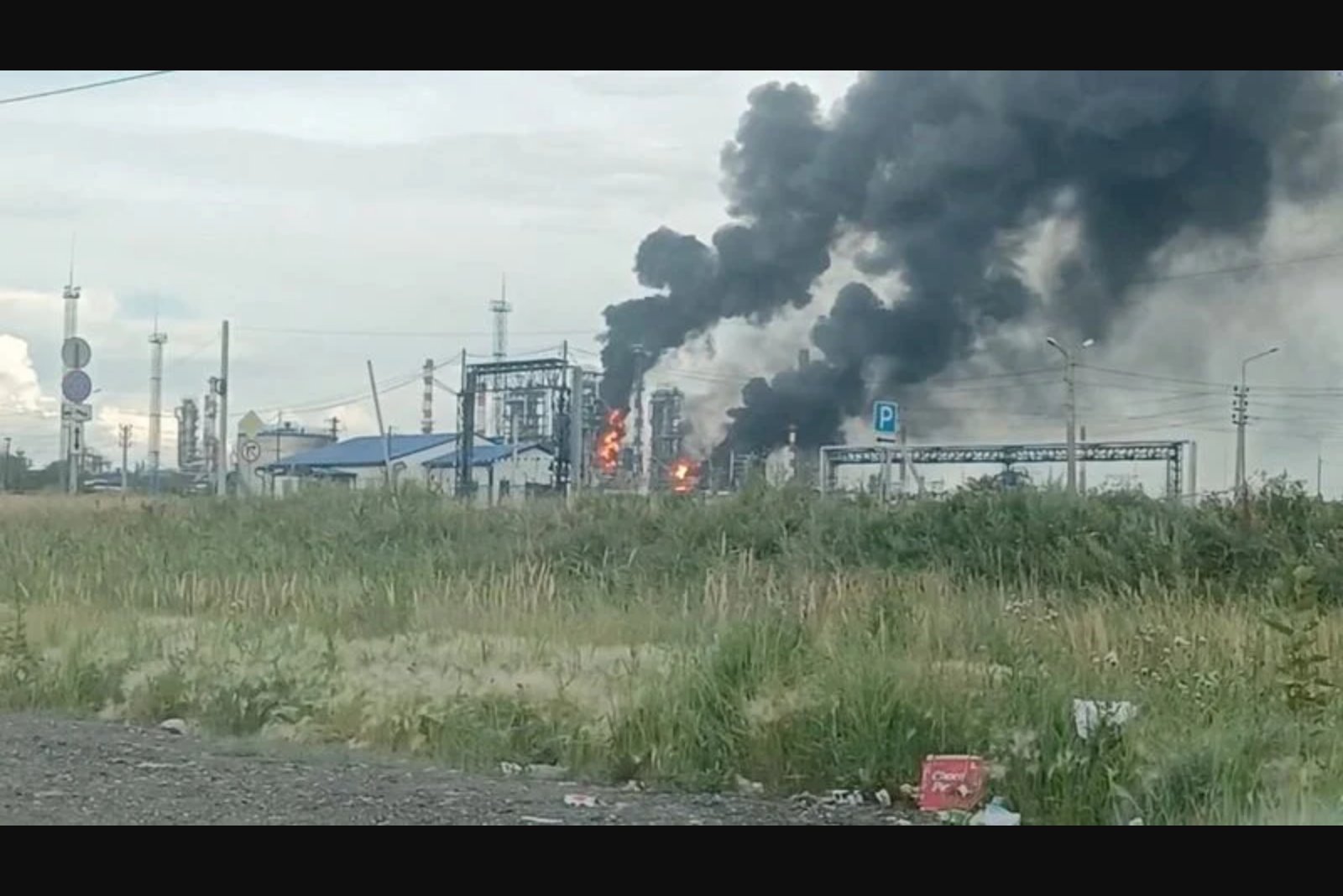
July 6 - Ukrainian unmanned aerial systems targeted the Omsk oil refinery in Siberia on Monday, an attack Kyiv described as one of the longest-range carried out during the conflict. Regional authorities in Russia confirmed a strike on the facility and reported a resulting fire.
The Omsk refinery, operated by Gazprom Neft, is located approximately 2,700 km (1,700 miles) from territory controlled by Ukraine and lies close to Russia's border with Kazakhstan. Ukraine's General Staff said the strike produced a fire at the site, while Vitaly Khotsenko, governor of the Omsk region, acknowledged the attack and said Russian air defences destroyed most of the drones involved.
Khotsenko added there were no casualties and that emergency services were working at the scene, posting the information on the Russian messaging app MAX. Officials did not provide an immediate assessment of the extent of damage to refinery infrastructure or production capacity.
In a televised nightly address, Ukrainian President Volodymyr Zelenskiy called the operation "an important achievement for the Armed Forces of Ukraine...Siberia, too, is now within reach of Ukrainian precision strikes." The Ukrainian defence technology company Fire Point said its upgraded FP-1 drones executed the attack, calling it a record for strike drones "not only in Ukraine, but worldwide. Prior to this, the Omsk oil refinery had remained out of reach for Ukrainian drones."
Fire Point CEO Iryna Terekh noted that "The Omsk refinery had remained one of only two refineries in the top 10 that had never been hit by Ukrainian drones." She identified the other untouched facility as the Angarsk Petrochemical Company in Irkutsk Oblast, saying both are located beyond the Ural Mountains.
Sources cited in reporting on the facility's throughput indicated the Gazprom Neft-owned Omsk refinery processed around 23 million metric tons last year, equivalent to roughly 460,000 barrels per day. The refinery had been considered an important asset to help alleviate fuel shortages that have emerged across Russia's wide geography following earlier strikes on energy infrastructure.
The strike on Omsk is part of a broader escalation in Ukrainian attacks on Russian oil-related targets. Alongside the Omsk incident, Ukraine's military reported strikes overnight on the Ust-Luga and Vysotsk ports on the Baltic Sea, which handle oil exports, as well as on targets in the Kaluga and Yaroslavl regions, according to statements from local governors.
Russian-installed authorities in Crimea reported that a strike on the port of Kerch killed one woman and that Sevastopol, the peninsula's largest city, experienced a blackout as a result of related incidents.
Context and operational notes
The attack marks a notable operational reach for Ukrainian strike drones, according to the statements released by Kyiv and by Fire Point. Russian officials say most drones were intercepted by air defences, and there are no confirmed casualty figures beyond the single fatality reported in Crimea.
The full implications for refinery output, regional fuel flows and the broader oil logistics chain remain unclear pending official damage assessments and repair timelines.