
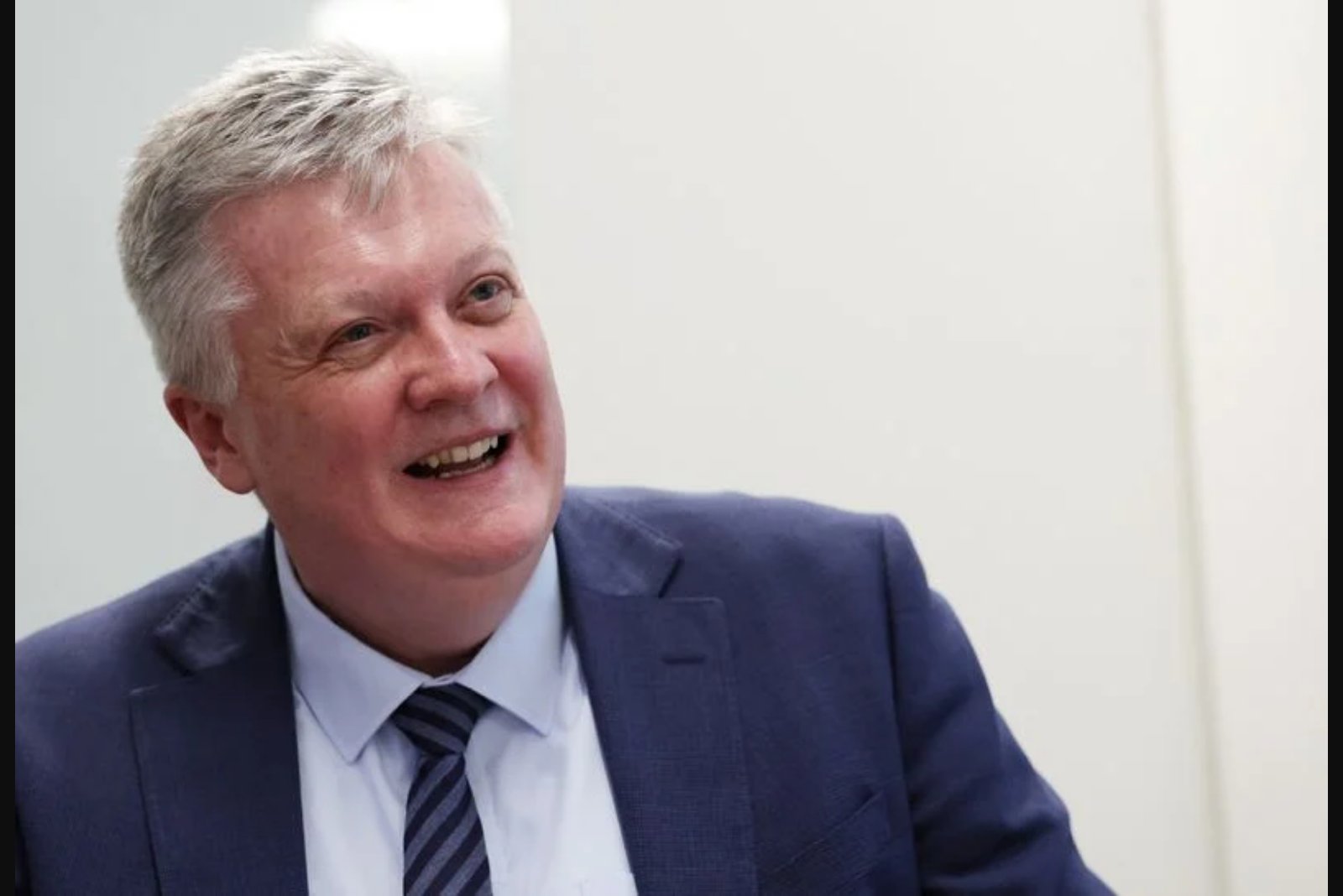
Bank of England Chief Economist Huw Pill cautioned that the Bank’s recent change in how it presents economic outlooks - moving away from a single central projection toward publishing multiple scenarios - has encouraged Monetary Policy Committee (MPC) members to emphasize their own perspectives rather than a unified committee position. Speaking at a panel discussion hosted by the central bank of Uzbekistan, Pill said the approach has made it more difficult for rate-setters to arrive at a collective viewpoint.
"By having the use of scenarios, I think we’ve tended to encourage (MPC) members to focus on their own view, seeking to have their own scenario, which to some extent comes to the detriment of the collective view of the committee, which ultimately drives the final decision," Pill said.
The central bank altered its communication strategy in April by ceasing publication of a single central projection and instead releasing three separate scenarios. In 2025 the Bank also began including individual MPC members’ explanations of their votes in the policy minutes, further exposing personal judgments within the committee.
Pill’s comments resonated with recent remarks from other MPC members. Last week several members expressed similar concerns as the committee debated interest rates. Among them were Megan Greene, who aligned with Pill in supporting a rise in the Bank’s main interest rate to 4% from 3.75%, and Alan Taylor, who occupies the opposite end of the MPC policy spectrum and voted with the 7-2 majority to leave borrowing costs unchanged.
In the minutes from the June policy decision, Pill noted that a rate increase would assist in addressing the "significant uncertainties" the MPC faces about how businesses and households will respond to higher borrowing costs and reduced purchasing power.
Separately, in an interview published on Monday with PA Media, Pill said he worries some policymakers may have grown too accepting of inflation remaining above the 2% target. He warned against normalizing higher inflation levels, invoking the earlier peak of inflation: "I do fear a little bit that, because we saw inflation go to 11%, policy discussion becomes: 'Oh inflation at 3% is not so bad'," Pill told PA Media.
Those remarks underline tensions within the MPC over both how economic projections are presented and the appropriate policy stance given continued uncertainty about household and business reactions to tighter financial conditions. Pill framed the debate around the trade-offs inherent in making decisions when the committee’s members are guided by differing scenario-based views rather than a single projection.
Bottom line: Pill says the Bank’s scenario-led communications have shifted emphasis toward individual MPC views, potentially weakening the committee’s collective decision-making, and he has signaled concern about complacency regarding inflation above the 2% target.