
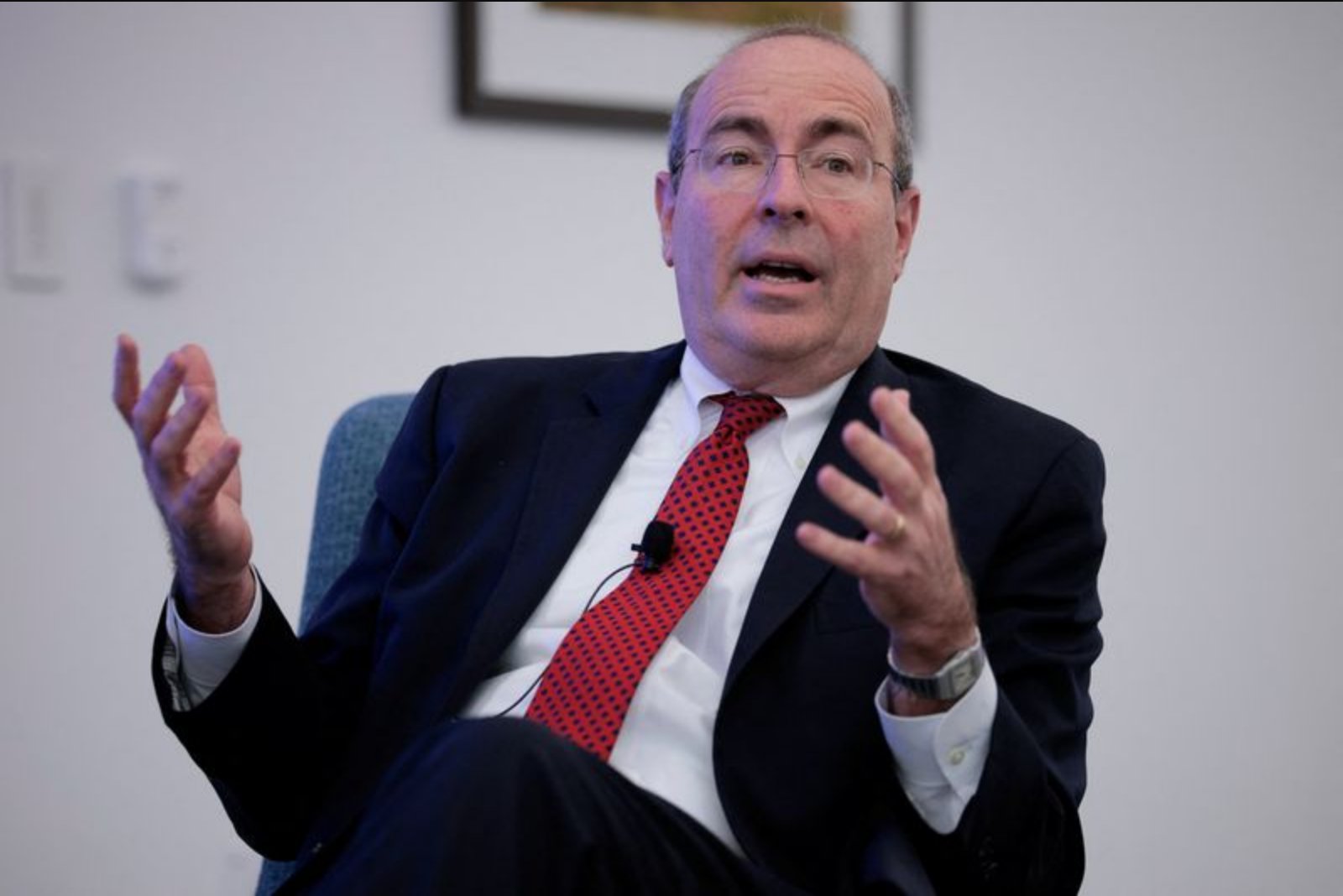
Richmond Fed President Thomas Barkin said the decision at the Federal Reserve's most recent meeting to hold the policy rate steady was appropriate while officials gathered additional information on jobs and price pressures. Barkin framed the move as a deliberate pause in an environment shaped by a range of developments - from elevated oil costs to an investment surge tied to artificial intelligence - that complicate the inflation outlook.
In prepared remarks to an economic group, Barkin said the Fed's choice to wait gave policymakers time to observe how firms and households react to ongoing shocks. That reaction, he said, will determine whether the central bank can "look through" the current bout of high inflation or will need to contemplate further rate increases.
"It made sense to give ourselves time," Barkin said. He added that in the months ahead the Fed could see developments that "pressure the employment side of our mandate, the inflation side of our mandate, or conceivably both. If we do, the Fed is well positioned to respond as appropriate."
Barkin noted that at the April meeting a growing number of policymakers viewed an additional rate hike as a possible response to inflation that has been pushed higher by factors including strong energy prices, the ongoing investment boom tied to artificial intelligence, and unexpectedly resilient household consumption. He did not explicitly state his own forecast for interest rates or say whether he expects a hike to be required.
Instead, Barkin set out three key conditions that will shape the policy path: whether consumers continue to spend at current levels, whether businesses begin to use rising productivity as a reason to reduce payrolls, and whether inflation expectations remain anchored after more than five years in which the Fed has missed its target.
"Looking through supply shocks has worked well for a generation," Barkin said. "Looking forward, it's easy to imagine more challenging conditions: heightened geopolitical tensions, trade fragmentation, more frequent severe weather events, rising government debt, cyber risk, slowing workforce growth and more..It’s worth asking whether the cumulative impact of so many waves risks loosening the anchor."
The message from Barkin emphasized readiness rather than conviction about immediate policy moves: the Fed paused to learn more and remains positioned to act if subsequent data show pressures on employment or inflation. His comments highlighted the uncertain interplay between supply-side shocks, demand resilience, and firms' responses to productivity changes as the central bank evaluates whether to tighten policy further.