
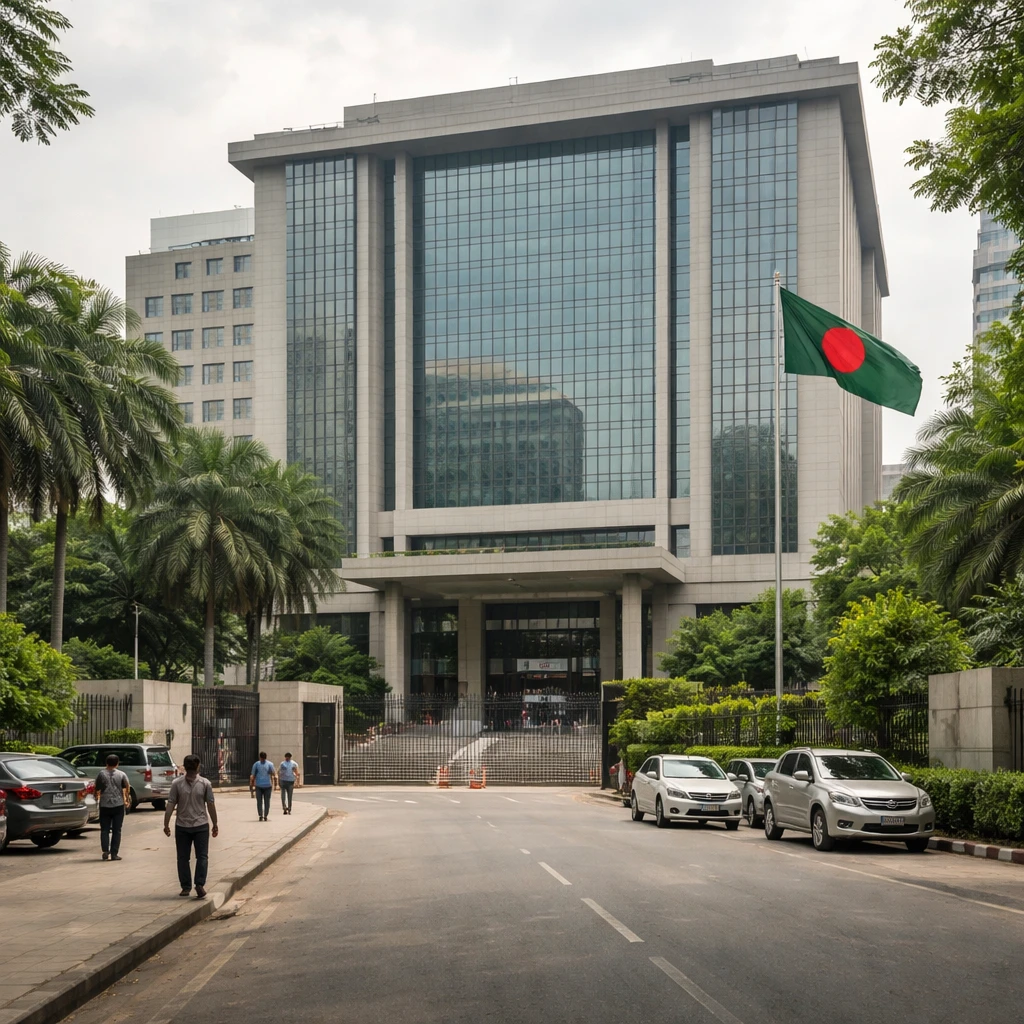
Bangladesh Bank held its benchmark interest rate at 10% on Tuesday, choosing to keep monetary conditions tight as authorities press to reduce inflation even as economic momentum slows and international risks rise.
The central bank cautioned that an intensifying conflict in the Middle East poses a threat to the country by potentially disrupting supplies of oil and fertilizer. Such disruptions, it said, could feed into higher imported inflation and introduce new downside risks to the domestic recovery.
Officials acknowledged that the economy has shown signs of gradual improvement, but they stressed that several deep-rooted problems remain. The central bank listed high levels of non-performing loans, weak private investment, uncertainties over energy supply, and external vulnerabilities among the main obstacles to stronger and more durable growth.
For the fiscal year ending June 2027, the government has set targets of 6.5% economic growth and headline inflation of 7.5%.
Headline inflation has moderated from a peak of 11.7% in July 2024 to 9.4% in May 2026, but it remains above the official target. In response, the central bank said it will keep a contractionary monetary policy stance through the first half of the current fiscal year to rein in headline inflation and anchor long-term inflation expectations.
At the same time, the bank emphasized that monetary tightening alone cannot fully resolve inflation when price pressures stem from structural inefficiencies and bottlenecks in supply chains rather than excess demand.
The banking sector is reflecting these strains. Private-sector credit growth slowed to 5% at the end of May, the central bank reported, as lenders have grown cautious in the face of rising bad loans and higher government borrowing. Excess liquidity in the financial system has increasingly been absorbed by government securities rather than being directed into business lending.
To help alleviate the credit squeeze, the central bank pointed to a previously announced 600 billion taka stimulus package - equivalent to $4.9 billion - aimed at industry, agriculture and small and medium-sized enterprises. The package is intended to ease the credit crunch, revive industrial output and support the creation of around 2.5 million direct and indirect jobs.
Context and implications
This decision underscores the central bank's priority of lowering inflation even at the cost of maintaining tighter borrowing costs for an extended period. The combination of subdued private credit growth and a shift of surplus liquidity into government debt suggests limited near-term relief for business investment unless the stimulus package meaningfully expands access to credit for firms.