
Asia's policymakers are responding with increasing urgency and unconventional steps as the region absorbs the effects of a global energy supply shock. Currencies have tumbled to record lows in several countries and the strain is already contributing to higher interest rates, reflecting a wrenching policy trade-off between defending currencies and sustaining growth.
Regionally, Asia sources roughly 80% of the oil that transits the now largely closed Strait of Hormuz, a concentration that places many economies on the front line of the supply disruption. One of the clearest manifestations of the shock is pressure in foreign exchange markets, where depreciating local currencies are beginning to transmit into inflationary pressures and growth risks.
Governments and central banks face a difficult balancing act. Allowing currencies to fall can undercut confidence and accelerate inflation, but raising rates to defend exchange rates will impose immediate costs on consumers and domestic demand - compounding the direct strain from higher fuel costs.
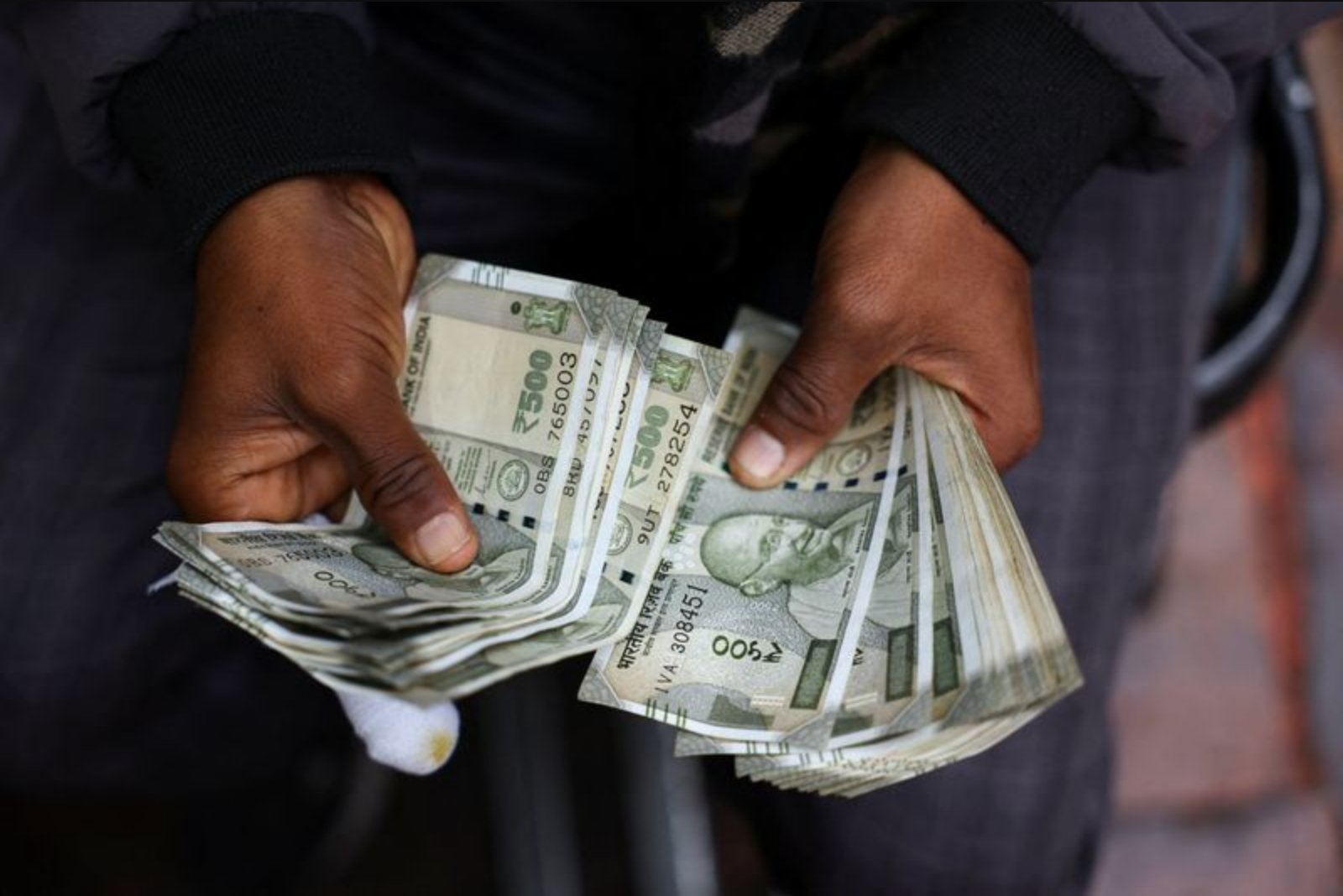
In India, authorities have publicly urged citizens to curtail foreign travel and to refrain from buying gold in an effort to shield the rupee, which is among the hardest hit currencies since the recent reduction in crude supplies tied to the Middle East conflict. A government source told Reuters that Prime Minister Narendra Modi has reduced the size of his motorcade to conserve fuel.
Bankers interviewed in recent days estimate that the central bank may be deploying roughly $1 billion a day to support the rupee, which is trading at record lows. The government source and the banking sources requested anonymity because they were not authorised to speak publicly.
Indonesia has also moved to blunt currency pressure. On Wednesday the central bank delivered a surprise 50-basis-point rate hike aimed at shoring up the rupiah, which is trading at record lows against the dollar. Jakarta additionally announced it would seize control of commodity exports so that proceeds remain onshore and in local currency.
The Philippines' central bank has already raised rates and market participants say a sharp rise in inflation could force an out-of-cycle increase before the next scheduled policymaking meeting in about a month's time.
BlackRock's Navin Saigal, head of global fixed income for Asia Pacific, posed the policy dilemma succinctly: "How many hikes does it really take to incentivise capital to come in? The answer could be quite a lot," he said. "On the flip side, what do those hikes end up doing to the domestic economy? And the answer is, it could be quite a lot."
India, Indonesia and the Philippines share particular vulnerability because they are net oil importers and at the same time are experiencing capital outflows as investors redeploy cash elsewhere. Compounding pressures is the market reaction to shifts in U.S. interest rate expectations, where the possibility of further tightening this year has intensified moves out of risk assets.
That dynamic has driven notable currency moves: the rupiah has fallen to about 17,700 per dollar, the rupee is near 97 per dollar and the peso stands close to 62 to the dollar. These levels have prompted heightened policy responses and market concern.
Market sentiment has turned distinctly hostile in some cases. Under President Prabowo Subianto, Indonesia's currency has depreciated about 12% against the dollar, as Jakarta's interventionist policy stance has unsettled investors and depleted foreign exchange reserves to their lowest point in two years.
The rupiah slid again soon after the rate increase, and equities fell as the government's move to centralise export control intensified investor worries that have put Indonesia at risk of a credit-rating downgrade.
Charlie Robertson, global chief economist and head of macro-strategy at FIM Partners, remarked that the approach is unlikely to attract investment and framed the strategy as state intervention that raises doubts about market confidence. "Does this look like a government that knows better than the market? What has happened over the last six months suggests no. There is too much heading in the wrong direction," he said.
S&P Global Ratings warned that Indonesia's plan to centrally manage commodity shipments could damage export performance, squeeze government revenue and weaken the balance of payments.
India's policy toolkit has also come under scrutiny. Short forward dollar commitments made via the central bank's forward market have exceeded $100 billion, a tally that market participants say erodes the reassurance provided by the country's roughly $700 billion reserve buffer.
"Once reserves become a market focus, the optics matter," said Vivek Rajpal, Asia macro strategist at JB Drax Honore. "The room to lean aggressively against further pressure looks increasingly limited. Both BSP and BI are now already on a hiking path, with India likely to follow." The reference is to central banks already hiking - the Bangko Sentral ng Pilipinas (BSP) and Bank Indonesia (BI) - with India also facing pressure to act.
There are reports that India is reviewing all available options to stabilise the rupee, including the possibility of an interest rate increase, according to people familiar with the matter who spoke to news organisations.
Despite heads of state and central bankers retaining scope to lift interest rates further and to use foreign currency reserves to manage disorderly moves, structural uncertainties remain. Even if a ceasefire or other resolution were to reopen the Strait of Hormuz to shipping, market participants say investors are unlikely to rush back immediately and ease pressure on the rupee, rupiah or peso.
Analysts note that Indonesia, in particular, requires what one strategist called a "complexity premium" because policy rules and directions can shift rapidly, elevating the cost of doing business and deterring long-horizon investors.
Implications for markets and policymakers
The combination of a regional exposure to disrupted oil flows, record lows in local currencies and an aggressive policy response underscores how a concentrated energy supply shock can force rapid trade-offs between inflation containment and supporting economic activity. Policy choices taken now are likely to influence capital flows, reserve adequacy and sovereign financing conditions across the region.