
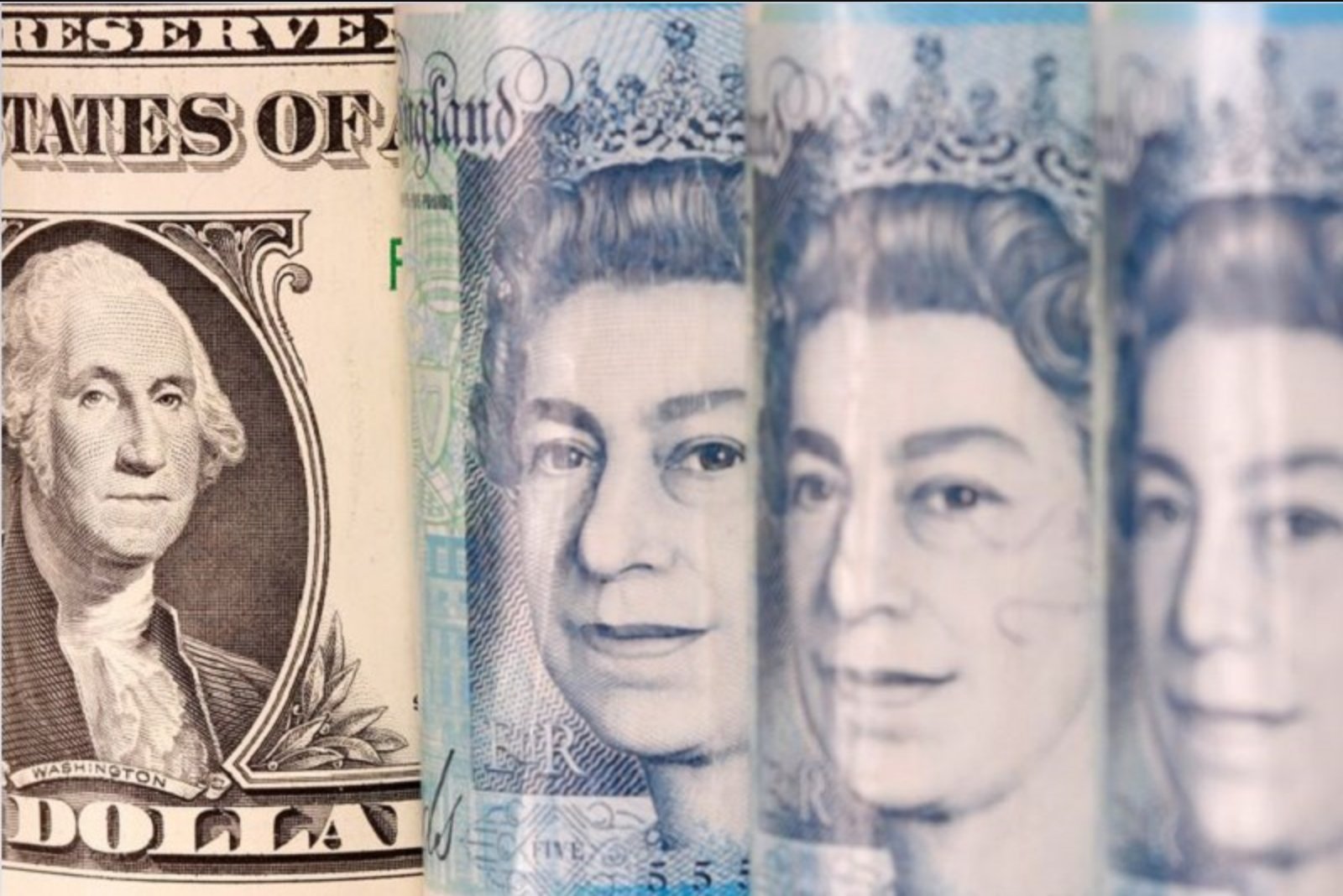
Currency markets took a tentative breather on Monday, with both the pound and the euro posting small gains after the U.S. dollar's broad advance late last week. The improvements were modest and vulnerable to reversal amid a backdrop of firmer Fed tightening bets and a risk-off tone in equities.
At 08:42 ET (12:42 GMT), GBP/USD was trading 0.12% higher at 1.3358, while EUR/USD had gained 0.19% to reach 1.1543. These moves represent marginal recoveries from Friday's sharp losses, but underlying demand for the greenback remains strong.
Dollar drivers
The dollar's renewed strength traces to a stronger-than-expected U.S. jobs report on Friday. That data lifted market expectations for further Federal Reserve tightening - priced at around 30 basis points this year and extending to 50 basis points by the second quarter of 2027. With the Fed now in a communication blackout ahead of its June 17 Federal Open Market Committee meeting, there is limited scope for more dovish commentary to counter current market pricing, leaving the dollar broadly supported into the week.
Concurrently, a tech-led sell-off in global equities is encouraging some investors to trim overweight positions in equities and emerging market assets. Analysts at ING highlighted that portfolio repositioning ahead of a likely SpaceX initial public offering, expected to be in the $75-85 billion range on Friday, together with recent capital raises from Alphabet, OpenAI and Anthropic, is creating market indigestion. This repositioning tends to favour the dollar as a safe-haven, with the DXY index looking biased to test resistance in the 100.25/65 area.
Euro outlook
EUR/USD faces a dual challenge from a firmer dollar and disappointing eurozone activity data. German factory orders for April were already reported as weaker earlier in the session. Attention now shifts to the European Central Bank meeting on Thursday, where a 25-basis-point rate increase to 2.25% is widely expected. ING expects the ECB to adopt a hawkish tone and to signal the possibility of another move in September, which could provide some near-term support for the euro.
Still, with energy prices turning bid and the 1.1500 level under pressure, downside risks for EUR/USD remain prominent.
Sterling's constraints
The outlook for sterling is similarly constrained. Market pricing shows only around 21 basis points of tightening expected at the Bank of England's September meeting, implying the BoE is likely to largely avoid further tightening this summer. Corporate inflation expectations data released on Friday gave the BoE some reassurance that second-round inflation effects may be less likely to emerge.
However, sterling's more pro-risk profile means it is vulnerable while the Fed is perceived as moving onto a firmer tightening path and equities are under pressure. ING anticipates GBP/USD could test 1.3300 this week, with an outside risk toward 1.3200 if the equity sell-off deepens and dollar strength persists.
Market implications
In short, modest gains in sterling and the euro on Monday remain vulnerable to further dollar appreciation and continued equity market stress. Key upcoming policy meetings and economic data will be watched closely for signals that could either reinforce or unwind the current pricing of global rates and risk sentiment.