
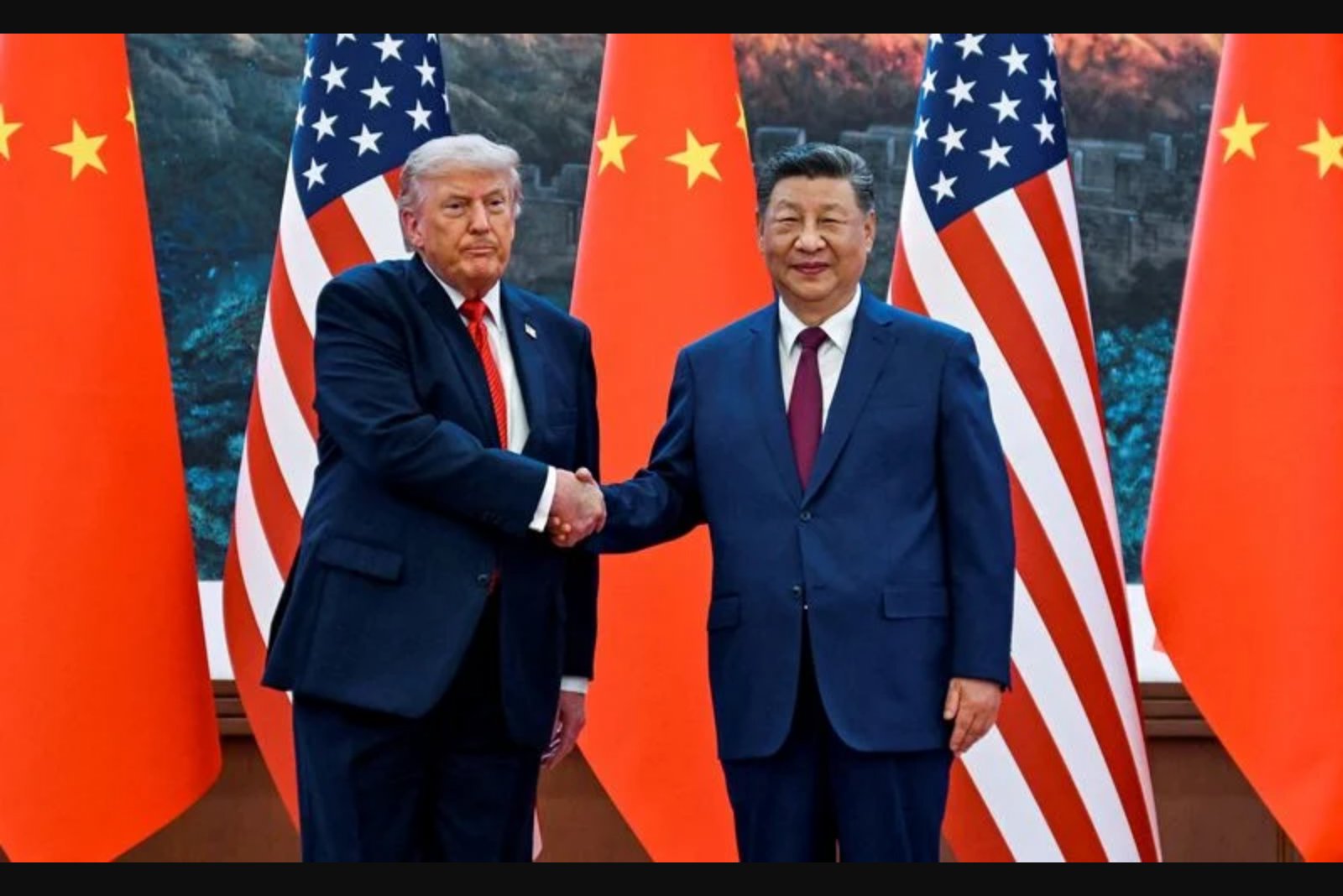
CHANGZHOU, China, Sept 22 - A U.S.-founded battery company that abandoned plans to put its inaugural factory in Kentucky has instead opened a manufacturing line in eastern China, starting mass production on the same day the presidents of the United States and China met in Washington. The move underscores the challenges facing efforts to draw advanced manufacturing back to the United States amid ongoing trade tensions and policy incentives aimed at reviving domestic production.
EnerVenue said it began mass production at its Changzhou facility on Thursday. Chief Executive Henning Rath described the timing as coincidental and pointed to local skills and supply chain depth as the principal reasons for choosing China over the United States. Rath highlighted Changzhou's concentration of hydraulics, pneumatics and automation specialists, and engineers who can iterate quickly on what he called a "first-of-its-kind" production line.
"The secret sauce is this industrial cluster," Rath said, noting that without building in China it would have been "very difficult with the capital available" to validate the manufacturing process at commercial scale. He framed the decision as one driven by practical manufacturing considerations rather than political signals.
EnerVenue's leadership emphasized the difference in supplier practices and labor costs between China and foreign suppliers. A floor manager at the Changzhou plant said local vendors often develop equipment on spec and without upfront payment until a design is adopted, in contrast with foreign suppliers who tend to require payment before development. The manager also noted graduate engineers at the site earn about 12,000 yuan per month, a figure he contrasted with U.S. salary norms; the article lists the dollar equivalent as $1,792 per month using an exchange rate of $1 = 6.6955 Chinese yuan.
Founded by a Stanford materials science professor, EnerVenue maintains research and development operations in Fremont, California, and produces nickel-hydrogen batteries based on technology used by NASA in the Hubble Space Telescope and the International Space Station. The company had announced plans in 2023 for a Kentucky factory with a first phase costing $264 million and creating 450 jobs, but that plan was dropped a year later.
Rath said the attempted Kentucky project provided a "valuable learning experience," but that at the time the technology was not sufficiently mature. EnerVenue subsequently redesigned both its battery and its factory approach before moving forward with production in Changzhou.
The newly opened Changzhou facility is highly automated - about 95% automated, according to Rath - and will employ roughly 400 workers by the end of the year. Rath declined to provide a precise construction cost, offering instead a range between $20 million and $50 million. He characterized government involvement as limited to permitting, certification and site selection.
EnerVenue reported it raised more than $300 million in a March funding round led by Full Vision Capital, the family office of Peter Lee Ka-kit. Rath said the funding round included other investors such as Saudi Aramco and SLB, and that the broader group led by the lead investor also counts a customer in Towngas.
The company expects to hit an annual production capacity of 250 megawatt hours this year, which it equates to roughly 300 battery cells a day. EnerVenue plans to scale capacity to 1 gigawatt hour by the third quarter of 2027. It has announced intentions to open similar factories in North America, the Middle East and Europe beginning in 2028, with site selection to take place next year.
Rath described China as the "factory of factories" and an "important stepping stone" toward a global production footprint. When asked whether EnerVenue would establish a plant in the United States, he said, "We want to play in the North American market. It depends a little bit now on legislation and regulation."
Context within broader policy debates was also noted in company remarks. The plant opening comes against the backdrop of strained relations between the two superpowers, including a tariff war the U.S. president launched in part to reclaim manufacturing and jobs. EnerVenue's decision illustrates the limits of incentives such as lower taxes and streamlined permitting when weighed against concentrated industrial capabilities and supplier networks in locations like Changzhou.
As operations commence, engineers at the site were observed testing spinning hydraulic arms while lidar-guided robots moved materials between production stations, reflecting the facility's high level of automation and integration of advanced manufacturing systems.
EnerVenue's trajectory from a planned U.S. factory to an active Chinese production site highlights tensions between industrial-policy goals and market realities for emerging energy technologies. Company executives present Changzhou not as a final destination but as a manufacturing milestone on a path toward broader global capacity.