
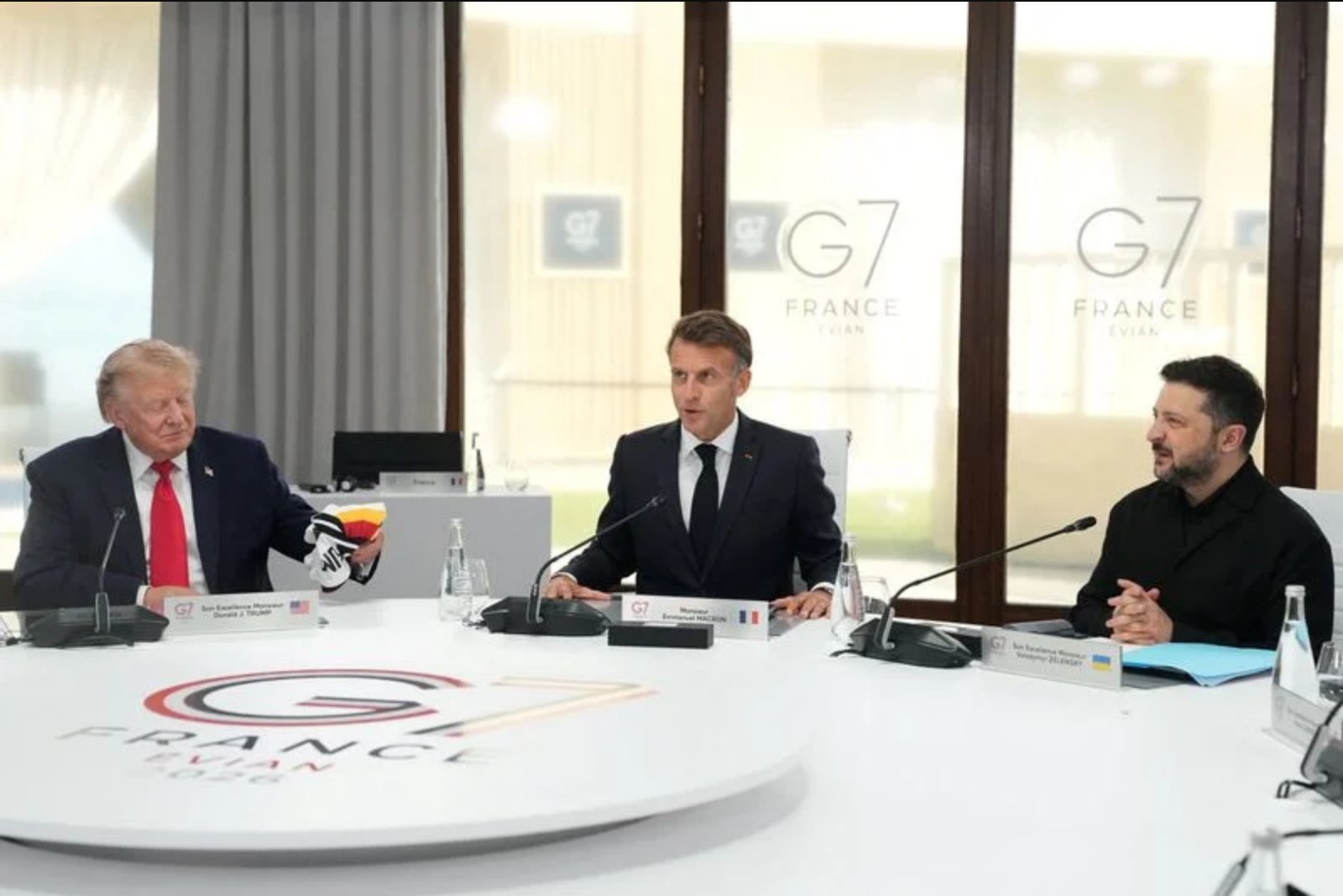
At the G7 meeting held in Evian-les-Bains, France on June 17, President Donald Trump told reporters that he had "good talks" with both Russian President Vladimir Putin and Ukrainian President Volodymyr Zelenskiy on the sidelines of the summit.
Zelenskiy, accompanied by European allies, attended the summit in the hopes of conveying to Trump that Ukraine's battlefield position had strengthened, a development they linked to Ukrainian drone strikes conducted deep inside Russian territory.
When questioned by reporters about whether he considered President Putin more responsible for the conflict in Ukraine, Trump declined to offer a judgment. "Well, I don’t want to comment on that, because I’m trying to get it settled, and that doesn’t make it easy," he said, signaling a reluctance to apportion blame in public remarks while he pursues a settlement.
Trump also did not provide a definitive answer on whether the United States would move to impose sanctions on Russia. On that point he said: "We are looking at that, we’re seeing how far the price of oil comes down, it’s, it’s really tumbling." The comment tied the administration's deliberations to recent movements in oil prices, without confirming any specific policy action.
The discussions took place against the backdrop of leaders from Ukraine and its European partners attempting to influence U.S. thinking at the summit, and amid market signals that Trump referenced when discussing possible measures against Russia.
Context and implications
The president's remarks underscored two concurrent themes at the summit: diplomatic engagement with leaders on both sides of the Ukraine conflict, and the consideration of economic signals - notably the drop in oil prices - as inputs into potential policy decisions on sanctions.
Trump's decision not to publicly assign responsibility for the conflict or commit to sanctions preserves diplomatic flexibility but leaves open uncertainty about immediate U.S. economic and geopolitical responses.