
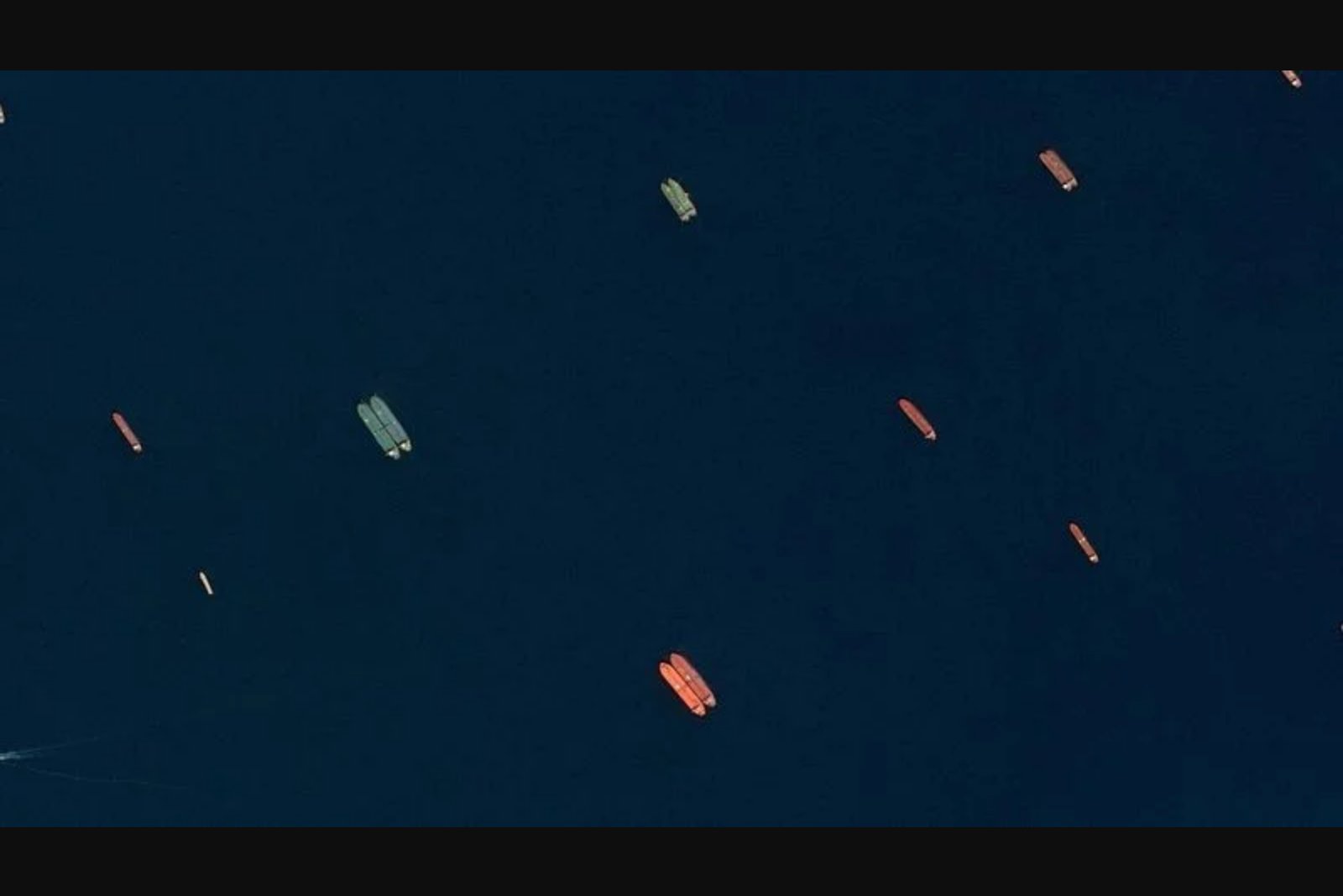
Multiple very large crude carriers (VLCCs) associated with Iran have sailed through the area where U.S. naval forces have been enforcing restrictions this week, shipping data shows, even as U.S. military officials say their operations against Iran-linked shipping will stay in place until Friday. The tanker transits coincide with a U.S. announcement of a deal intended to end the Iran war and a scheduled signing this Friday in Switzerland.
U.S. President Donald Trump announced the deal on June 14 and celebrated its completion on his Truth Social platform, posting: "The Deal with the Islamic Republic of Iran is now complete," and adding, "Ships of the World, start your engines. Let the oil flow!"
Ship-tracking datasets from Kpler, Vortexa and LSEG show that at least three tankers carrying roughly five million barrels of Iranian crude have passed through the Gulf of Oman en route to Asian destinations. The Hero II and the Diona, each reported to be carrying about 2 million barrels, have moved through the corridor and are headed for Asia, the data providers indicated. The Sonia I, with about 1 million barrels aboard, has also transited the naval line and is bound for Singapore according to the same datasets.
Other vessel movements were visible in the tracking feeds. An Iranian-linked VLCC named Stream, reported as empty, was tracked sailing back toward the area of the U.S. blockade, while the partly laden Iranian-flagged Herby supertanker followed close behind, LSEG data showed on Wednesday. Analysts who monitor Iran-related tanker traffic noted a visible repositioning of ships in recent days in anticipation of a loosening of restrictions.
"The signal has gone out and they are repositioning in expectation of the end of the U.S. blockade. Clearly, a system reboot is in progress," said Charlie Brown, senior advisor at the U.S. advocacy group United Against Nuclear Iran (UANI), which follows Iran-linked shipping movements.
The U.S. military’s Central Command did not immediately provide a response to requests for comment about the tanker movements.
Ship activity extended beyond oil tankers. UANI analysis showed five Iranian-flagged dry bulk and container vessels that had been anchored off the coast of Malaysia for weeks were underway back toward Iran.
U.S. measures against Iranian crude exports had reduced Iranian shipments to their lowest level in six years in May, with exports falling to about 260,000 barrels per day, Kpler data showed. That figure stands in contrast to an average of 1.67 million barrels per day in 2025, according to the same data provider.
The memorandum of understanding announced by the U.S. and set for signing on Friday reportedly calls for the United States to allow Iran to immediately begin selling oil and fuel, a senior U.S. official said on Tuesday. Market reaction to the prospect of resumed Gulf supply has already been evident: benchmark Brent crude futures fell below $80 a barrel this week from highs near $120 as traders factored in increased supply expectations.
Falling crude prices could make Iranian oil more attractive to buyers whose purchases had been held back by high prices. China, identified in shipping data as Iran’s largest customer, had been relatively subdued in buying amid the earlier price strength, market sources said.
Meanwhile, non-Iran-related shipping in the Gulf remains constrained by uncertainty about practical safety and passage. Industry sources told analysts that many companies will wait for proof of safe transit before resuming voyages through the strait. Kpler reported that about 118 tankers carrying cargoes from other Gulf producers remain inside the Gulf.
Greece-based shipbroker Intermodal noted in a recent industry note that a political agreement may formally reopen the strait, but that demonstrating safe passage operationally remains a separate hurdle: "A political agreement may formally reopen the strait, but safe passage must still be proven in practice," the firm said.
Context and next steps
The agreement announced in mid-June includes a 60-day ceasefire period during which Iran’s deputy foreign minister said a more expansive accord would be negotiated. The time gap between the public announcement and the expected signing on June 19 creates a window in which both sides could issue divergent statements on the terms and implementation, Torbjorn Soltvedt, principal Middle East analyst at Verisk Maplecroft, said.
As the scheduled signing approaches, monitoring of tanker movements, clearing of the strait for third-party shipping and the operational details of restarting Iranian crude flows will be watched closely by market participants and governments alike.