
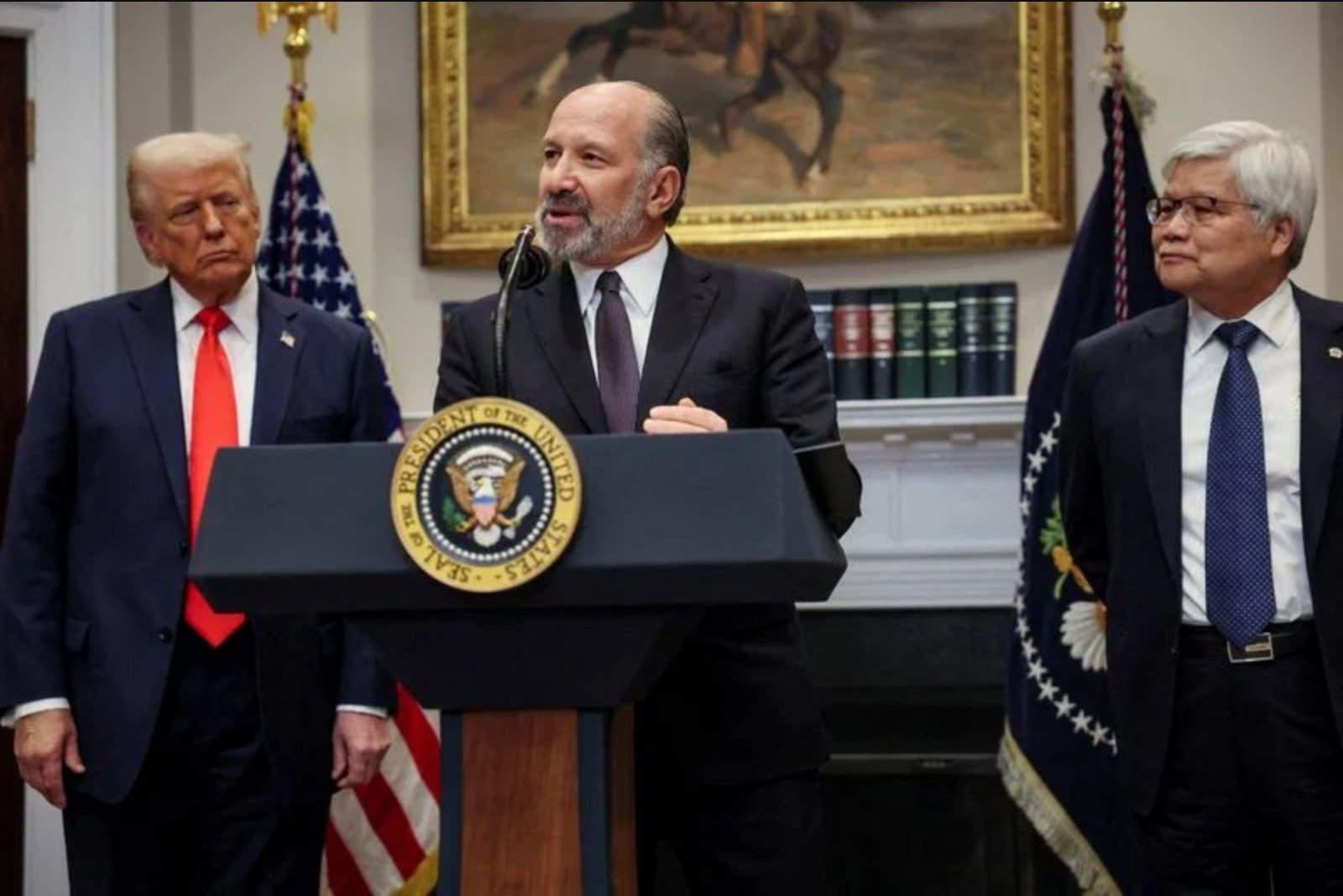
The U.S. government has awarded $500 million to SandboxAQ to accelerate development of chemicals and materials intended to support domestic semiconductor manufacturing, government and company officials said. The funding, provided by the U.S. Department of Commerce under research allocations of the CHIPS Act, directs the startup toward alternatives to certain persistent chemicals and to new components that reduce reliance on foreign sources of critical minerals.
SandboxAQ, which counts Nvidia among its investors, was valued at $5.75 billion in April 2025 and has raised in excess of $1 billion to date. The company is building an AI platform designed to tackle problems in the physical sciences by training on results from real-world experiments and physics-based data rather than on human language or software code. That approach has previously been applied to areas including biotechnology and quantum navigation sensors, and the firm is now applying it to materials and chemicals used in chip production.
The $500 million award assigns SandboxAQ a mandate to discover commercially viable materials in four specific categories: substitutes and remediation methods for PFAS chemicals used in chipmaking; catalysts to accelerate chemical reactions in manufacturing processes; and permanent magnets and batteries for semiconductor equipment that do not depend on rare earth elements imported from China or other foreign sources. The work is framed as addressing both vulnerability in foreign supply chains and shortages or bottlenecks within the industry.
As part of the transaction, the Commerce Department will take a minority stake in SandboxAQ, agency and company officials said. SandboxAQ's chief executive, Jack Hidary, declined to disclose the precise size of the government's equity position but said the stake does not carry voting rights or a seat on the company's board.
PFAS focus and remediation
One area singled out in the contract is PFAS - often called "forever chemicals" because of the strength of their chemical bonds and their persistence in the environment. PFAS play roles in some semiconductor manufacturing steps, but their durability raises environmental and regulatory concerns. The Trump administration last year delayed certain Biden-era deadlines related to monitoring PFAS in drinking water, officials noted.
SandboxAQ's contract covers two tracks on PFAS: identifying alternative chemistries that avoid PFAS in manufacturing steps where substitutes are feasible, and developing methods to break down PFAS into less harmful compounds where elimination is not possible. Hidary said there are opportunities across the semiconductor workflow both to select different chemicals to prevent PFAS use and to treat residual PFAS on-site before it can escape into the environment.
"When you look at the many steps of semiconductor manufacturing, there are opportunities across that workflow to both choose different chemicals that prevent the need for PFAS, and then when there are some steps that do generate PFAS, to break it down on site, before it enters the outside world," Hidary said.
Magnets, batteries and supply-chain resilience
The award explicitly aims to develop permanent magnets and battery systems that avoid dependence on rare earth elements from China or other foreign suppliers. The Commerce Department and SandboxAQ framed this work as part of a broader U.S. objective to reduce reliance on critical minerals sourced through foreign supply chains.
Chipmaking equipment uses batteries to smooth power from the grid and to provide backup power that prevents damaging and costly abrupt shutdowns. Permanent magnets are ubiquitous in the machinery used in semiconductor fabrication.
"Everything uses at least one or more permanent magnets," a senior Commerce Department official said. "If the big semiconductor equipment companies can’t source enough magnets to go in the equipment, then that’s an issue."
Commercialization and royalties
If SandboxAQ succeeds in producing materials that meet performance and commercial criteria in the four focus areas, the company will license those formulas to industrial partners for large-scale manufacture. Under the terms described by the company and a senior department official, the Commerce Department would receive a royalty payment tied to those licensed materials.
The award follows earlier CHIPS Act research allocations that included a $150 million commitment for new chip manufacturing tools and a $2 billion investment in quantum computing, indicating the program's broader emphasis on reducing strategic dependencies and advancing domestic manufacturing capabilities.