
When a torrent of ice, rock and debris surged down the mountainside and engulfed the valley housing the Upper Trishuli 3A Hydropower Station, mechanical foreman Sanjay Sah faced a difficult decision: run for his own life, or stay and try to help others. He told army officials that he chose to remain.
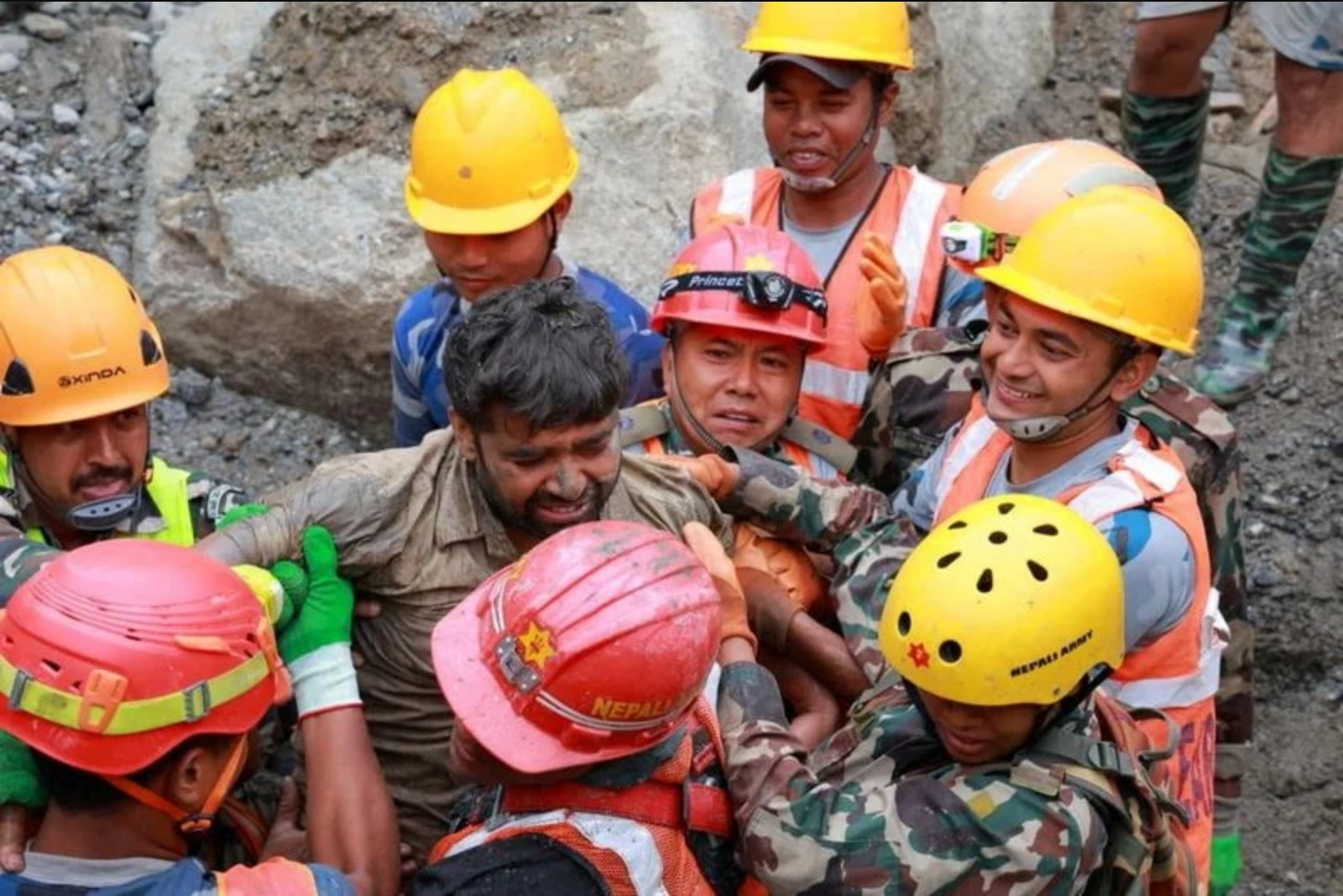
Sah, 30, was rescued on Friday along with another worker, nine days after the disaster struck. In video released by Nepali authorities, he can be seen on a stretcher with an oxygen mask, telling rescuers about his experience in the control room inside the tunnel.
"I was in the control room in the tunnel. Normally there are four to six people there, but there could have been 40 to 45 people that day," he said, according to the footage. "My responsibility was to save everyone’s lives. When there was such a big accident, it was not right for me to run away."
Sah said he warned colleagues as soon as news of the incident upstream reached them and urged them to evacuate. He did not manage to exit the tunnel himself. By the time he turned to run, there was no time left, he said.
Officials estimate that at least 900 people are trapped in tunnels associated with six hydropower projects along the Trishuli river. For nine days in the dark, Sah said he chanted mantras to maintain hope. He reported staying in contact with three or four other workers somewhere in the tunnel system and indicated that others may be trapped deeper inside the mountain.
Also rescued from the hydropower complex was mechanical supervisor Kabir Maharjan. The two men are the first workers pulled from tunnels at the affected power projects. Authorities also noted that a small group of workers had managed to escape from another tunnel hours after the incident.
Footage released by the Nepali Army showed Sah being carried out by a fellow worker, his face covered in mud. Both Sah and Maharjan were taken to an army hospital in Kathmandu, where they remain in intensive care.
The disaster has caused widespread destruction across regions near Nepal's border with China's Tibet. Nepali authorities report at least 1,287 people killed and 5,083 listed as missing, with thousands more displaced. Chinese authorities have reported 21 deaths in Tibet and 541 people missing there.
Rescue operations continue amid concerns for those believed to be trapped in tunnel systems beneath the devastated valley. The situation has produced isolated pockets of survival and hope, represented by the successful recovery of Sah and Maharjan, while larger search efforts persist for the many still unaccounted for.
Summary of current status:
- Two workers rescued from hydropower tunnels and admitted to intensive care in Kathmandu.
- Authorities estimate at least 900 people trapped in tunnels linked to six hydropower projects along the Trishuli river.
- National casualty and missing figures stand at 1,287 killed and 5,083 missing in Nepal; Tibet reports 21 killed and 541 missing.