
European wholesale natural gas prices rallied on Tuesday, reversing much of the heavy selling that had hit energy markets the day prior, after U.S. military strikes on Iran's Qeshm Island and the collapse of hopeful diplomatic talks raised fresh concerns over flows through the Strait of Hormuz.
The Dutch Title Transfer Facility (TTF) front-month contract climbed 4% to trade at 98.60 euros per megawatt-hour (MWh), staging a pronounced recovery following Monday's steep one-day drop, which had been the contract's sharpest single-day decline since March. Across the Channel, the U.K. national balancing point (NBP) futures contract rose 4.5% to 245.60 pence per therm, bouncing back after recording its worst daily sell-off since June.
Traders said the rebound erased much of the prior session's profit-taking that had swept through energy markets when diplomatic optimism briefly reduced risk premia. That optimism faded quickly after a U.S. official confirmed Washington carried out strikes on Iranian targets on Qeshm Island, an island positioned directly in the Strait of Hormuz. U.S. officials characterized the operation as defensive and intended to prevent Iranian forces from targeting commercial merchant vessels.
Shortly after the U.S. confirmation, a senior Iranian official told Reuters that talks were still far from resolving hostilities and that Tehran would not accept what it described as Washington's "excessive demands." The abrupt escalation of tensions helped reverse Monday's broad commodity sell-off, lifting Brent crude futures by 1.76% to $106.61 a barrel and West Texas Intermediate by 1.66% to $98.06 a barrel. Energy traders moved to re-establish long hedges across prompt European gas curves.
Analyst revisions and winter risk scenarios
Goldman Sachs raised its baseline forecast for first-quarter 2027 TTF to €74/MWh from €44/MWh, and increased its full-year 2027 average projection to €51/MWh from €32/MWh. The bank said the revision incorporated a "subjective 45% probability that we face a low-winter-Mideast LNG supply scenario" together with a cold-weather risk premium.
Goldman outlined a stressed scenario in which Persian Gulf LNG exports remain constrained at 25% to 30% of normal levels while Northwest European temperatures turn one standard deviation colder than average. Under that combination, first-quarter TTF could spike to nearly 150 EUR/MWh, the bank warned. With first-quarter forward contracts trading near €92/MWh at the time of the note, Goldman noted the market was already implying a 47% probability of that severe-squeeze scenario.
"The range of outcomes for TTF this winter remains exceptionally wide," wrote Goldman Sachs analysts led by Samantha Dart, adding that "European natural gas and global LNG markets continue to face two key sources of risks, namely Mideast LNG supply and winter weather, with a highly uncertain outlook for both."
Storage, supply routes and regional dependencies
European Union underground gas storage sites were reported to be at roughly 74% of capacity, a level well below seasonal historical norms. That lower fill level leaves regional inventories exposed to early drawdowns once freezing weather settles over Northern Europe, analysts say, increasing reliance on steady imports.
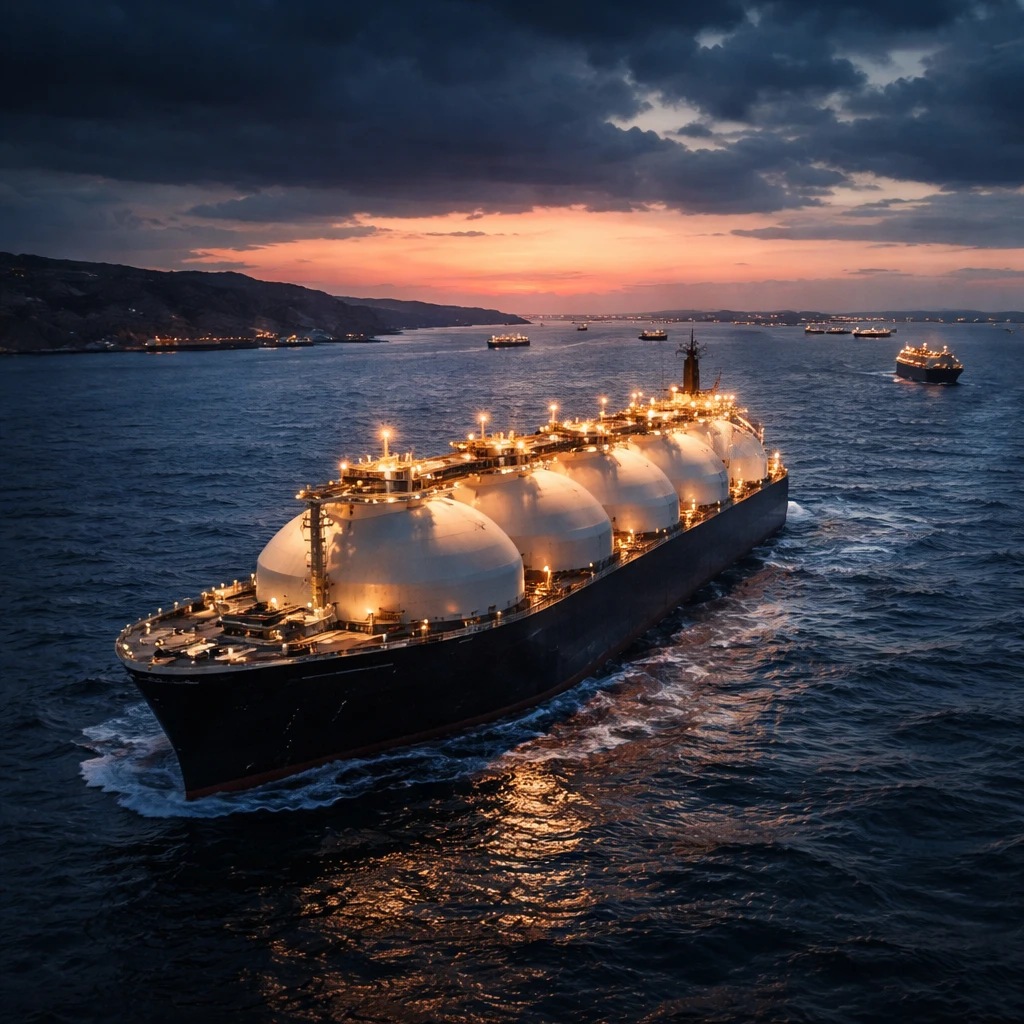
While pipeline deliveries from Norway supply the baseline demand for many European consumers, regasified liquefied natural gas (LNG) remains critical to cover structural shortfalls and meet peak space-heating loads. Market participants noted that rerouting of LNG tankers around Africa's Cape of Good Hope has already sharply reduced prompt deliveries from the Middle East to Northwest European regasification terminals, tightening near-term availability.
Market implications and near-term outlook
Financial and commodity markets quickly re-priced risk following the U.S. strikes and the collapse of diplomatic optimism, with traders rebuilding protective positions in both gas and crude. The immediate moves in TTF and NBP reflected an elevated premium for the possibility that geopolitical developments could curtail LNG shipments through the Strait of Hormuz, at least in the near term.
Looking ahead, the interaction between any sustained disruption to Persian Gulf LNG exports and incoming winter weather will be central to how prices evolve. With storage below typical seasonal levels and forward contracts already reflecting a meaningful probability of a severe squeeze, markets will be sensitive to any further signals on shipping routes, diplomatic progress or weather forecasts.
For utilities, industrial gas users, and broader energy markets, the combination of geopolitical risk and low inventory buffers suggests a higher potential for price volatility this winter. Market participants will likely monitor developments around Qeshm Island, regional negotiations, and terminal reception schedules closely as the season progresses.