
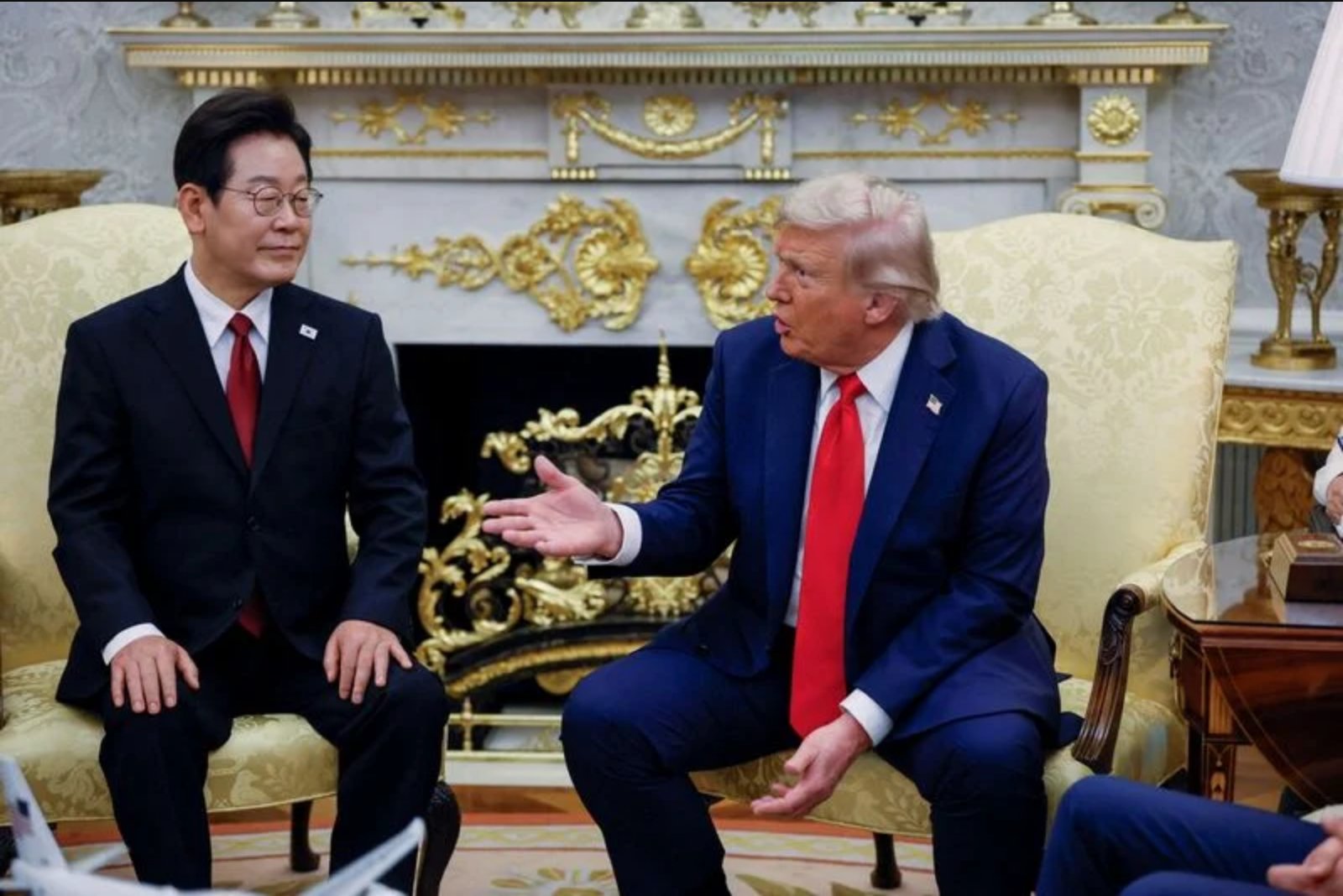
South Korea and the United States are in the final stages of shaping how Seoul will deliver on a pledged $350 billion investment package agreed as part of a trade arrangement that reduced US tariffs on South Korean goods to 15%.
The total package totals $350 billion, of which $150 billion has been designated for shipbuilding. The allocation and structure of the remaining $200 billion in strategic investments are still being worked out, according to briefings given to South Korean lawmakers.
Officials from South Korea's industry ministry told lawmakers on Tuesday that President Donald Trump is expected to make a final announcement. The plan still faces a formal review by a US government investment committee and further negotiation with US Commerce Secretary Howard Lutnick, the ministry said.
This report compiles the projects presently under discussion, drawing on media reporting and summaries provided to members of South Korea's legislature.
Texas gas-fired power plant
The first project identified under the investment framework is a large combined-cycle gas power plant in Encinal, Texas, with a capacity exceeding 6 gigawatts. The plant is intended to supply electricity to artificial intelligence data centres and semiconductor manufacturing facilities.
According to information relayed to lawmakers, South Korea's industry ministry said Seoul plans to invest more than $20 billion in the Texas project. Lawmakers were told anticipated returns from the project are in the range of about $43 billion to $45 billion over an approximately 20-year horizon.
Reporting by Yonhap News Agency, citing the industry ministry, indicates South Korea would provide all the funding for the plant while initial ownership would be split equally between the two countries. US officials, however, are described as seeking a longer-term ownership arrangement in which the US side would hold a 90% stake and the South Korean side a 10% stake, according to a lawmaker cited by Yonhap.
Lawmakers identified this Texas power plant as the first project confirmed under the broader $350 billion investment package.
Up to eight nuclear reactors and a stake in Westinghouse
Seoul and Washington are discussing a plan to construct as many as eight large nuclear reactors in the United States. Media reports including Korea Economic Daily indicate a per-reactor cost of about $15 billion, meaning the nuclear component could consume a substantial portion of the investment package.
Briefings to lawmakers outline a potential split in reactor technology: six units using Westinghouse's AP1000 design and two units based on South Korea's APR1400 technology. If the APR1400 units proceed, they would represent the first deployment of South Korean-designed reactors on US soil, lawmakers were told.
In parallel negotiations, Seoul is considering acquiring an equity stake in US nuclear company Westinghouse. Discussions around a 5% to 10% stake are ongoing, according to lawmakers. The industry ministry told lawmakers that South Korea would retain voting rights even with a stake in that range, as reported by Yonhap.
Estimates provided in media reporting say the value of such an investment would hinge on Westinghouse's valuation ahead of a planned initial public offering, and could amount to $15 billion to $20 billion. That same reporting noted an illustrative calculation in which a 15% stake would translate to roughly $2.25 billion to $3 billion.
Current ownership of Westinghouse's equity is held by Canadian asset manager Brookfield and its partners, who own 51%, with Cameco holding the remaining 49%.
Alaska LNG participation under consideration
South Korea is also in talks about participating in the Alaska liquefied natural gas (LNG) project, a large pipeline and export initiative that has faced delays. The Alaska LNG development has been estimated in reporting at a value of $50 billion and would transport gas sourced from northern Alaska by way of a roughly 1,300-kilometre pipeline to a terminal at Nikiski for export to Asian markets.
Seoul has approached the Alaska plan cautiously. Industry Minister Kim told parliament last November that the Alaska LNG scheme is a "high-risk business," and South Korean media have said Seoul has sought to include Alaska LNG in the investment memorandum without committing to a binding participation agreement. Lawmakers emphasized that participation remains under discussion and no final decision has been reached.
Other projects under discussion
Lawmakers reported additional areas of potential cooperation under discussion between the two governments. One involves US proposals relating to the reprocessing of spent nuclear fuel; a ruling party lawmaker, Yoon Hu-duk, said Washington has proposed a project to process 4,000 tons of spent fuel. Lawmakers said the US has linked this proposal to South Korea's ambitions to build nuclear-powered submarines and to secure necessary fuel supplies.
At a leaders' summit last November, the two countries agreed on a joint factsheet in which Washington approved South Korea's plans to build a nuclear-powered submarine and to work closely with Seoul on fuel procurement, lawmakers noted.
Another area identified for potential investment is carbon capture, utilisation and storage (CCUS). Lawmaker Yoon highlighted CCUS as an item under consideration; reporting notes that major US energy firms have already attracted significant investment in this technology space.
Officials in both capitals continue to refine the terms, ownership structures and financing arrangements for the projects listed above. The package will require additional intergovernmental review and negotiation before any commitments are finalized.