
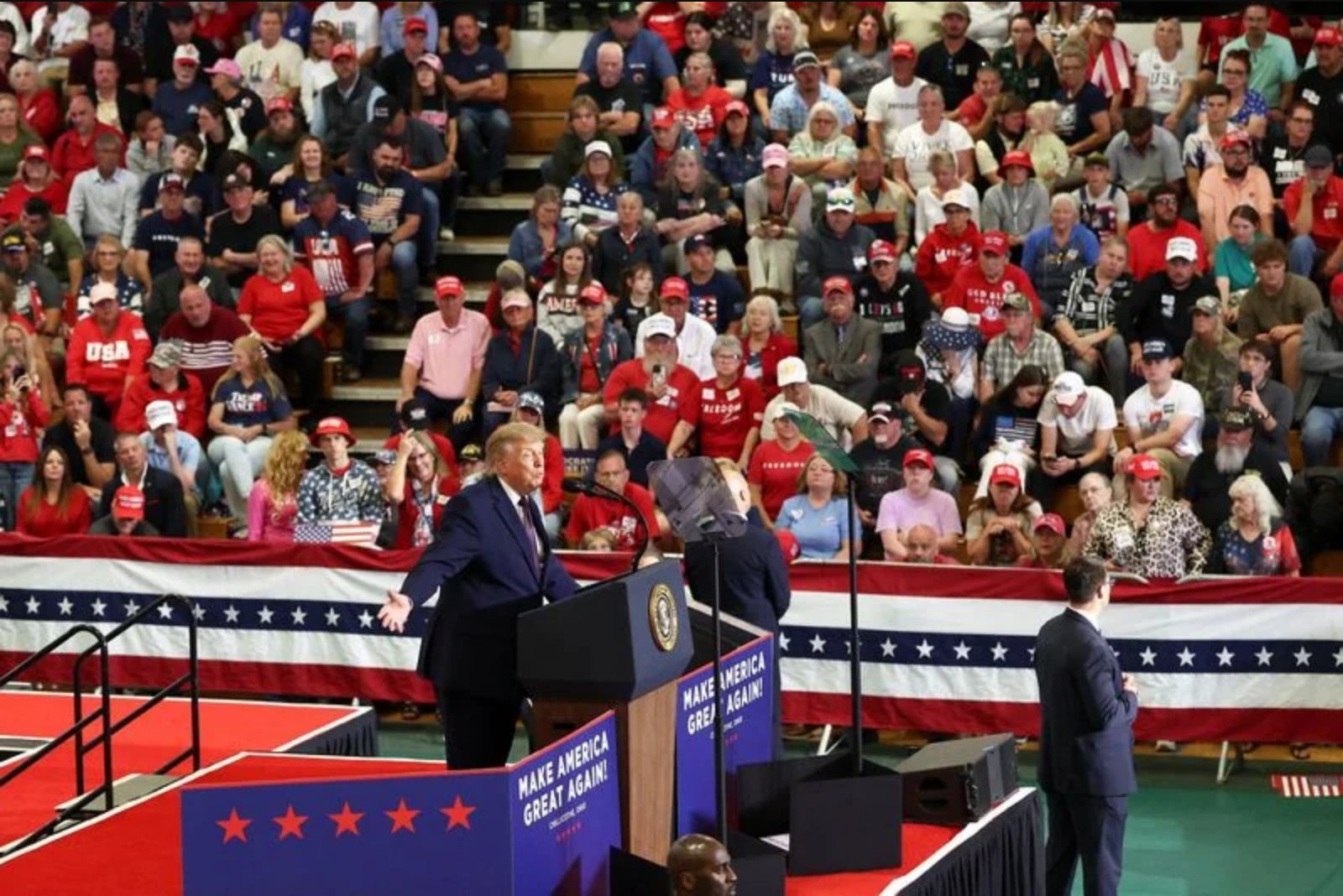
As the midterm election approaches, President Trump has made a series of high-profile stops to showcase what he describes as landmark investments in American manufacturing, energy and jobs. He has used these events to argue that his economic platform is producing large-scale commitments from domestic and foreign companies. But a closer look at those projects shows many remain tentative, dependent on further negotiation, or years away from generating the promised economic benefits.
What the president is highlighting
Across multiple campaign appearances, the president has pointed to a list of projects including an Alaska liquefied natural gas (LNG) pipeline, a planned steel complex in Iowa, a power generation plant in Texas, a pharmaceutical-ingredients revival in Kentucky and a quartz mine and processing operation in North Carolina. He has presented these announcements not only as validation of his economic agenda, but at times has tied federal support or direct payments to Republican successes at the ballot box.
These events follow a familiar political pattern where presidents use the final stretch before midterm elections to emphasize legislative and economic achievements. This campaign cycle has seen the strategy extended beyond traditional highlights to include the promotion of prospective investments and even proposed payments that would need congressional approval.
Gaps between announcement and execution
Several of the projects cited by the president contain significant caveats when examined more closely. After the president announced what he described as a $54 billion South Korean investment tied to the Alaska pipeline late in September - part of a broader $200 billion pledge - officials in Seoul said no final decision had been made on whether to invest or how large any commitment would be. Questions about financing and timelines also surround a Texas power plant that was mentioned as part of the same South Korean package; South Korean media cited unresolved issues over ownership, power-purchase agreements and permitting.
The Alaska pipeline plan that was promoted would be led by developer Glenfarne Group and envisions an 807-mile (1,300-km) line to carry natural gas for export to Asian markets. The concept has been discussed publicly for decades and prior efforts have faltered over cost and the uncertainty of export demand sufficient to justify the investment.
In Iowa, the proposed $15 billion steel complex led by Mesabi Metallics and its Indian parent Essar Group has been showcased as an example of tariffs and industrial policy restoring American manufacturing. But Mesabi Metallics has said production would not begin until 2030. The company has also noted it has not finalized a deal with the state, that a site selection is still under review, and that it is working to secure full funding. Iowa lawmakers previously approved more than $1.3 billion in tax incentives for the project, with those benefits tied to operational, hiring and production targets.
Similarly, the quartz project in North Carolina involving Sibelco was announced at a rally with the president and the commerce secretary as a “hundreds of millions of dollars” investment. Soon after the event, the company clarified the federal government’s direct investment would be $56 million and that the agreement remained subject to due diligence, continued negotiation, and federal and state approvals before capital deployment could proceed. Sibelco also described its agreement as still requiring "further negotiations."
Campaign promises and conditional payouts
Beyond investment announcements, the president has made election-linked promises for direct payments and policy shifts. One prominent pledge on September 9 proposed a $5,000 dividend to each U.S. adult if Republicans keep control of Congress - a plan that would need congressional approval and has seen limited traction among lawmakers. The president has also tied a promise to allow year-round sales of E15 fuel to the reelection of a specific Republican senator, stating that the policy would be enacted if voters reelect Senator Roger Marshall of Kansas.
Campaign messaging has at times explicitly connected federal funds to electoral outcomes. The president pledged $100 million in Pentagon funding to support Anthea, a pharmaceutical-ingredients maker, to reopen a shuttered drug plant in Kentucky, linking the allocation to Republican success in the midterms. Details about the funding remain sparse, and the office of Kentucky Governor Andy Beshear said it had no knowledge of the project.
Political context, reactions and public sentiment
The rush to publicize potential investments underscores Republican urgency to demonstrate economic progress on employment and energy costs ahead of voters casting ballots. Opinion polling cited as Reuters/Ipsos indicates many voters remain frustrated by the cost of living, even as candidates emphasize future projects and pledges.
Critics have questioned the timing and substance of the announcements. Todd Tucker, director of industrial policy and trade at the Roosevelt Institute, said the flurry of pronouncements shortly before an election can feel theatrical, noting concerns over tariff policies and the use of promising investments as campaign tools. Supporters of the president’s approach point to the administration’s efforts to secure investments and jobs, with White House spokeswoman Taylor Rogers saying the president has pursued "an aggressive, pro-growth economic and energy dominance agenda" and has a record of attracting investments and reviving manufacturing.
Announcements tied to tight races
Many of the investments promoted during campaign events were announced in the context of close Republican contests. When the president unveiled the $200 billion South Korean investment package that included the Alaska pipeline, Alaska Senator Dan Sullivan - who is in a tight reelection contest - appeared with the president. Seoul later indicated that no final investment decisions had been taken.
In Iowa, the president made appearances with Republican Senate candidate Ashley Hinson and others while promoting the Mesabi Metallics steel plan. That project continues to face questions over financing and the final site. In North Carolina, the president and the commerce secretary announced the Sibelco investment, which the company subsequently clarified would involve a smaller federal contribution and require additional approvals.
Where things stand
- Alaska LNG pipeline - A developer-led proposal remains under discussion; South Korea indicated no final investment decision had been made; prior iterations stalled over costs and export demand uncertainties.
- Iowa steel complex - Mesabi Metallics says production would not start until 2030; the company has not finalized a state deal and is still securing funding and selecting a site; Iowa lawmakers approved tax incentives tied to performance.
- Texas power plant - Mentioned as part of the South Korean package, but financing, ownership, power-purchase agreements and permitting questions remain unresolved.
- Kentucky pharmaceutical project - A $100 million Pentagon funding pledge tied to midterm success was made; details are limited and the governor’s office reported no knowledge of the project.
- North Carolina quartz project - Initially described as "hundreds of millions" by campaign officials; Sibelco later said the federal contribution would be $56 million and that further negotiation and approvals are required.
Conclusion
The president’s campaign appearances have emphasized large-scale investments and potential payouts as evidence of economic momentum. Yet multiple projects remain conditional on unresolved financing, pending negotiations, regulatory approvals, or multi-year timetables before they deliver jobs or other local economic benefits. The approach represents a political bet that voters will reward promises of future investment, even as many households continue to struggle with the cost of living and energy prices influenced by international developments.