
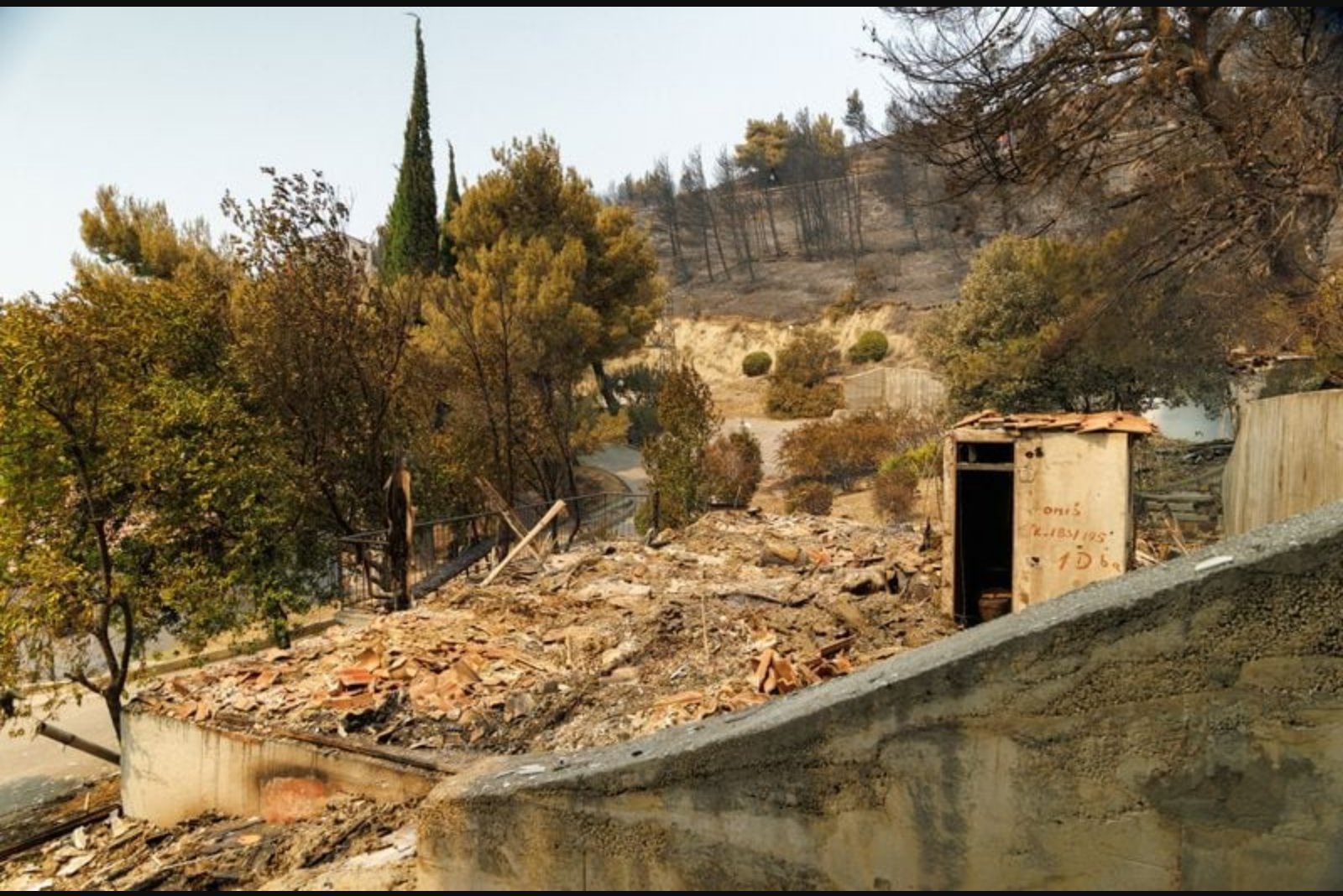
A series of wildfires swept through tourist and rural areas across Europe, collapsing night skies into red glows, forcing thousands to flee and leaving a trail of destruction. In Croatia, flames tore through homes near a popular coastal resort, injuring dozens and driving mass evacuations, while in northern Greece seaside residents were carried to safety by boats as forests and smoke threatened settlements.
Authorities in Croatia said a wildfire burned through settlements and trees across more than 1,000 hectares in the vicinity of Omis, a scenic town on the Dalmatian coast bordered by rocky hills and forests. The blaze turned the night sky red and inflicted substantial property damage. "The fire swept everything in its way ... there has been huge material damage," Chief Fire Commander Slavko Tucakovic said. Local officials reported that 40 people were treated by ambulance services, seven of them in serious condition, and about 1,200 people were evacuated from the area.
By the following morning the Croatian fire appeared to have calmed, with officials noting no open flames at that time. Still, the overnight destruction left significant damage to homes and landscapes in the resort area.
In northern Greece, residents of the seaside town of Siviri fled by sea as fire consumed nearby woodland. Videos and reports showed people wearing face masks, carrying children and pets, boarding dinghies, small boats and fishing vessels to escape as columns of smoke turned a once clear sky dark grey. The coast guard said more than 300 people had been evacuated by boat from the peninsula south of Thessaloniki.
Greek authorities deployed substantial firefighting resources to the area: more than 140 firefighters on the ground, nine aircraft and seven helicopters fighting the flames, while fishing vessels and small boats assisted with evacuations.
Fires were not limited to the Balkans. In southwestern France, officials evacuated 525 people from the village of Luglon in the Landes region after a wildfire broke out near an area already hit by major blazes earlier this summer. In England a large grass fire reportedly engulfed houses, and in Spain crews removed the remains of three medieval kings from a monastery in the Aragón region that was under threat from wildfire.
The European Union's Copernicus Climate Change Service issued an outlook warning of "very extreme" wildfire conditions across a broad swath of central and eastern Europe. The warning also highlighted additional pockets of very extreme risk over southern Britain, Ireland, northern France and southern Sweden in its forecast through the week to August 19.
Weather and climate data released alongside these warnings underscored how anomalously hot conditions have been. The average high temperature across Western Europe on Friday was forecast at 31.2 degrees Celsius, about 8 C higher than the typical average from 1961 to 1990, according to Reuters Climate Monitor data. For Europe as a whole, temperatures were shown to be 1.6 C above the 1961-1990 average.
Record-breaking heat and drought, which scientists link to climate change, have created especially conducive conditions for wildfires across the continent this summer, with France, Spain and Greece among the worst affected. The Balkans region has also endured several heatwaves over recent weeks, compounding risks.
The prolonged hot and dry period is already affecting agriculture. French industry group AGPM warned that French grain maize production is on course to fall to its lowest level since the 1970s as severe summer heat and drought wither crops.
Emergency services across affected countries have been stretched as they combat multiple blazes and coordinate evacuations. Local officials and climate monitoring services cautioned that the prevailing conditions - high temperatures coupled with dry vegetation - continue to pose a significant fire risk across a wide geographic area.
Context and immediate developments
- Croatia: More than 1,000 hectares burned around Omis; 40 people treated for injuries, seven seriously; about 1,200 evacuated.
- Greece: More than 300 people evacuated by boat from Siviri; over 140 firefighters, nine aircraft and seven helicopters deployed; fishing vessels assisted evacuations.
- France and Spain: 525 people evacuated from Luglon in the Landes region; remains of three medieval kings removed from an Aragón monastery threatened by wildfire.
The situation remains fluid in many locales as firefighting efforts continue and authorities monitor weather conditions underpinning the heightened danger.