
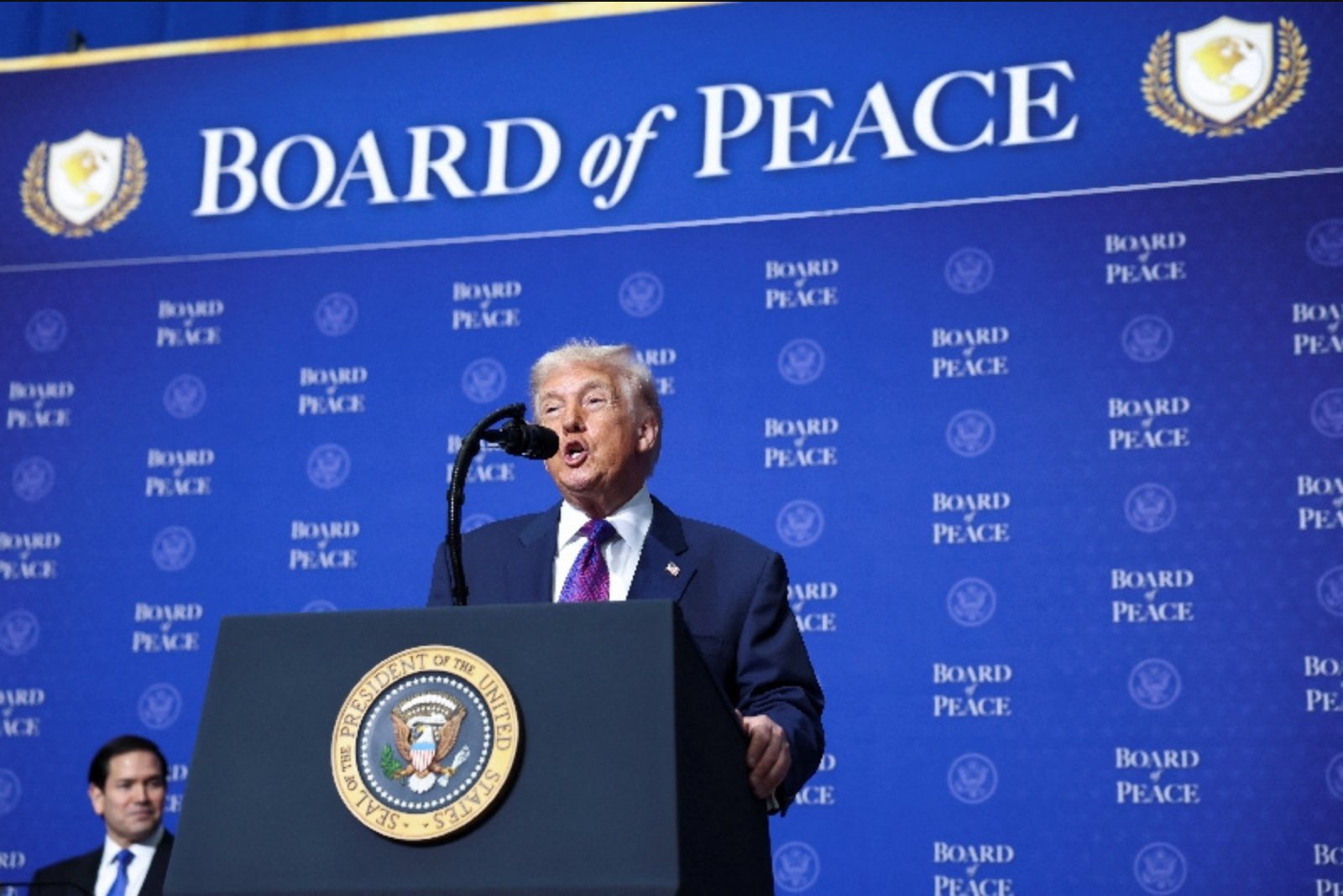
The U.S.-initiated Board of Peace, created to manage an ambitious $70 billion plan to rebuild Gaza and oversee a new transitional government there, told the United Nations Security Council that a discrepancy between pledges and actual cash transfers needs to be resolved quickly.
In a report submitted to the Security Council on May 15 and reviewed by this newsroom, the board said that "the gap between commitment and disbursement must be closed with urgency." It added that funds which have been committed but not yet disbursed represent the difference between a framework that exists on paper and one that delivers on the ground for the people of Gaza.
The board used the report to call on states that have signed up to its effort - and others - to make contributions without delay, and to urge those that have pledged funds to accelerate their disbursement processes. The document reiterated that the total amount pledged to the board remains at $17 billion, but it did not specify how much of that has been transferred or how large the shortfall between promises and payments might be.
The funding is intended to cover both the physical reconstruction of Gaza after prolonged bombardment and the operational costs of a U.S.-backed transitional government that the plan envisions. The board emphasized the urgency by highlighting the scale of damage it says Gaza has suffered: it reported that roughly 85% of buildings and infrastructure in Gaza have been destroyed and estimated that approximately 70 million tonnes of rubble will need to be cleared.
Although the board said in its May 15 report that committed funds not yet disbursed create a risk to delivery on the ground, it did not provide a breakdown of received versus outstanding amounts. The board also did not respond immediately to requests for further comment on the figures cited in the report.
Several states have publicly pledged funds to the board, including the United States, Saudi Arabia, the United Arab Emirates and Qatar, as well as Morocco, Uzbekistan and Kuwait. The board is recognised by the U.N. Security Council, but many major powers have not signed on; membership to the board so far includes Washington’s principal Middle Eastern allies and a number of midsize and smaller states.
Earlier reporting had indicated that only a small fraction of the $17 billion pledged had actually been received by the board, a claim the board later rebutted in a statement, describing itself as an "execution-focused organisation that calls capital as needed" and asserting that there "are no funding constraints." The board said the funding model is designed to call capital when required rather than holding all funds up front.
That same earlier reporting also said that discussions are underway within the U.S. government about whether to ask Israel to transfer some tax revenues it has been withholding from the Palestinian Authority to the Board of Peace to help finance reconstruction. The board’s report did not address that possibility directly.
Despite a ceasefire in October, the broader political and security situation remains unresolved: the report notes that Hamas has refused to disarm and that Israeli military forces continue to operate in large parts of Gaza while air strikes persist. Those conditions have contributed to delays in implementing the reconstruction plan and in moving from commitments to actual projects on the ground.
Concerns about transparency and oversight have made some states reluctant to channel reconstruction financing through the board. Officials from European and Asian governments cited reservations about the board’s governance arrangements and preferred to route funds through established multilateral institutions such as United Nations mechanisms instead.
Under the board’s charter, member states would be limited to three-year terms unless they pay a $1 billion fee each to fund the board’s activities and secure permanent membership. The report did not indicate whether any state has paid that fee, leaving the permanence of membership and the board’s long-term funding model unclear.
The board framed its appeal in technical, operational terms: accelerated disbursement, it argued, is the practical difference between a plan that exists on paper and one that can deliver reconstruction, rubble removal and governance support for Gazans. But the report's lack of a transparent accounting of disbursements and its acknowledgement of persistent political hurdles underscore unresolved questions about how the $70 billion program would be financed and executed.