
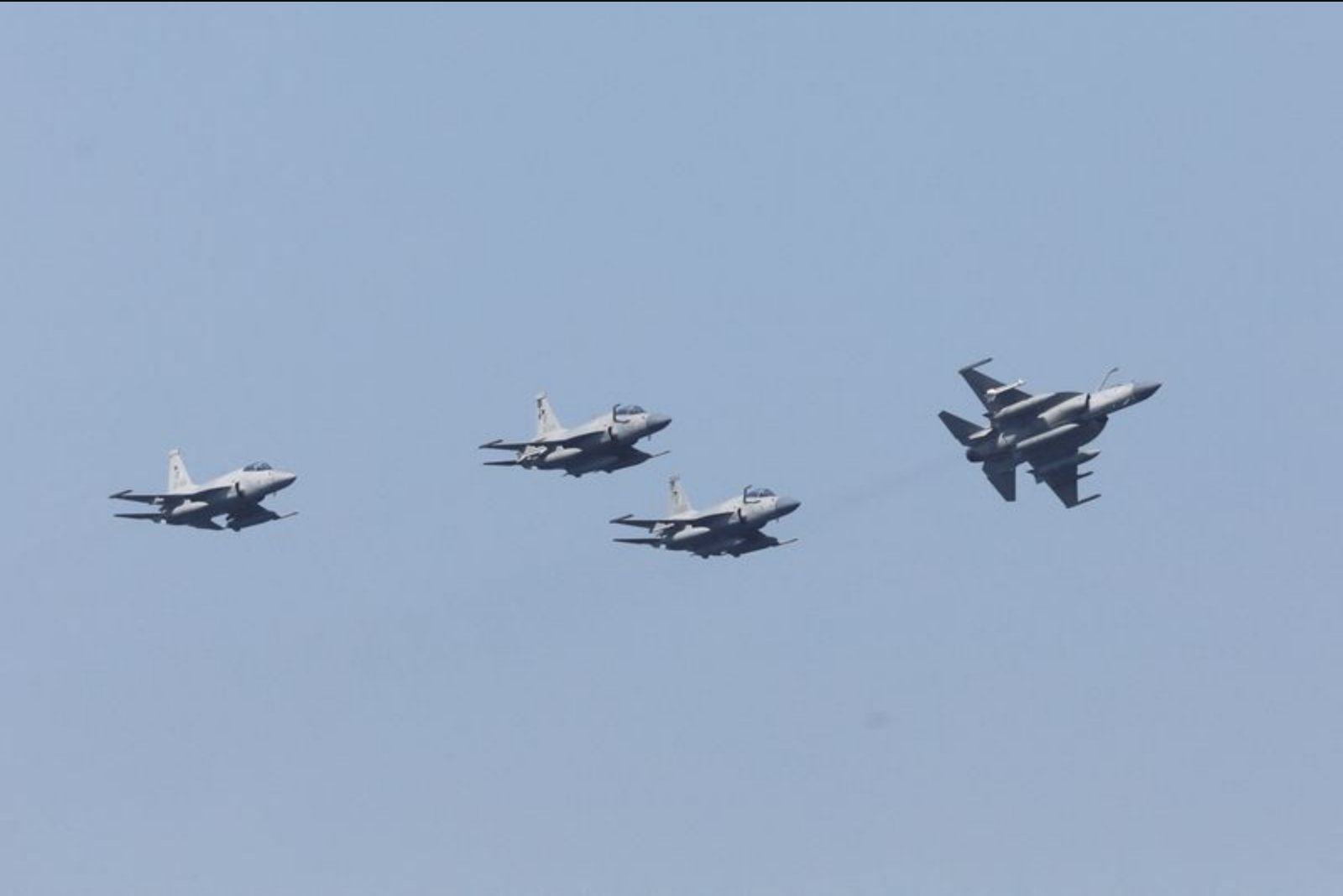
Islamabad, April 20 - Pakistan has suspended a planned $1.5 billion package to supply jets and other weapons to Sudan after Saudi Arabia signalled that it would not finance the purchase and requested that the deal be terminated, according to two Pakistani security sources and a diplomatic source.
The halted transaction was one of several defence sales Pakistan had been negotiating, following heightened international attention on Pakistani jets and weapons systems after skirmishes with India in May of last year. Officials and security sources said Saudi officials communicated the decision to Islamabad after withdrawing the prospect of financing the acquisition.
The conflict between Sudan's regular army and the paramilitary Rapid Support Forces (RSF) has generated what has been described as the world's worst humanitarian crisis for roughly three years. The fighting has become a focal point for competing foreign interests, and has put pressure on the stability of the Red Sea country, which is also a notable gold producer.
One security source said that Saudi Arabia had signalled Pakistan should terminate the agreement after dropping the idea of providing funding. The same source said a March meeting in Riyadh between Sudanese army leaders and Saudi authorities led to the termination of Saudi financing for the deal.
Officials contacted for comment did not immediately respond. The Saudi government media office did not reply to a request for comment. Sudan's armed forces and Pakistan's military also did not immediately respond to requests for comment. Pakistan's military and air force had not previously publicly confirmed that a sale to Sudan was in progress.
Context on Gulf involvement and other deals
Saudi Arabia is one of Pakistan's closest allies and a key provider of loans and financing that have supported Islamabad's strained economy. The bilateral relationship has strengthened since the signing last year of a mutual defence pact that treats aggression against either party as an attack on both.
Security sources said that some Western countries had, in private discussions, urged Riyadh to avoid involvement in proxy confrontations in Africa. In various regional conflicts, Saudi Arabia and the United Arab Emirates have backed opposing sides; both Gulf states publicly say they support diplomatic solutions. According to the sources, Saudi Arabia has thrown its weight behind Sudan's army, while the UAE has been accused of providing logistical support to the RSF, allegations the UAE denies.
One security source cautioned that the withdrawal of Saudi financing has broader implications for other defence transactions. A second source said a separate $4 billion agreement with the Libyan National Army, reported previously, was also at risk as Riyadh reviews its strategy in both Libya and Sudan.
Key points
- Pakistan has paused a $1.5 billion arms-and-jets sale to Sudan after Saudi Arabia declined to finance the purchase and requested termination.
- The suspension follows a March meeting in Riyadh between Sudanese army leaders and Saudi officials, during which Saudi funding was withdrawn.
- Impacted sectors include defence exporters in Pakistan, international financing channels supporting Islamabad, and commodity markets tied to Sudan's mining sector, given Sudan's status as a major gold producer.
Risks and uncertainties
- Financing uncertainty - the withdrawal of Saudi backing introduces funding risk for the Pakistan-Sudan transaction and may imperil other defence deals being negotiated by Pakistan, affecting defence exporters and associated supply chains.
- Geopolitical recalibration - Saudi reassessment of its involvement in African conflicts could alter the course of Gulf support to parties in Sudan and Libya, creating uncertainty for regional security arrangements and defence market demand.
- Escalation and humanitarian consequences - ongoing fighting between Sudan's army and the RSF continues to drive a severe humanitarian crisis and heightens the political sensitivity of any arms transfers to the region.
This report is based on information provided by security and diplomatic sources who described the financing discussions and meetings that led to the suspension of the sale. Public comment was not provided by the governments and militaries cited at the time of reporting.