
Canada's headline inflation rate climbed to 2.4% year-on-year in March, with monthly consumer prices up 0.9%, Statistics Canada reported. The annual rate returned to a level last seen in December, while the monthly increase was the largest since 14 months ago.
The surge in prices was driven in part by higher crude oil costs after the Iran war, which began at the end of February, reduced shipments through the Strait of Hormuz. That disruption removed almost a fifth of global oil supply, contributing to a marked increase in gasoline prices at the pump and tightening household budgets.
Analysts surveyed by Reuters had penciled in a slightly different outcome, forecasting an annual consumer price index of 2.6% versus the prior month's 1.8%, and expecting monthly inflation to reach 1.1% after a 0.5% rise in February. The actual figures came in a touch lower on the annual and monthly measures, but still signaled meaningful upward pressure in March.
Canadian inflation has been relatively tame for more than a year, hovering near the mid-point of the Bank of Canada's 1-3% target range. Bank of Canada Governor Tiff Macklem said last week that the central bank was not worried about a short-term spike in inflation expectations, indicating policymakers are watching the recent move but not necessarily interpreting it as a persistent shift.
Gasoline was a principal driver of the monthly jump: pump prices rose 5.9% compared with March of last year and surged 21.2% month-on-month in March. The year-on-year gasoline figure was partly muted because prices had been higher in the same period last year following a carbon levy that was dropped in April 2025, which restrained the annual comparison.
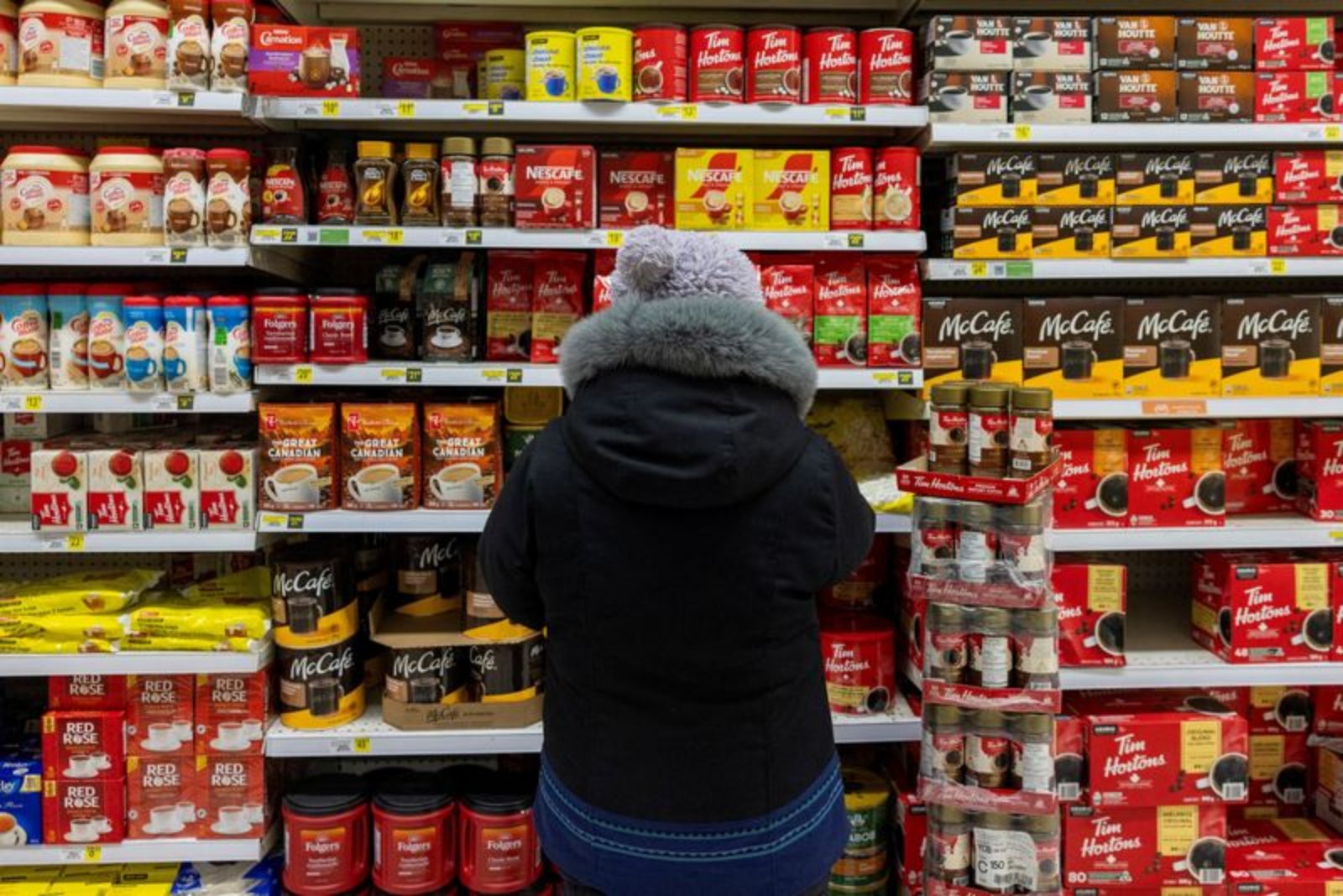
Higher fuel costs fed through to the broader transportation category - the second-largest component in the CPI basket - which rose 3.7% in March compared with a year earlier. Food was another significant contributor to the headline increase. Prices for food purchased from stores climbed 4.4% year-on-year in March, up from a 4.1% annual increase in February.
Within grocery categories, fresh vegetables saw particularly strong inflation, with prices up 7.8% in March - the largest increase since August 2023, according to Statistics Canada.
Because headline inflation can be volatile from month to month, the Bank of Canada and economists monitor core measures that exclude the most extreme price movements. The closely watched CPI-median, which tracks the centermost component of the CPI basket, held steady at 2.3% from the prior month. CPI-trim, which strips out the largest price changes, edged down to 2.2% in March.
Financial market responses were muted. The Canadian dollar strengthened slightly, trading up 0.04% at C$1.3687 to the U.S. dollar, equivalent to 73.06 U.S. cents. Two-year government bond yields slipped 1.6 basis points to 2.755%.
Money market pricing suggested no change in Bank of Canada interest rates this month, while participants priced in a 25 basis point hike by December.
Summary
March's CPI reading showed an uptick to 2.4% year-on-year and a 0.9% monthly rise, led by gasoline and grocery prices. Core inflation measures remained near recent levels, and markets expect no immediate rate move from the Bank of Canada.
Key points
- Headline CPI rose to 2.4% year-on-year in March, with a 0.9% monthly increase - the largest monthly jump in 14 months.
- Gasoline prices were a major driver, increasing 5.9% year-on-year and 21.2% month-on-month, boosting transportation costs by 3.7% annually.
- Food prices, especially groceries and fresh vegetables, also contributed materially, with store-bought food up 4.4% year-on-year.
Risks and uncertainties
- Further crude oil supply disruptions tied to the Iran war could sustain higher gasoline prices, pressuring consumer budgets and transport costs.
- Volatility in food prices, notably for fresh produce, could keep headline inflation elevated and affect household spending on groceries.
- Core inflation measures remain a key uncertainty for policymakers; while currently stable, persistent shifts in gasoline or food costs could complicate the Bank of Canada's assessment.
Tags: inflation, Canada, gasoline, BoC, currency