
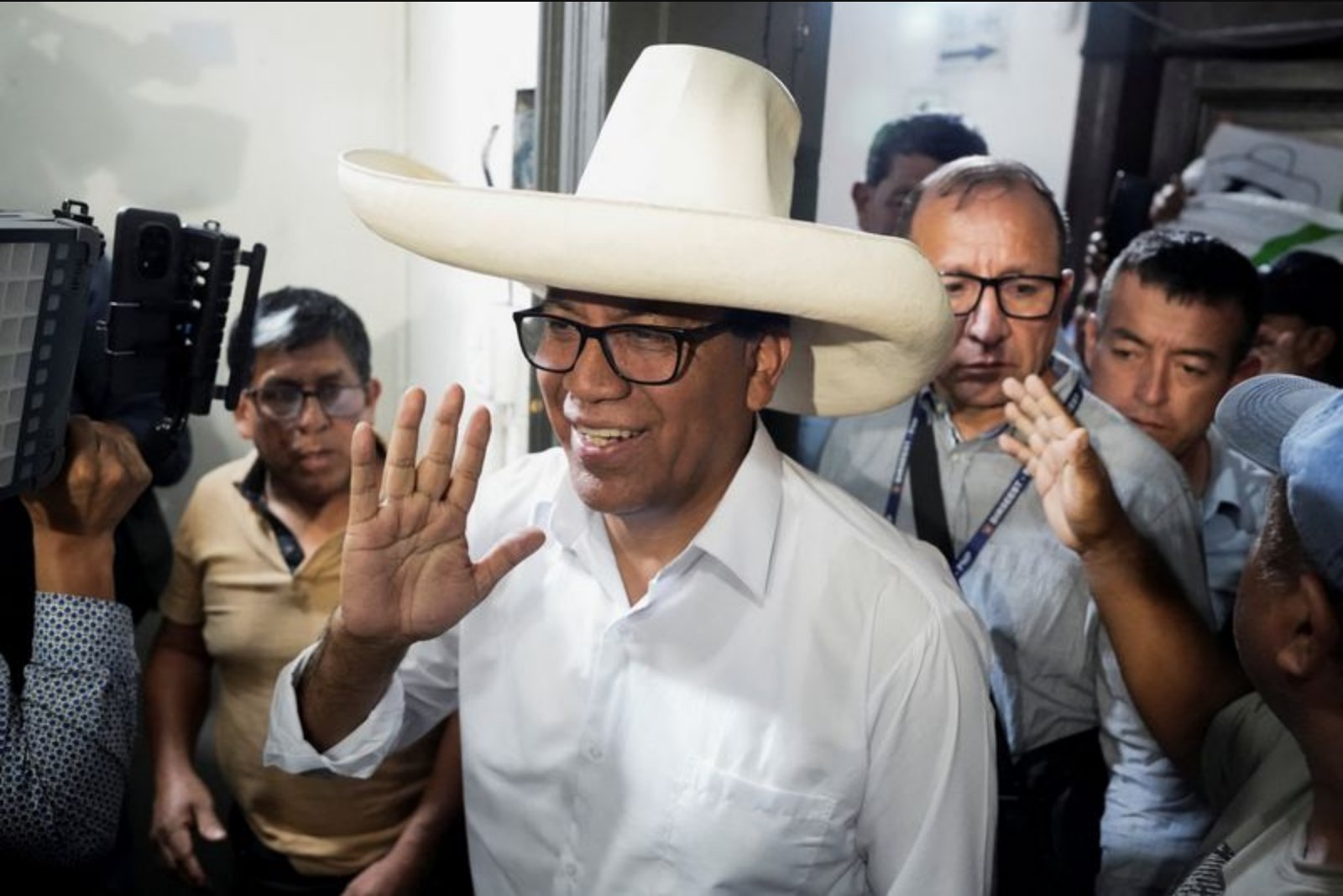
As tabulation continued on Wednesday in Peru's presidential contest, the race for the second runoff slot tightened, moving leftist congressman Roberto Sanchez ahead of a right-wing rival and worrying investors about the makeup of a potential June 7 runoff.
Data from Peru's electoral body ONPE showed that with just over 91% of ballots counted Sanchez held 12.1% of the vote, narrowly outpacing former Lima mayor Rafael Lopez Aliaga, who had 11.9%. Center-left candidate Jorge Nieto trailed in fourth with 11.1%.
Conservative former congresswoman Keiko Fujimori led the field at 17% from Sunday’s vote and is positioned to advance to the runoff. If the preliminary standings hold, Fujimori will move on to a June 7 head-to-head for the presidency in her fourth campaign for the office.
Markets respond
Financial markets reacted sharply to the evolving tallies. Peru’s sol weakened by 1.4% against the U.S. dollar, and the MSCI Peru stock index fell 6.6% on Wednesday. Market commentators linked the sell-off to concern that Sanchez could secure the second place needed to contest Fujimori in the runoff.
"Sanchez represents more risk for the market," said Alberto Arispe, who leads the Peruvian brokerage Kallpa SAB, reflecting investor unease about the policy implications of a Sanchez-Fujimori runoff.
Who is Roberto Sanchez?
Sanchez, 57, is a congressman representing the Together for Peru party and is broadly described as left-leaning. He has campaigned for rewriting the constitution to create what he terms a "plurinational" state aimed at granting greater voice to Indigenous communities who he says have been excluded from national decision-making.
Sanchez is an ally of former president Pedro Castillo, who was jailed on rebellion and conspiracy charges after a brief presidency that ended in a failed attempt to dissolve Congress in 2022. Castillo has endorsed Sanchez from prison; Sanchez in turn has publicly called for Castillo’s release, posting on X on Wednesday: "Let no constitutional president ever again be removed from office or arrested."
Fujimori and other contenders
Fujimori, 50, leads the Popular Force party and anchors a right-wing bloc in Congress. Her campaign has emphasized courting foreign investment and a law-and-order platform, positioning her as pro-U.S. Observers noted the echoes of militarized security policies tied to her father's presidency. Her father governed from 1990 to 2000 and was later jailed for human rights abuses, a fact that has framed aspects of her political profile.
Rafael Lopez Aliaga, 65, of the Popular Renewal party, is an ultraconservative businessman and a former Citibank corporate banker. Known by the nickname "Porky," he opposes abortion, same-sex marriage and what he calls "gender ideology." Jorge Nieto, a center-left candidate, was in fourth with 11.1% according to ONPE.
Claims of irregularities and observer findings
Count-related allegations of fraud circulated following the vote, contributing to a tense political atmosphere. Both Lopez Aliaga and Sanchez voiced concerns about the integrity of the counting process. Lopez Aliaga also shared a post calling on Fujimori to request annulment of the proceedings.
At a press conference on Tuesday, European Union election observers said they had found no concrete evidence to substantiate the fraud claims that have been circulating since Sunday.
Political backdrop and uncertainty
The close margins underscore a broader climate of instability in Peru, a country that has seen frequent presidential turnover in recent years. As ballots continued to be counted and candidates disputed aspects of the process, economic indicators and investor sentiment showed immediate sensitivity to the unfolding political picture.
The coming days of counting will determine whether Sanchez holds his slim advantage and advances to face Fujimori in the June 7 runoff, or whether Lopez Aliaga overtakes him for the second berth.