
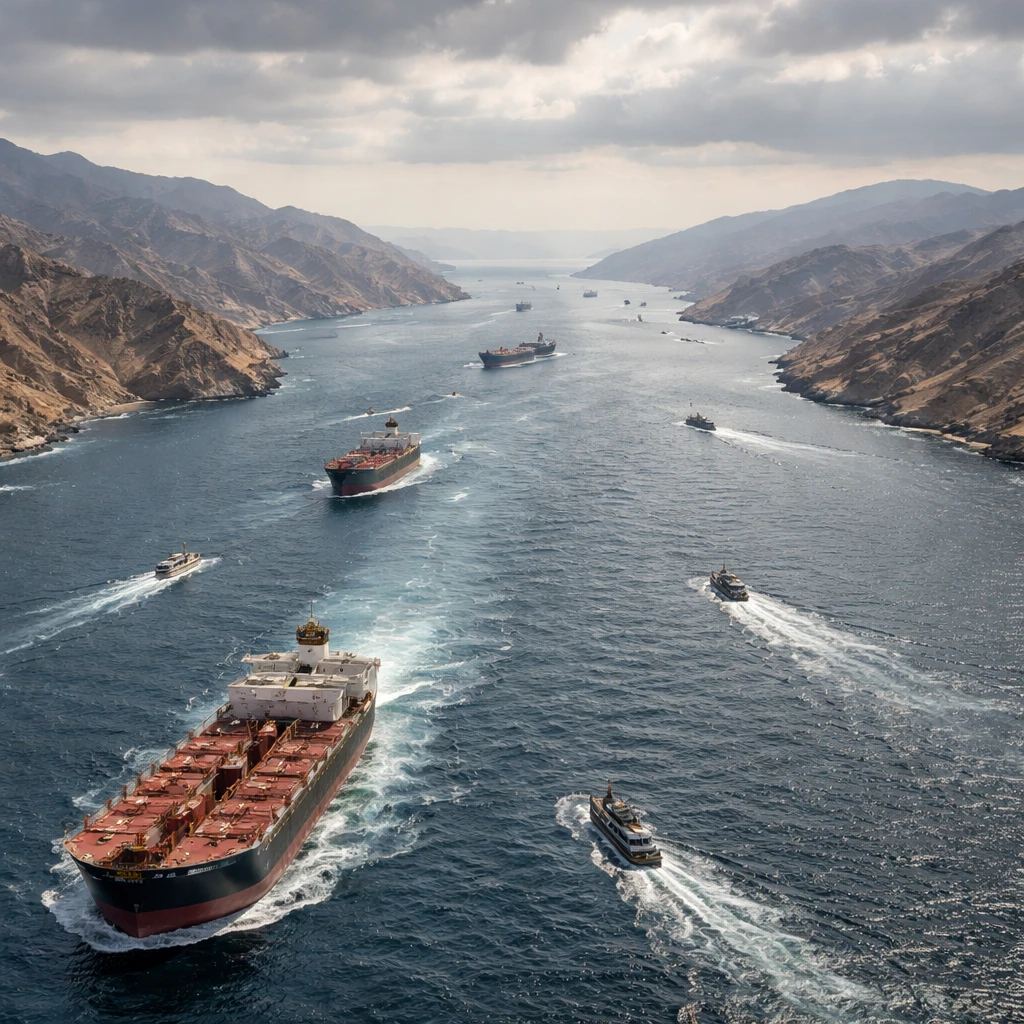
A source briefed by Tehran said on Wednesday that Iran may offer to allow vessels to navigate the Omani side of the Strait of Hormuz without risk of attack as part of proposals under discussion with the United States. The statement frames the potential concession as contingent on whether Washington is willing to satisfy Tehran’s demands.
The disruption tied to the U.S.-Israeli war with Iran has created the largest-ever interruption of global oil and gas shipments, the source said, tied to Iran’s actions that have interrupted traffic through the strait. That waterway handles about 20% of the world’s oil and liquefied natural gas flows, making its status central to energy markets and global trade.
Since the wider conflict began on February 28, hundreds of tankers and other ships and roughly 20,000 seafarers have been confined inside the Gulf, the source added. A two-week ceasefire came into effect on April 8, and President Donald Trump said on Wednesday that the war was close to over. Nonetheless, who controls passage through the Strait of Hormuz remains a core bargaining point in negotiations.
The source described the proposal as potentially permitting unimpeded use of the narrower, Omani-side channel of the strait without interference from Tehran. But the proposal, as explained by the source, would be conditional on reciprocal actions by Washington and is tied to Tehran’s wider negotiating demands - a stipulation the source said would be essential to any breakthrough on the issue.
Key operational questions were not resolved in the account provided to the source. It was not specified whether Iran would commit to clearing any mines it may have placed in the Omani stretch of the waterway. Nor did the source say whether Iran’s offer, if made, would extend to all ships, including those linked to Israel.
The Strait of Hormuz is a narrow corridor connecting the Gulf to the Indian Ocean, measuring just 34 km (21 miles) across at its tightest point between Iran and Oman. It is a principal route for energy exports from the Middle East as well as other vital goods, including fertilisers.
If advanced, the proposal would mark the first overt sign that Tehran is moving away from more confrontational ideas discussed publicly in recent weeks, which reportedly included charging vessels for transit through the internationally used waterway and asserting sovereignty over the strait - measures that the global shipping industry viewed as unprecedented unilateral steps that would contravene maritime rules.
Summary - A Tehran-briefed source said Iran could propose allowing ships to pass freely on the Omani side of the Strait of Hormuz, conditional on U.S. concessions. The strait’s status remains a central negotiating issue following a conflict that has severely disrupted oil and gas shipments.
- Key points:
- Iran may permit unhindered transit on the Omani side of the strait if Washington meets Tehran’s demands - sectors impacted: energy, shipping.
- The disruption tied to the conflict has produced the largest-ever interruption of global oil and gas flows; the strait handles about 20% of global oil and LNG flows - sectors impacted: energy, commodities markets.
- Hundreds of vessels and about 20,000 seafarers have been stranded in the Gulf since February 28 - sectors impacted: maritime logistics and crew welfare.
- Risks and uncertainties:
- It is unclear whether Iran would remove any mines it may have placed in the Omani side of the strait - impacts shipping safety and insurance.
- The source did not confirm whether all vessels, including those linked to Israel, would be permitted to pass - impacts shipping and geopolitical risk assessments.
- The proposal’s implementation depends on whether Washington will meet Tehran’s demands, leaving negotiations and the timeline uncertain - impacts energy markets and traders.