
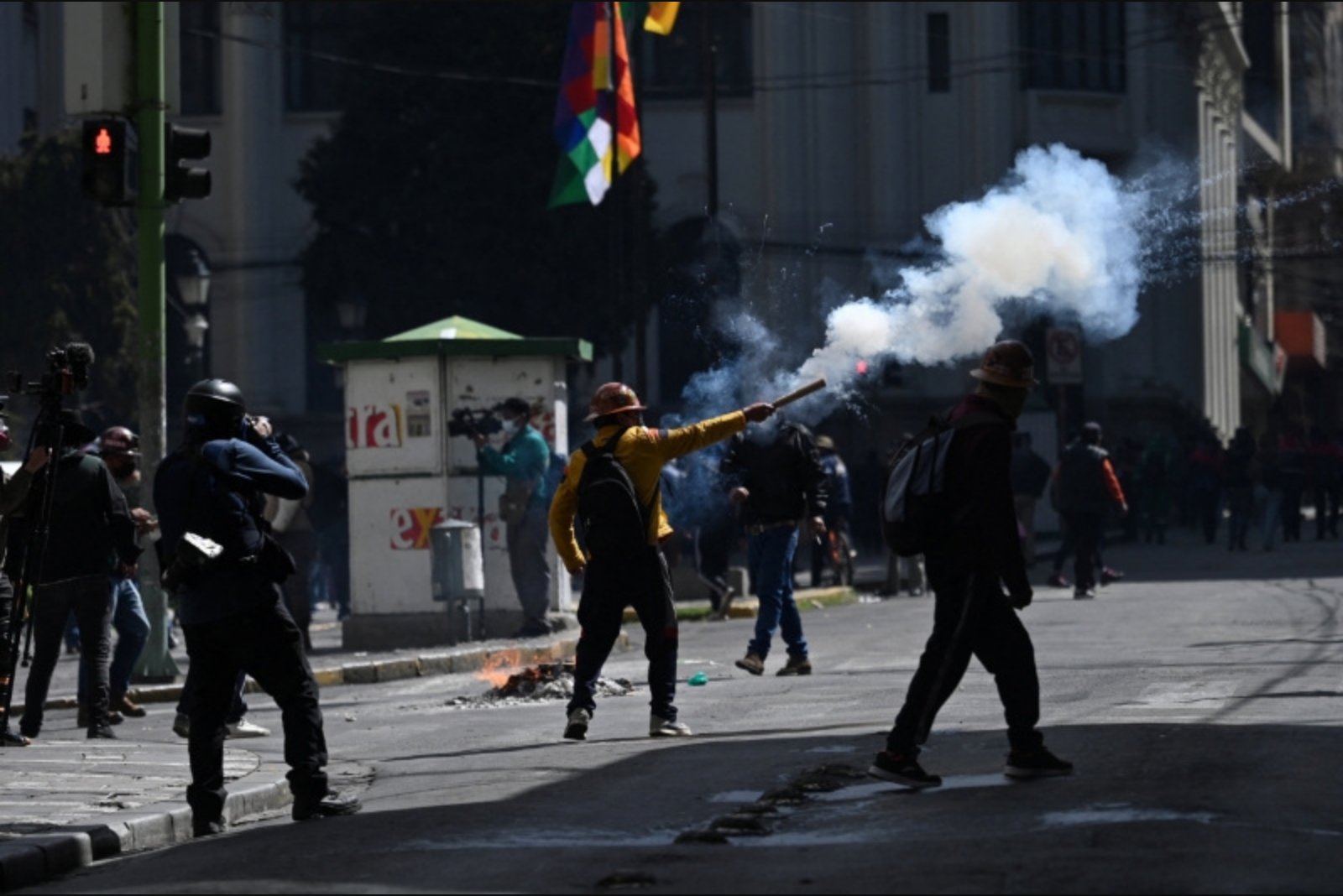
Bank branches in downtown La Paz temporarily closed on Tuesday as growing anti-government demonstrations and a network of roadblocks disrupted daily life and commercial operations in Bolivia's administrative capital. The closures coincided with appeals from foreign diplomats for dialogue and calm amid mounting pressure on President Rodrigo Paz.
Unions, miners, transport workers and rural organizations have escalated demonstrations in recent weeks, pushing for reversals of austerity measures and relief for households facing higher living costs. Some protesters have demanded the president's resignation, signaling a broader rejection of the administration that assumed office in November after nearly two decades of leftist rule.
U.S. Deputy Secretary of State Christopher Landau said he spoke with President Paz on Tuesday and expressed serious concern about the situation. "Let there be no mistake: Those who lost overwhelmingly at the ballot box in Bolivia last year are trying to overthrow President Paz," Landau wrote.
At the same time, the European Union delegation in Bolivia and five European embassies released a joint statement urging dialogue and peaceful demonstrations.
In the heart of the city, several banks posted notices and closed some branches, directing clients toward online banking platforms and ATMs. Institutions named as having shuttered outlets included Banco Nacional de Bolivia, Banco de Credito de Bolivia (BCP), Banco Economico and the state lender Banco Union. Reporters on the ground and media postings confirmed the temporary closures.
Employees at five banks told reporters they would not resume normal operations until protests had diminished. Bolivia's banking association, ASOBAN, declined to explain the motive behind the closures but said banking services remained partially operational.
While central La Paz appeared relatively calm on Tuesday morning, groups of demonstrators were reported moving toward the city center and a public transport strike was under way in nearby El Alto. Police maintained tight control of access to Plaza Murillo, the square that houses the presidential palace.
The demonstrations have generated extensive roadblocks across the country, leaving trucks stranded on highways and contributing to shortages of food, medical supplies and fuel. Authorities reported at least 32 roadblocks on Tuesday.
Residents described constrained access to essentials. "It's difficult to be in the city of La Paz. It's as if we were surrounded," said housekeeper Ana Uria, who cited shortages of vegetables and diesel.
Health facilities have felt the knock-on effects. At a primary clinic in La Paz, doctor Jorge Hinojosa recounted treating a woman injured during Monday's clashes and improvising a splint from a piece of cardboard. "Because of these conflicts, the patient couldn't get medical attention," Hinojosa said. "We need medications. We need supplies that we cannot obtain because of the blockades."
Bolivia's state energy company, YPFB, reported on Monday that blockades at its Senkata plant and other roads forced it to suspend shipments to impacted areas. Officials said authorities plan to announce measures this week intended to allow supplies to enter La Paz and El Alto.
President Paz entered office facing a difficult economic situation and has moved to reduce spending and pare back fuel subsidies to shore up public finances. His administration has also raised the minimum wage by 20%, expanded certain social benefits and opened channels of dialogue with sectors of society, but those steps have not quelled the protests.
Government officials have accused supporters of former president Evo Morales of encouraging the blockades. Government spokesperson Jose Luis Galvez said on Monday that violent groups were undermining democracy.
Economists see deeper structural pressures at play. Gonzalo Chavez described the unrest as a symptom of longer-term strain, saying Bolivia faces its worst economic crisis in a generation. "There are no easy or quick solutions in sight," Chavez said, adding that the country is caught between the exhaustion of a state-led economic model and the absence of a viable alternative.
Analysts also point to global energy shocks tied to the Iran war as an added strain on households in a landlocked country that increasingly depends on fuel imports.
For now, closures of bank branches and partial disruptions to banking services, combined with halted energy shipments and blocked highways, have produced immediate economic and humanitarian effects. Authorities, diplomatic missions and social leaders are publicly calling for a de-escalation even as protesters press their demands and supply lines remain fragile.