
Hook / Thesis
Toast is no longer a promise — it is a profitable, cash-flowing restaurant SaaS and payments platform that still carries meaningful growth optionality from AI-enabled products. The company posted $6.2 billion in revenue and $342 million in net income in 2025 while generating a record $608 million of free cash flow. Those results change the way investors should value a business that dominates small-to-medium restaurant POS and payments.
Short version: the balance of probabilities favors owning a tranche of Toast over the next 45 trading days as the market digests profitability plus early AI monetization. The entry I prefer is $28.00 with a $36.00 target and a $24.25 stop. This is a mid-term directional trade sized for a swing — not a full position for a buy-and-hold allocation.
Why the market should care
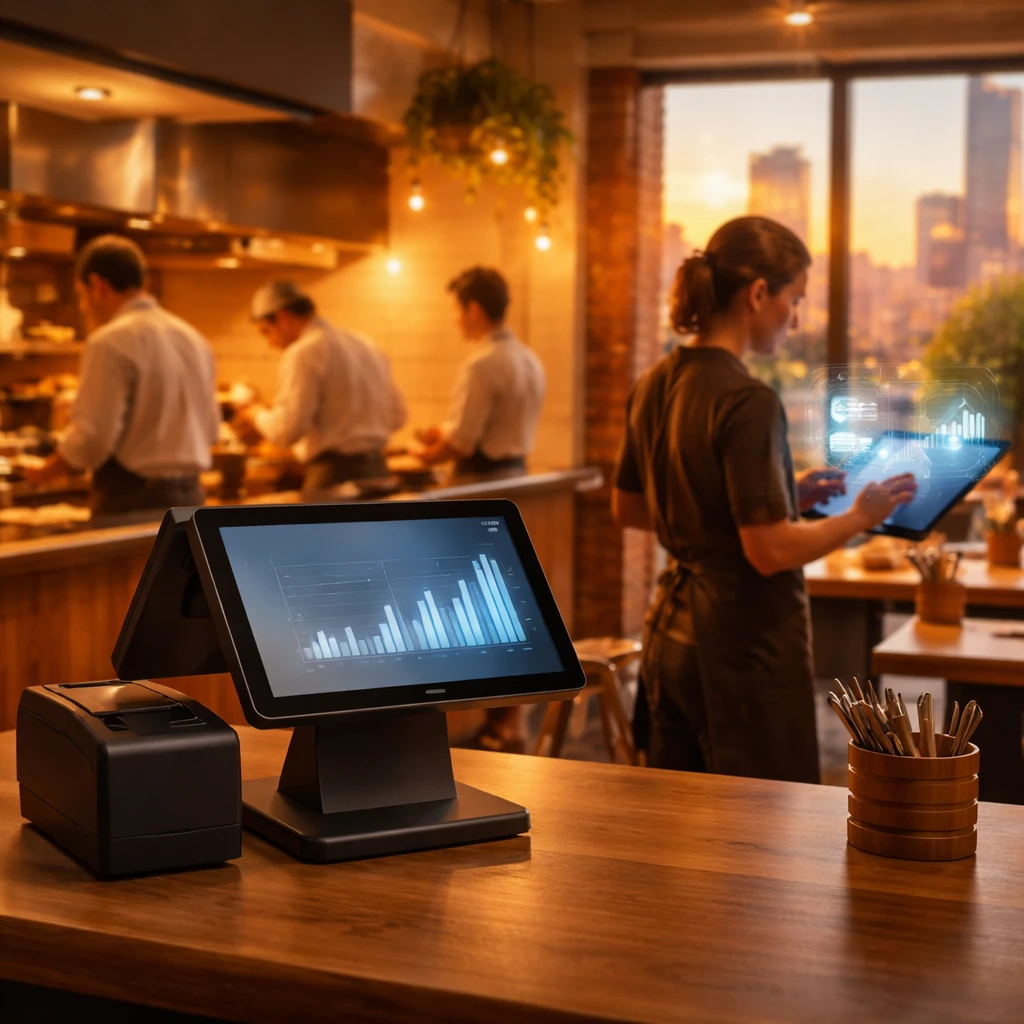
Toast is the operating layer underneath roughly 164,000 restaurants and claims ~20% penetration in its target small-restaurant market. That scale matters: the company bundles payments, POS, online ordering, and kitchen systems into an integrated product with real switching costs. Beyond transactional revenue, Toast sells recurring software, data, and increasingly AI-driven services that improve throughput, reduce labor friction, and lift margins for restaurateurs. For a payments-plus-software platform, those are sticky economics.
Concretely: Toast reported $6.2B of revenue in 2025 and converted that into $608M of free cash flow. Management expects recurring-profit growth in the low-20s percent range for 2026 and has guided to roughly $2.3B of ARR for 2026. Those figures explain why an investor like ValueAct has been building a stake and why activist interest has coincided with recent inflows into the name.
The numbers that matter
- Current price: $28.07 (market trading between its 10/20/50-day averages; RSI ~52).
- Market cap: about $16.9 billion; enterprise value roughly $15.5 billion.
- Profitability & cash flow: $342 million net income in 2025 and $608 million free cash flow.
- Valuation pocket: trailing P/E near ~49x and price-to-free-cash-flow ~27.8x; market-implied EV/ARR of about 6x on 2026 guidance of $2.3B ARR.
- Scale: roughly 164,000 restaurants served with ~8,000 net new locations added in Q4 of 2025.
- Share dynamics: float ~483 million shares; short interest recently around 28 million shares (days-to-cover roughly 2.7 at current volumes), so there is a non-trivial short base that could amplify moves on positive news.
Valuation framing
On a pure multiple basis Toast is not cheap in absolute terms — P/FCF near the high-20s and P/E around 49x require growth to justify the multiple. But the market is already pricing in that growth: the stock trades at roughly 6x EV/ARR using management's 2026 ARR guide of $2.3B, which sits well below the pricing stretches applied to some higher-growth enterprise software peers at peak optimism. Given Toast's newly established profitability and $608M of FCF in 2025, the current multiple is reasonable for a company with strong penetration, sticky revenue streams, and a clear path to monetize AI-enabled efficiencies.
Compare that to the prior narrative where Toast was a growth-at-all-costs story: profitability and FCF materially de-risk the thesis. The question is whether AI-driven product upgrades — better demand forecasting, labor scheduling optimization, voice/ordering assistants, and decisioning inside the POS — can widen gross margin and lift ARPU fast enough to compress multiples higher. If early adoption shows traction, the market will likely re-rate toward a lower EV/ARR multiple or a higher multiple of FCF.
Catalysts (2-5)
- Quarterly earnings that reinforce profitability and margin expansion. A beat-and-raise can trigger near-term re-rating.
- Commercial evidence of AI monetization: rollout metrics (adoption of AI modules, ARPU lift, churn improvement) presented on an earnings call or an investor day.
- Institutional buying or further stake increases from long-only funds (ValueAct's activity already signals conviction).
- Macro stability in consumer spending for restaurants — a soft improvement in dining, or continued resilience, supports expansion of payment volume and add-on software sales.
- Partnership wins or enterprise contracts with larger chains that show Toast can move upmarket without margin-dilutive pricing.
Trade plan (actionable)
My actionable trade for the next mid-term swing:
| Parameter | Value |
|---|---|
| Trade direction | Long |
| Entry price | $28.00 |
| Target price | $36.00 |
| Stop loss | $24.25 |
| Horizon | Mid term (45 trading days) |
| Position sizing guidance | Allocate as a swing-weighted tranche (e.g., 25-40% of a core-sized idea) given execution and macro risks. |
Why this structure? The $28.00 entry is close to the current market price and allows participation while keeping risk defined. The $36.00 target captures a ~28% upside — enough to reward the trade if the market re-rates toward modestly higher multiples or if short-covering accelerates after a positive print. The stop at $24.25 sits below the 52-week low area and preserves capital if the company faces renewed execution or macro pain.
Risks and counterarguments
- Restaurant cyclicality: Toast's fortunes track the health of restaurants. A recession or meaningful pullback in dining can compress transaction volumes and new seat openings, hurting revenue growth and payments mix.
- AI paradox - enabler and threat: While AI can be a revenue catalyst, it also lowers the cost of building software. Large chains could decide to build proprietary systems if AI tools make custom development cheaper, eroding Toast's TAM or pricing power.
- Competition: Square/Block, Clover, Lightspeed and other payments-POS hybrids can match features and price aggressively to win share, pressuring growth and margins.
- Execution risk on upmarket expansion: Winning enterprise customers requires different sales motion and product SLAs. Failure to cross the chasm could keep growth tied to the smaller restaurants with lower ARPU upside.
- Valuation vulnerability: Even with FCF, multiples are elevated; disappointing guidance or missed KPIs could re-rate the stock quickly — the sector is sensitive to narrative swings.
Counterargument to my thesis: The main bear case is that AI advances will accelerate verticalized competition. If major cloud or software vendors bundle similar restaurant-specific stacks with marginal costs far below Toast’s pricing, Toast's ARPU growth could stall and its enterprise customers could migrate. That outcome would justify a lower multiple and materially reduce the upside embedded in the trade.
That said, Toast's advantage is embedded hardware, integrations, payments relationships, and years of operational telemetry from restaurants — not just standalone software routines. Those attributes create switching friction that is non-trivial to replicate quickly. The trade therefore pays to outcome: if proof of AI-driven ARPU expansion arrives, the stock should re-rate; if not, the stop protects capital.
Technical & flow considerations
Technically, the stock is trading near its short-term moving averages (10/20/50-day cluster) and RSI is neutral (~52), suggesting limited momentum exhaustion and room for a positive catalyst to push price higher. There is also a measurable short base (short interest ~28M shares) which can amplify moves if sentiment flips positively on earnings or product news.
Conclusion - clear stance and what would change my mind
Stance: Long, mid-term (45 trading days) with a measured position sized as a swing trade. The rubric is straightforward: ownership is a bet that profitability plus AI monetization will be rewarded by the market sooner than not.
What would change my mind quickly:
- Missed guidance or a material slowdown in ARR growth or new-location adds in an upcoming quarter would invalidate the trade and trigger the stop.
- Public evidence that large national chains are executing migrations away from Toast at scale or that a competitor matched Toast's integrated stack at significantly lower total cost would force a reassessment.
- Conversely, clear ARPU lift from AI modules, stronger-than-expected margin expansion, or additional large institutional buyers would prompt adding to the position and extending the horizon to a longer-term hold.
In short: Toast is a different business today than it was two years ago. Profitability and meaningful free cash flow reduce downside risk and make a disciplined mid-term long trade attractive. The plan above gives defined risk, a plausible upside scenario tied to AI and enterprise adoption, and explicit triggers for re-evaluating the idea.