
Hook - Thesis
TeraWulf (WULF) has quietly become one of the more interesting 'pick-and-shovel' plays on AI infrastructure. The company that built its identity on environmentally conscious bitcoin mining is now accelerating a move into high-density AI/HPC leasing - selling access to racks, power and increasingly GPU capacity rather than only BTC production. That strategic pivot matters because hyperscaler and enterprise demand for colocated GPU capacity remains unconstrained by a single supplier, and early movers with attractive power economics can grab high-margin recurring revenue.
I am recommending a long trade with a clear entry, stop and target based on two facts: (1) management just priced a $900 million upsized common stock offering at $19 per share to fund its Hawesville, KY campus and site acquisitions (04/15/2026), and (2) market pricing already reflects a meaningful re-rating from last year - shares have run hard but technical momentum remains constructive. This is a high-conviction, high-risk long: if TeraWulf converts capital into leased AI capacity at attractive pricing, the valuation gap versus legacy mining peers can compress meaningfully.
Business snapshot - what the company does and why the market should care
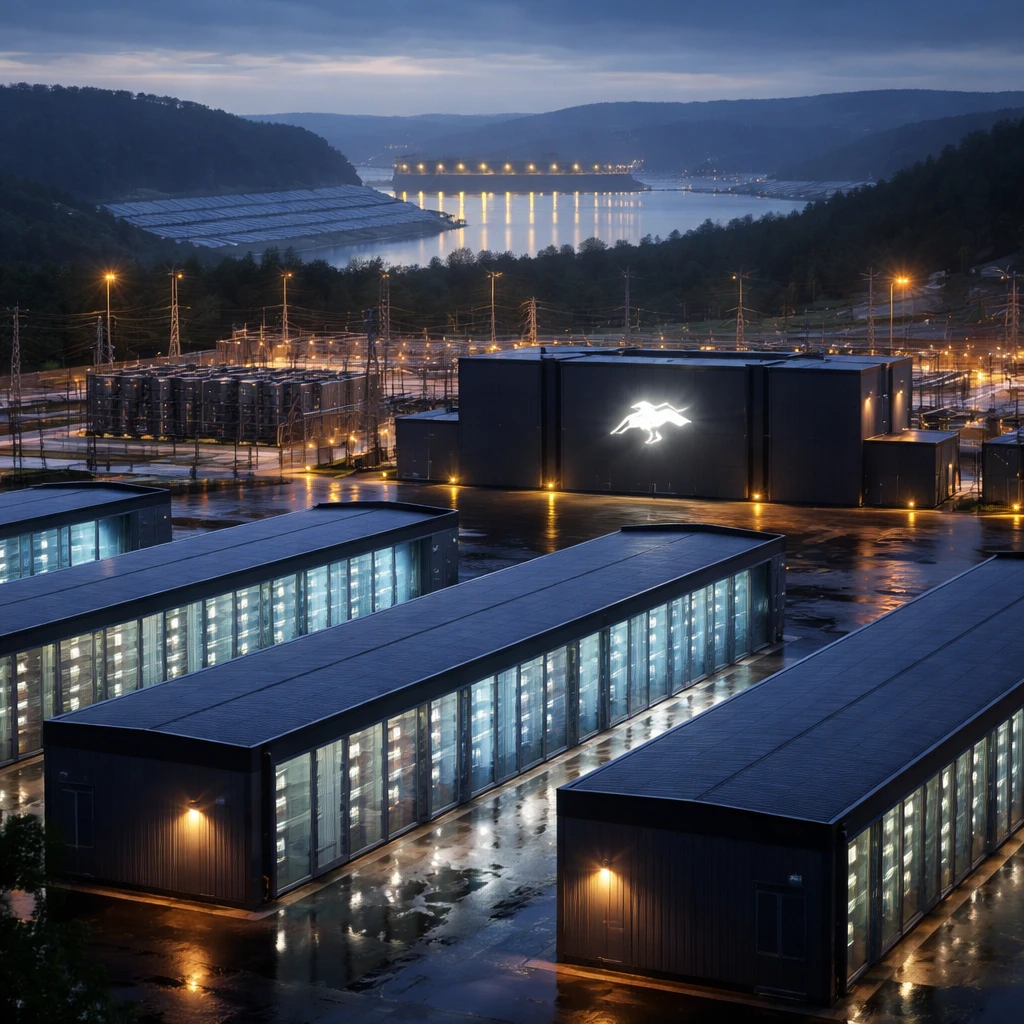
TeraWulf owns and operates fully integrated bitcoin mining facilities powered by nuclear, hydro and solar energy, and it now operates through two segments: Digital Asset Mining and HPC Leasing. The relevance for investors is simple: AI workloads are hungry for power and colocated rack space with robust electrification. Companies that control low-cost, clean power and large contiguous capacity can monetize both floor space and the more lucrative GPU-as-a-service opportunities.
The company’s plan is not theoretical. Management is explicitly using proceeds from the recent offering to build out a Hawesville data center campus in Kentucky and support future site acquisitions - a move consistent with industry peers pivoting from BTC mining to AI/colocation. For investors, this converts capital-intensive, lumpy crypto production into recurring leasing revenue with better margin visibility once facilities reach stabilized occupancy.
What the numbers say
Market-snapshot math helps frame the opportunity and the stakes. WULF’s market capitalization stands around $10.5 billion with an enterprise value of roughly $11.64 billion. The company carries cash on the balance sheet near $1.88 billion and a debt-to-equity metric around 37.2. Free cash flow was negative at approximately -$1.18 billion, which reflects heavy ongoing CAPEX as management scales new campuses. Shares outstanding are in the neighborhood of 501.8 million and public float about 313.8 million.
Valuation is rich on headline multiples; price-to-book and price-to-sales metrics sit at elevated levels (snapshot PB ~57.7, prior ratio data showed price_to_sales near 57.5). Earnings remain negative (EPS around -$1.35 in recent reporting) and ROA and ROE are negative. In short, the market is pricing optionality into WULF: growth + re-risking from miner to infrastructure operator. That explains the steep multiple - investors are valuing the potential of recurring AI/HPC revenue more than current mining cash flows.
Technical backdrop and investor behavior
Technicals are constructive: the stock is trading above the 10-, 20- and 50-day moving averages (10-day SMA ~$20.07, 50-day SMA ~$16.58). Momentum indicators are bullish with RSI around 65 and a positive MACD histogram. Short interest is material - about ~98 million shares recently with days-to-cover near 3.3 - which creates a potential squeeze dynamic on strong news but also indicates active bearish positioning that can cap rallies if execution falters.
Valuation framing - why I think this gap can close
Yes, valuation looks frothy by traditional mining multiples. But that comparison misses the new revenue mix target: recurring, high-margin leasing and GPU-as-a-service can command multiples similar to other high-growth infrastructure providers, particularly if TeraWulf achieves multi-hundred megawatt (or gigawatt) leasable capacity and early high utilization at Hawesville. If you value the business as a nascent AI-colo operator rather than a pure miner, market cap near $10.5 billion begins to look like a bet on future EBITDA scale rather than current cash flows.
That said, the company must execute construction, sign contracts, and convert power economics into cash flow. The $900 million offering (priced 04/15/2026 and expected to close 04/16/2026) materially derisks near-term funding for Hawesville but dilutes equity holders - a trade-off the market is already debating.
Catalysts (what would drive the stock higher)
- Lease announcements or hardware pre-orders for Hawesville - signed contracts with enterprise or hyperscaler customers materially de-risk revenue visibility.
- Operational milestones: grid connections, permits, or first-power events at Hawesville that show capital is converting to revenue-producing capacity.
- Better-than-expected pricing for GPU leasing or early ARPAU (average revenue per occupied unit) data that shows sustainable margin.
- Industry M&A or partnerships (construction or silicon vendors) that validate demand for third-party AI capacity and position TeraWulf as a strategic supplier.
- Macro tailwinds: sustained GPU demand and hyperscaler CAPEX recovery that pushes pricing for colocated GPU capacity higher.
Trade plan (actionable)
Trade direction: Long
Entry price: $20.99
Target price: $32.00
Stop loss: $16.00
Time horizon: long term (180 trading days) - I expect the trade to take time because campus buildouts, equipment procurement and lease ramping are multi-quarter processes. Give the thesis 4-6 quarters to verify execution, with regular check-ins on construction milestones and signed leases. The target assumes market re-rating toward valuation multiples more typical of niche AI infrastructure providers once recurring revenue emerges and stabilization begins.
Rationale: Enter near current trading levels where momentum remains supportive. The $16 stop provides room for normal volatility while cutting losses on failed execution or material dilution/re-pricing events. The $32 target reflects a re-rating and growth realization scenario - roughly a 52% upside from the entry.
Risks and counterarguments
- Execution risk - Building a high-density AI campus is complicated: interconnection, substations, cooling, and GPU procurement all carry schedule and cost risk. Delays or cost overruns would pressure the stock.
- Capital/dilution risk - The $900M offering reduces immediate funding pressure, but the company still shows negative free cash flow (~-$1.18B) and will likely need additional capital to hit gigawatt-scale capacity. Future dilution could compress per-share value.
- Revenue mix uncertainty - Transitioning from spot bitcoin revenue to long-term leases requires signed contracts and stable pricing. If customers prefer owning hardware or hyperscalers build internally, demand could be weaker than expected.
- Macro/industry risk - GPU pricing and demand are cyclical. A downturn in AI spend or a rapid move toward custom on-prem solutions by hyperscalers would undermine the leasing business model.
- Valuation compression - The stock trades at premium multiples versus legacy miners. If the market doubts the pivot, traders can re-rate the stock quickly, resulting in steep downside.
Counterargument: Skeptics will point out that TeraWulf’s valuation already prices in the AI pivot and that non-performing real estate could leave investors exposed. That is valid. The right response is to treat the trade as binary on execution: if Hawesville reaches meaningful committed capacity and early GPU leasing ARR looks healthy, the upside is real. If not, the multiple will compress quickly. For that reason, discipline via the stop loss is essential.
What would change my mind
I would be less bullish if management misses critical Hawesville milestones, fails to secure customers for leased capacity within expected timelines, or the company announces materially higher-than-expected capital needs that imply another dilutive raise. Conversely, early lease wins, a visible path to positive FCF, or sizable partnership deals with major cloud or AI firms would strengthen the bull case and could prompt a higher target or tighter stop.
Conclusion
TeraWulf is a classic high-upside, high-risk transition story: the company owns power-advantaged sites and has the cash to accelerate a strategic pivot into AI/HPC leasing. That makes WULF an attractive trade for investors willing to accept execution and dilution risk in exchange for the potential of recurring, high-margin infrastructure revenue. My trade is long at $20.99 with a $16 stop and a $32 target over a long-term horizon (180 trading days). Monitor construction milestones, lease announcements and ARPAU data - those will determine whether the market rewards or punishes the pivot.
Key dates to watch
- 04/16/2026 - expected close of the $900M offering
- Next quarterly report - watch for CAPEX cadence, cash runway and any details on Hawesville progress
- Announcements of initial lease agreements or first-power events at Hawesville
Recommendation: Long WULF at $20.99, stop $16.00, target $32.00, horizon long term (180 trading days). High conviction but high risk - treat position size accordingly.