
Hook / Thesis
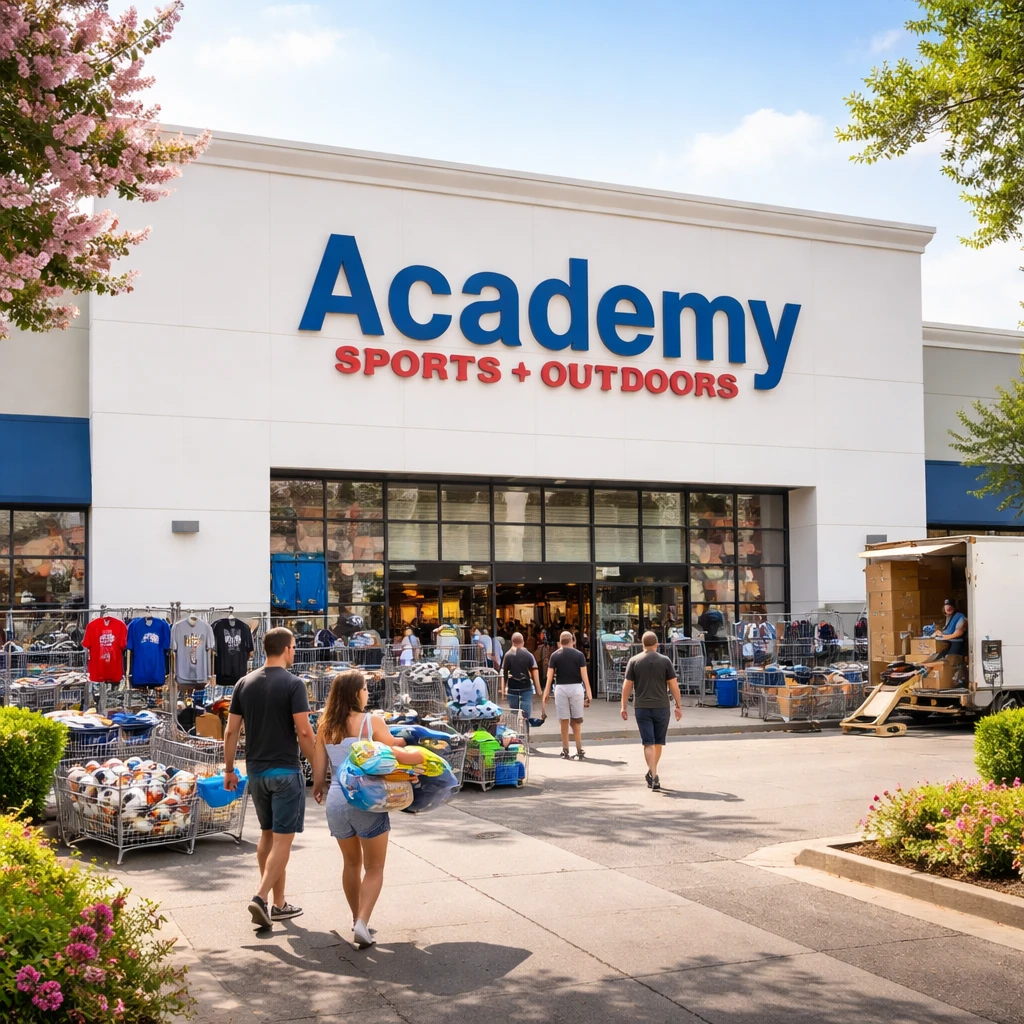
Academy Sports and Outdoors (ASO) is a simple, capital-efficient retailer currently trading at a low-teens multiple on normalized earnings and a sub-7x EV/EBITDA metric. The stock was punished earlier in 2026 after a quarterly miss and cautious guidance, but fundamentals show steady sales growth, margin improvement, and a manageable balance sheet. For investors willing to look past short-term cadence risk, ASO presents a value-for-quality trade with a plausible event-driven upside into the summer 2026 sports calendar and next fiscal year.
Our trade thesis: buy a measured position on weakness with an entry at $56.50, a stop at $50.00, and a target of $70.00. That target assumes a modest re-rating toward 12-13x earnings as comparable-store trends stabilize and management's store expansion and e-commerce adoption continue to translate into share gains. We view this as a medium-risk, event-leaning long for a 180 trading day horizon to capture seasonality and the potential boost from summer sporting demand.
What the company does and why the market should care
Academy Sports & Outdoors operates a network of sporting-goods and outdoor retail stores plus an expanding e-commerce channel. Merchandise is organized across Outdoors, Sports & Recreation, Apparel, and Footwear. The business combines a value-oriented physical retail footprint with growing online reach, and management has been executing store openings while returning capital via a rising dividend.
Why investors should care: Academy sits at the intersection of durable consumption categories (outdoors, fitness, team sports) and discretionary income cycles. The company reported a return to topline growth (full-year growth of 2.0%, and Q4 sales growth of 2.5%) after a period of decline, is expanding gross margin, and is scaling its omnichannel business. Those operational trends, combined with a conservative balance sheet and free cash flow generation, make the equity look cheap relative to the underlying cash flow and growth optionality.
Key fundamentals and recent trends
- Market cap: approximately $3.68 billion.
- Profitability: trailing earnings per share around $5.85 and a P/E near 10x (the snapshot shows ~10-10.6x depending on the exact price used).
- Valuation multiples: price-to-book roughly 1.74, EV/EBITDA about 6.19, and price-to-sales roughly 0.62.
- Cash flow: free cash flow reported at $222.13 million, implying an FCF yield on market cap near ~6% and on enterprise value around ~5.6%.
- Balance sheet: debt-to-equity about 0.22, current ratio ~1.89; the company is conservatively levered for a retailer.
- Dividend policy: quarterly dividend raised to $0.15 (a ~15% increase), producing a yield just under 1% but signaling stable capital return priorities.
- Operational cadence: comparable-store sales declined modestly (Q4 comp -1.6%, full-year comp -1.5%), while management grew total sales (2.5% Q4, 2.0% full year) via store openings (24 stores added in 2025 and guidance to open 20-25 in 2026) and faster e-commerce growth (double-digit e-commerce gains were reported across quarterly updates).
Valuation framing
The valuation is straightforward: ASO trades at roughly a 10x P/E and about 6.2x EV/EBITDA. For a profitable retailer with consistent free cash flow generation ($222M), disciplined capex for new store rollouts, and a low net leverage profile, those multiples are on the conservative side. A return to mid-teens P/E territory would push the stock materially higher without assuming heroic top-line expansion. Even a modest multiple expansion to ~12-13x on the current EPS would imply prices in the mid-$60s to low-$70s.
Put another way: the enterprise value to EBITDA multiple implies the market is pricing in limited upside from margin expansion or store growth. If management hits its 2026 guidance of 2-5% sales growth while comp sales stabilize and e-commerce continues to outpace brick-and-mortar trends, a re-rating is a plausible outcome.
Catalysts
- Seasonal sports demand into summer 2026 - an elevated event calendar that includes major soccer and outdoor events could lift team apparel, footwear, and outdoor categories.
- Store expansion - management plans 20-25 new stores in 2026, which will contribute to sales and market share gains if execution remains consistent with recent openings.
- E-commerce momentum - continued double-digit growth online would raise blended margins and reduce reliance on physical traffic for growth.
- Margin expansion - small gains in gross margin and operating leverage from new stores and product mix could push free cash flow higher and justify multiple expansion.
- Dividend and buyback optionality - the quarter-over-quarter dividend increase signals capital return discipline and can attract income-seeking investors as growth stabilizes.
Trade plan (actionable)
Direction: Long
Entry Price: $56.50
Stop Loss: $50.00
Target Price: $70.00
Time horizon: long term (180 trading days). We pick a 180 trading day horizon to capture the ramp into and through the summer sports season, to allow for multiple quarters of margin and e-commerce progress to be reported, and to give store openings time to contribute meaningfully to sales. Shorter holds are possible around discrete news-driven moves but increase exposure to quarter-to-quarter volatility.
Position sizing: treat this as a tactical value trade inside a diversified portfolio. Given retail cyclicality and consumer-credit sensitivity flagged by management, a starter position around 1-2% of portfolio, scaling up if the thesis is confirmed (improving comps and margins), is reasonable.
Why this trade makes sense
Academy is generating cash and growing sales at a low single-digit rate while trading at a valuation consistent with stagnation. The market discounted the stock after a quarterly miss and cautious commentary about consumer credit conditions, but the core economics - positive free cash flow, low leverage, and a rising dividend - support a valuation reset if the company can stabilize comps and deliver on guidance. Event-driven demand (sports, summer outdoor activity, and team apparel) and steady execution on store openings plus e-commerce should be enough to shove the multiple higher from current levels.
Risks and counterarguments
- Consumer weakness / lower-income pressure: Management called out elevated credit-card delinquencies and weakness among lower-income customers. If that trend widens, transaction counts could continue to fall and comps could deteriorate further, pressuring margins and cash flow.
- Follow-through on comps: Comparable store sales have been negative (-1.6% in Q4, -1.5% full year). The recovery in top-line growth is fragile; lack of comp improvement would keep the multiple depressed.
- Execution risk on new stores: While new openings are a growth lever, mis-timed or underperforming stores would dilute cash flow and margins, and capital returns could be trimmed.
- Macro-driven margin pressure: A renewed inflationary spike or meaningful freight/tariff/headline cost shock could compress gross margins despite operating leverage.
- Market sentiment and short pressure: Short interest and heavy short volume indicate the stock is a focus for bearish positioning; that can exacerbate downside on headline misses and increase volatility.
- Counterargument: The bearish case is that the recent earnings miss and weak comps are the canary in the coal mine for broader retail softness among value-oriented consumers. If delinquencies spike and transaction counts keep falling, earnings could degrade and the market could re-rate ASO lower, invalidating our P/E re-rating thesis. In that scenario, the stop at $50 is prudent; further weakness could test the $43-50 technical supports mentioned by some analysts.
What would change our mind
We would become more bullish if comp trends reverse (positive comps for two consecutive quarters), e-commerce growth stays comfortably in double digits while online margins improve, and management raises full-year guidance or expands buybacks. Conversely, we would turn cautious if delinquencies accelerate, comps slip further, or management reduces financial returns (dividend or buybacks) to preserve liquidity. A string of misses or an environment where lower-income consumer demand deteriorates would lead us to reduce exposure or flip to neutral/short depending on severity.
Quick snapshot table
| Metric | Value |
|---|---|
| Market Cap | $3.68B |
| P/E | ~10x |
| EV/EBITDA | 6.19x |
| Free Cash Flow | $222.13M |
| Dividend | $0.15 / quarter (yield ~0.9%) |
| 52-week range | $35.95 - $62.45 |
Bottom line: Academy Sports looks like a value-for-quality trade today. The business is producing free cash flow, expanding its store footprint, growing e-commerce, and returning capital while trading at conservative multiples. For disciplined buyers, a measured long entry at $56.50 with a stop at $50.00 and a target of $70.00 over the next 180 trading days offers a favorable risk-reward to capture both event-driven demand and a potential re-rating. Monitor comps, credit delinquencies, and margin cadence as the primary read-throughs for the trade.