
Hook / Thesis
AI needs two things at scale: compute and power. Brookfield Infrastructure Corporation (BIPC) is positioning itself to supply both through its data infrastructure and energy businesses. Recent company activity - commissioning data center capacity, partnering on clean-power solutions and participating in semiconductor supply chain projects - makes BIPC a direct way to capture secular AI tailwinds while collecting a 4%+ yield.
This is a tactical long: buy the pullback near $40.50 and expect upside as contracted capacity ramps, Q1 results (04/29/2026) confirm growth, and markets re-rate a reliable cash-flow infrastructure owner benefitting from multi-year AI capex. I lay out a trade plan, horizon, catalysts and a balanced risk view below.
What the company does and why markets should care
BIPC owns and operates diversified infrastructure assets across transportation, data infrastructure and energy. Its business model is built on long-term contracts, regulated returns and franchise assets. For the AI era, the relevant pieces are:
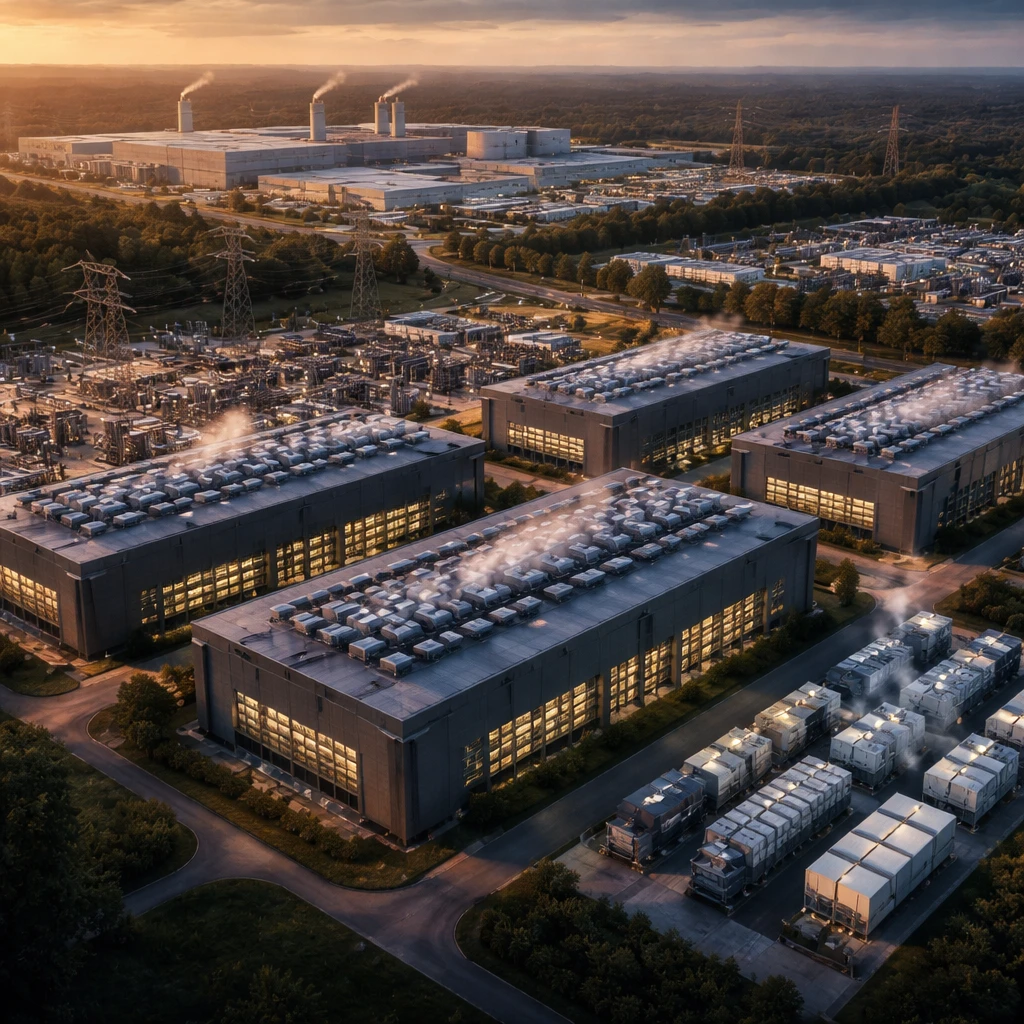
- Data infrastructure - data center capacity that provides critical physical space and power for hyperscale AI workloads.
- Energy - power generation and distribution assets that can secure reliable, often contracted, electricity for high-demand customers like large cloud providers and semiconductor fabs.
Why this matters: estimates cited across industry research put AI-related infrastructure investment in the trillions over the next decade. Brookfield is converting that secular demand into contracted, fee-like cash flows: its data infrastructure segment grew revenue by more than 50% year-over-year in recent commentary and the firm commissioned 220 MW of new data center capacity. The firm reports 1.2 GW of operational data power capacity and 1.1 GW contracted - a substantial share tied directly to AI workloads and chip manufacturing.
Numbers that back the thesis
- Market capitalization: the company trades around a market cap of $5.39 billion, a compact valuation for a global infrastructure platform with multi-year contracted cash flow expansion potential.
- Dividend & distributions: quarterly distribution per share is $0.455 with a trailing dividend yield around 4.13%. The company announced its 17th consecutive distribution increase, reinforcing the income story for yield-seeking investors.
- Operational scale: 220 MW of new commissioned data center capacity, 1.2 GW operational and 1.1 GW contracted data-center power capacity; partnerships noted with Bloom Energy and Intel for power and chip-fab support.
- Trading range and technicals: 52-week high $51.72, low $35.49; current price near $40.49. Momentum indicators show room to run - RSI ~40.7 (not overbought) and a small bullish MACD histogram suggesting nascent positive momentum.
- Short interest and market positioning: short interest recently around 7.36M shares with days-to-cover near 4.2, and persistent elevated short-volume data in the most recent sessions. That can amplify moves on positive news.
Valuation framing
Absolute valuation metrics are mixed. Reported P/E is negative (-22.09) and PB is negative (-4.10), reflecting accounting and earnings seasonality common in infrastructure vehicles; earnings multiples can be misleading for an asset-heavy, funds-from-operations (FFO)-oriented business. Market cap of roughly $5.4 billion buys you contracted cash flows, a 4% yield and a track record of distribution increases. Management has communicated FFO per share growth of about 6% in 2025, and analysts cited in the press expect double-digit annual FFO growth as new data capacity and power contracts ramp.
Qualitatively, BIPC’s valuation should be judged against its ability to grow fee-like revenue from data centers and energy contracts, not just headline earnings. At today's price, the stock sits well below its 52-week high, offering upside if the market assigns a higher multiple to steadily growing, contracted cash flow streams tied to AI and semiconductor demand.
Trade plan (actionable)
| Direction | Entry | Stop loss | Target | Horizon | Risk level |
|---|---|---|---|---|---|
| Long | $40.49 | $36.00 | $48.00 | Long term (180 trading days) | Medium |
Rationale: enter at the current price area where the stock has shown support in recent weeks. The stop at $36.00 sits below the 52-week low of $35.49 and protects against a structural breakdown or distribution cut. The target of $48.00 is a sensible intermediate re-rating toward prior highs and reflects a re-acceleration in FFO growth and positive confirmation from the Q1 (04/29/2026) results. Expect to hold the position for up to 180 trading days to allow data-center capacity to ramp, contractual revenues to flow and for macro forces (rates, industrial capex) to normalize.
Conservative traders could scale in or use a tighter stop around $38.50 for a mid-term (45 trading days) swing if looking for quicker catalyst-driven moves (earnings, contract announcements).
Catalysts
- Q1 2026 earnings and webcast on 04/29/2026 - confirmation of FFO growth, updates on contracted data center capacity and new power contracts would be immediate upside triggers.
- New long-term power or data center contracts with hyperscalers or semiconductor firms - material deals lift visibility on multi-year cash flow.
- Commissioning or accelerated construction of contracted capacity (data centers, chip-fab utilities) improving revenue recognition timelines.
- Positive analyst revisions or upgrades as FFO growth guidance tightens.
- Macro tailwinds: easing interest-rate expectations that reduce capital costs for infrastructure expansion and lift yield-asset multiples.
Risks and counterarguments
- Capital intensity and balance-sheet risk: infrastructure expansion requires heavy upfront investment. If growth disappoints or financing costs rise materially, FFO per share could be pressured and distributions could come under review.
- Execution risk on data center projects: building and commissioning power-hungry data centers and chip-fab utilities is complex. Delays, cost overruns or lower-than-expected customer take-up can slow cash-flow ramp.
- Regulatory and regional exposure: Brookfield operates in multiple jurisdictions, including Brazil and the U.K. Local regulatory changes, permitting delays or political shifts could impact returns on new projects.
- Valuation and earnings ambiguity: negative GAAP P/E and PB metrics reflect accounting noise; if the market loses confidence in management’s FFO growth target, the stock can re-rate lower despite operational progress.
- Market sentiment and short pressure: elevated short interest and recent high short-volume days mean positive news can produce sharp squeezes, but negative surprises can amplify downside quickly.
Counterargument: One credible bear case is that AI and semiconductor customers pursue vertically integrated power solutions or negotiate lower rates, shrinking margins on Brookfield’s data and energy services. If contracted pricing compresses or customers self-supply more power, projected FFO growth could fall short, and the stock would likely reprice lower.
What would change my mind
I will revisit the thesis if any of the following occur: a distribution cut or suspension; Q1 results that show declining FFO per share or material write-downs; meaningful customer losses in the contracted pipeline; or a protracted rise in financing costs that materially increases capex economics. Conversely, a materially stronger-than-expected Q1 report with new long-term hyperscaler or semiconductor contracts would validate the buy and warrant raising targets.
Conclusion
Brookfield Infrastructure is an under-the-radar way to gain exposure to the physical buildout of AI compute and semiconductor capacity. The company’s mix of contracted data-center power, recent capacity commissions and strategic partnerships make it a credible beneficiary of long-term AI-driven capex. The trade suggested here is a long with an entry near $40.49, a stop at $36.00 and a $48.00 target over a 180-trading-day horizon. The setup combines yield, growth optionality and clear event-driven catalysts, but it is not without execution and financing risk. Keep position sizing disciplined and watch the upcoming Q1 release as the near-term litmus test.
Key facts
- CEO: Samuel J. B. Pollock
- Quarterly distribution: $0.455; ex-dividend date 02/27/2026; payable 03/31/2026
- Market cap: $5.39B; 52-week range: $35.49 - $51.72