
Stifel boosted its 12-month price target on Texas Instruments to $340 from $290 following discussions with the company’s investor relations group that the broker says revealed a notable shift in the company’s operating backdrop. The analysts described a transition from awaiting a cyclical recovery to a phase of validated recovery momentum, writing that "TXN's narrative has shifted from one of patient cycle-waiting to one of active recovery validation."
The firm’s research team, led by Tore Svanberg, identified two principal growth drivers emerging from the conversations. The first is an industrial rebound visible in Texas Instruments’ first-quarter performance. Management reported that January, February, and March each showed accelerating activity, with expansion occurring across every major sub-sector and across all principal geographies - the U.S., EMEA, and China. Stifel quantified the strength in industrial end markets, noting industrial revenue increased by more than 30% year-on-year and rose over 20% sequentially in the quarter.
Analysts emphasized that this breadth of contribution marks a qualitative change compared with the firm’s observation of 2025, when a strong first half was followed by a weaker second half. CEO Haviv Ilan had previously characterized that weaker follow-through as a "head fake," and Stifel views the current pattern of simultaneous, cross-region acceleration as meaningfully different.
The second growth engine identified by Stifel is Texas Instruments’ Data Center segment. The broker reports this business accounted for roughly 12% of first-quarter revenue and is tracking toward a $2 billion annualized run-rate. Stifel projects the Data Center business could expand to about 20% of total revenue by 2029. The analysts also noted a next potential vector of opportunity tied to 800V power architecture using gallium nitride technology.
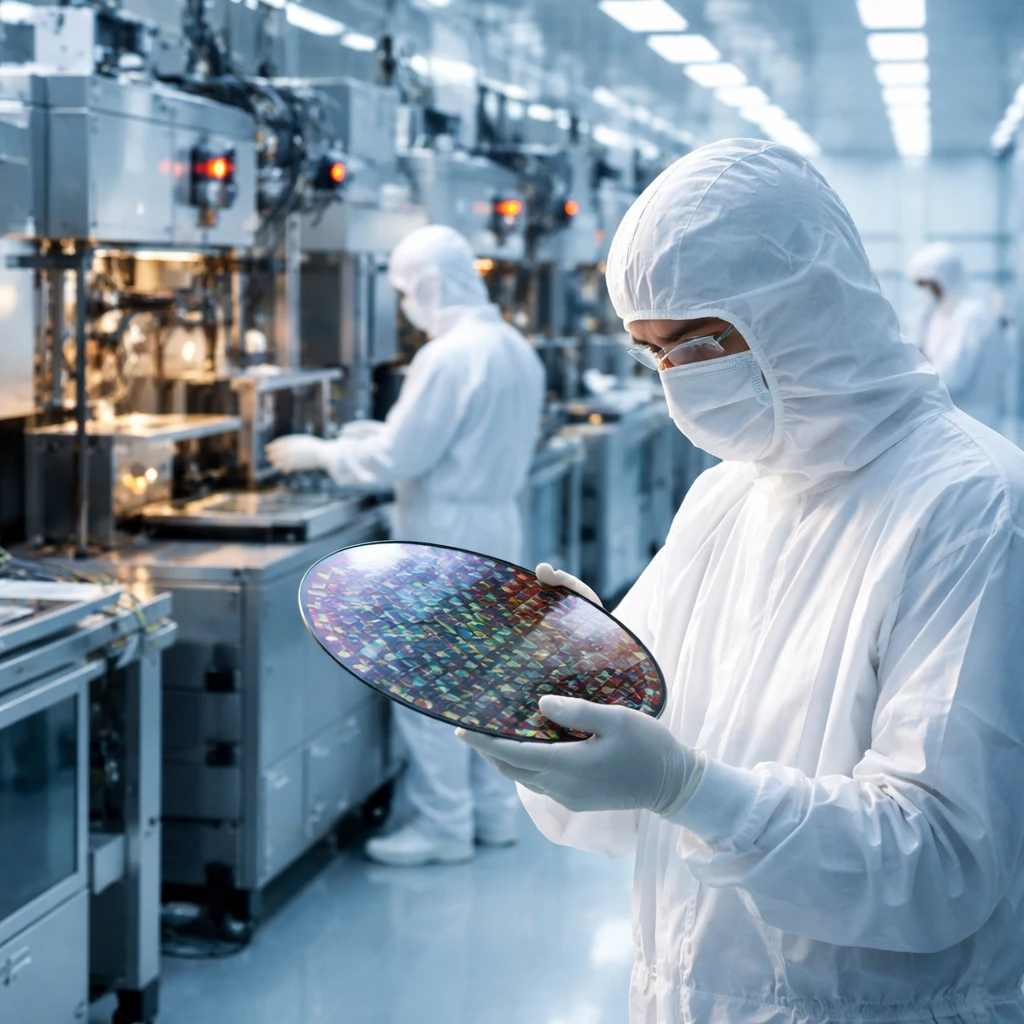
Beyond demand-side improvements, Stifel flagged Texas Instruments’ manufacturing posture as a structural advantage heading into the next upcycle. The company’s internal fabrication capacity is now roughly $25 billion, up from about $16 billion during the 2020-22 upcycle. In addition to installed capacity, management reported significant cleanroom and shell capacity that can be brought online faster than the time required to build new facilities from the ground up. Stifel underlined that this capacity is U.S.-based, which it characterized as making TXN’s footprint "geopolitically dependable in a way few analog peers can match."
When considering valuation, Stifel drew parallels to prior re-ratings seen among processors, foundries, and memory companies. The brokerage argued that a best-in-class analog company could see a comparable uplift in valuation and said that Texas Instruments has invested in sufficient capacity to preserve the optionality to reach a trillion-dollar valuation should the market re-rate the sector in that direction.
Contextual notes
This analysis rests on management commentary about accelerating first-quarter demand and on Stifel’s interpretation of capacity improvements and Data Center growth. The firm’s projections on revenue mix and future growth are its expectations based on current information provided by the company.