
Economy May 15, 2026 09:20 AM

Panama Canal to Maintain Full Transit Capacity Through 2026 Despite El Niño Forecast

Waterway authority says 38 daily transits will continue as it monitors rainy-season conditions and conserves water ahead of potential drought

By Ajmal Hussain

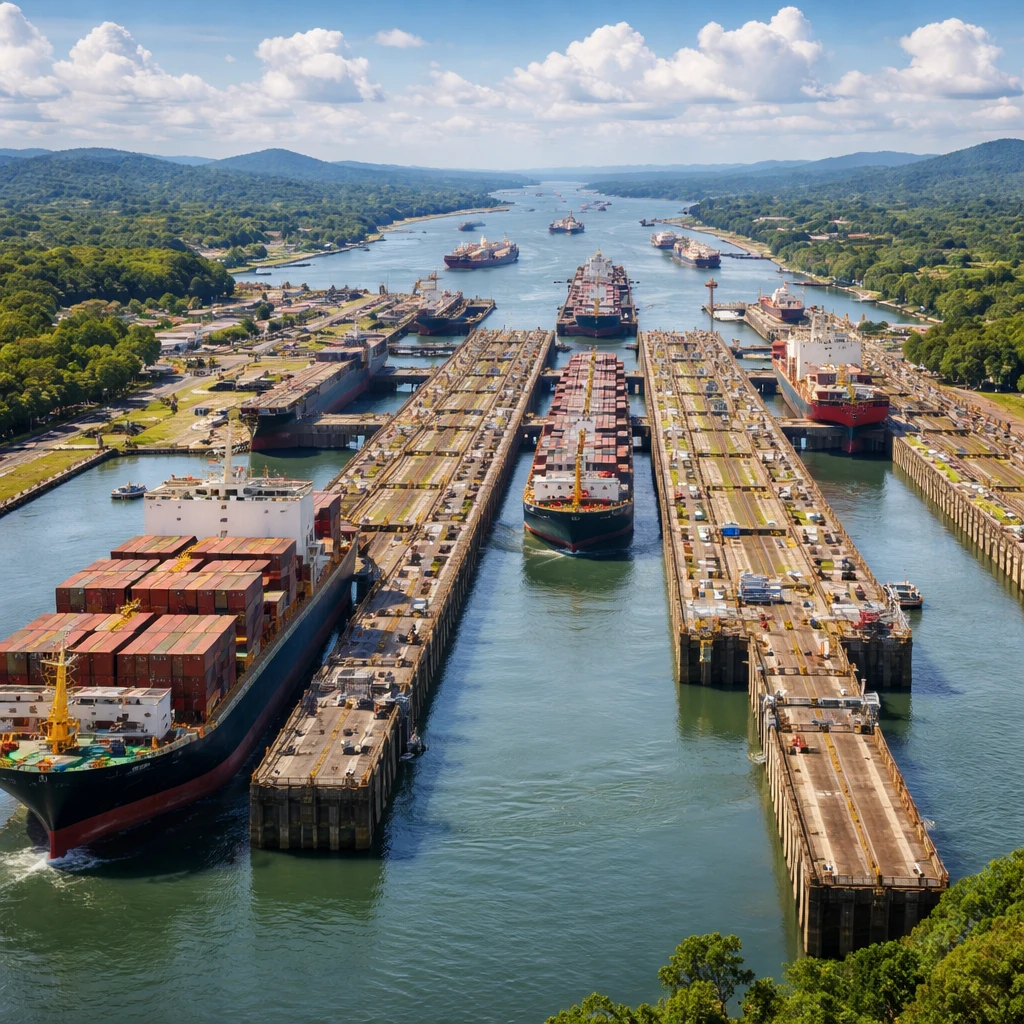
Panama Canal officials said vessel passage limits will not be introduced for the remainder of 2026 even if the forecasted El Niño brings drought to Central America in the second half of the year. The canal currently allows 38 transits per day and has observed rising passage demand in recent months. Authorities report ongoing weather monitoring and water conservation measures implemented since the rainy season began.

Panama Canal to Maintain Full Transit Capacity Through 2026 Despite El Niño Forecast

Key Points

  • The Panama Canal will not enforce vessel passage limits for the remainder of 2026 despite an El Niño drought forecast - sectors impacted include shipping and global trade.
  • Current operations allow 38 ship transits per day, and that daily allowance is to be maintained through 2026 - relevant to maritime logistics and freight-dependent industries.
  • Passage demand has risen recently, primarily attributed to disruptions from the U.S.-Israel war on Iran affecting alternate routes such as the Suez Canal - this influences shipping flows and supply-chain planning.

Panama Canal authorities have confirmed that they do not plan to impose restrictions on vessel passages for the rest of 2026, even if the foreseen El Niño weather pattern results in drought conditions across Central America during the second half of the year.

The waterway is currently operating with a capacity that permits 38 ships to transit the canal each day. Officials say that daily allowance will remain unchanged through the remainder of 2026 despite the El Niño forecast.

Traffic through the canal has been increasing in recent months. Canal authorities attribute much of this uptick in passage demand to disruptions affecting alternative routes - notably wider traffic impacts tied to the U.S.-Israel war on Iran, which has disrupted shipping through channels such as the Suez Canal.

In preparation for the possible arrival of El Niño-related dry conditions, the canal authority reports it has been closely tracking weather developments since the beginning of the region's rainy season. As part of those preparations, the authority says it has already implemented water conservation measures designed to preserve the freshwater reserves that support canal operations.

Officials framed the steps as precautionary - ongoing monitoring of hydrological conditions combined with operational measures aims to sustain current transit levels. The authority's public statements emphasize maintaining uninterrupted passage at the stated daily capacity while adapting management of the water supply as needed.

Observers should note that the authority's assessment and planned approach are explicitly limited to the remainder of 2026. The statement does not extend beyond that timeframe, nor does it quantify specific contingency triggers or the detailed mechanics of the conservation measures currently in place.

For shipping operators and supply-chain participants, the canal authority's declaration signals a continued ability to move 38 vessels per day for the rest of 2026, even as weather uncertainty persists. The authority's emphasis on monitoring and conservation reflects an operational focus on balancing demand and water-resource management amid evolving seasonal forecasts.

Risks

  • Potential El Niño-driven drought in the second half of 2026 could stress the water resources that support canal operations - this risk affects maritime transport and logistics.
  • Elevated passage demand amid external disruptions to alternative routes places pressure on canal capacity even as conservation measures are used - shipping and trade sectors face uncertainty over transit congestion and timing.
  • The authority's statement covers the remainder of 2026 only and does not specify contingency thresholds or detailed mitigation steps - this leaves operational uncertainty for long-term planning by shippers and port operators.

More from Economy

AI-led tech surge drives eighth consecutive weekly inflow into global equity funds May 15, 2026 Morgan Stanley Sees Rates on Hold Through 2026 as Tariff Pass-Through Ebbs and Oil's Core Impact Remains Limited May 15, 2026 U.S. Energy Secretary Says China Likely to Boost Purchases of American Crude May 15, 2026 Brazil’s Services Output Slips in March as Transport Leads Decline May 15, 2026 Treasury Yields Jump to May 2025 Peaks as Oil Rally and Inflation Data Pressure Markets May 15, 2026