
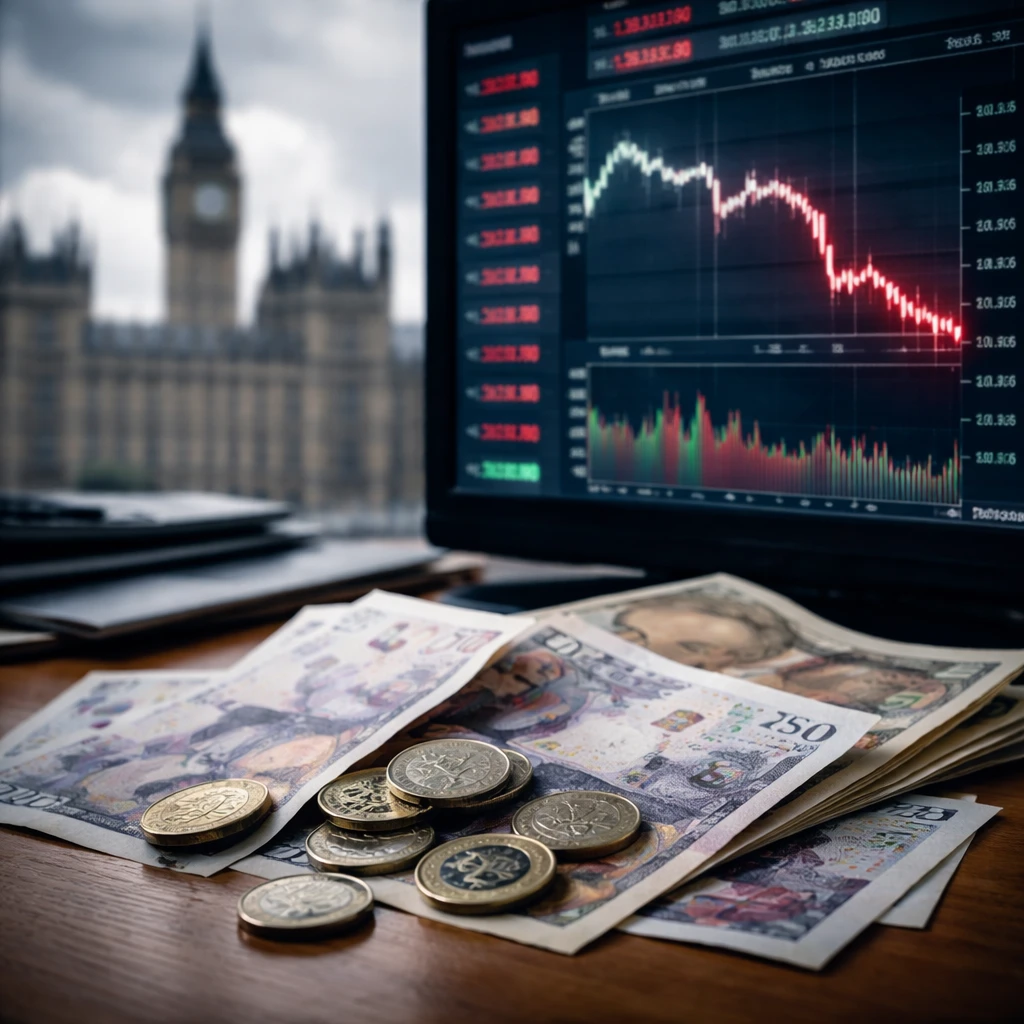
Sterling came under renewed selling pressure on Friday as a mix of domestic political instability and higher global energy prices pushed the currency to its lowest point in more than five weeks while UK assets broadly retreated.
As of 08:55 ET (12:55 GMT), GBP/USD had fallen 0.41% to 1.3354. EUR/GBP was unchanged. Over the course of the week the pound was on track for its worst performance against the dollar since November 2024, having lost almost 2%.
Political shockwaves
The pound’s decline accelerated after the Health Secretary, Wes Streeting, resigned from government. His departure has intensified questions about Prime Minister Keir Starmer’s hold on leadership following Labour’s poor showing in last week’s local elections. Markets are increasingly concerned that any successor to the current leader might be more inclined to loosen fiscal policy, a scenario that has already pushed UK gilt yields higher.
The 10-year gilt yield rose by nearly 12 basis points to about 5.11% as investors re-priced the risk that fiscal settings could shift. That rise in yields reflects growing unease about fiscal credibility amid political turbulence.
By-election and leadership risk
Another potential fault line for sterling centers on the possibility of Greater Manchester Mayor Andy Burnham entering Westminster. A Labour lawmaker has offered to vacate his Makerfield seat, opening a path to a possible by-election that could be scheduled between mid-June and early July.
Market commentators had previously flagged Burnham as a key tail risk because of his public comments that suggested he could abandon the party’s fiscal rule. That stance would likely be treated by markets with considerably less equanimity than a single cabinet resignation.
Deutsche Bank has observed reporting that suggests the Labour National Executive Committee may not block Burnham from contesting the seat. Betting markets currently view Labour as favourites to retain Makerfield, though the outcome is not assured.
Analysts expect the foreign exchange volatility market to begin assigning event weight to potential by-election dates. Polling of Labour members places Burnham as the frontrunner to replace Starmer in any subsequent leadership contest, a development that markets are monitoring closely.
Global energy and inflation backdrop
The domestic political deterioration has unfolded against a worsening external environment. Energy prices rose again on Friday, with crude oil up more than 50% since the outbreak of the Iran conflict, tightening economic conditions for an economy that depends heavily on energy imports.
U.S. inflation data released this week showed consumer and factory price pressures accelerating sharply as a result of that conflict. Those trends complicate the disinflation narrative facing the Bank of England and add another layer of uncertainty to sterling’s outlook.
In sum, traders and investors are contending with an intersection of political uncertainty and an adverse global energy shock. The combination has driven declines in the pound, pushed up gilt yields and heightened event-driven volatility around potential by-election and leadership developments.