
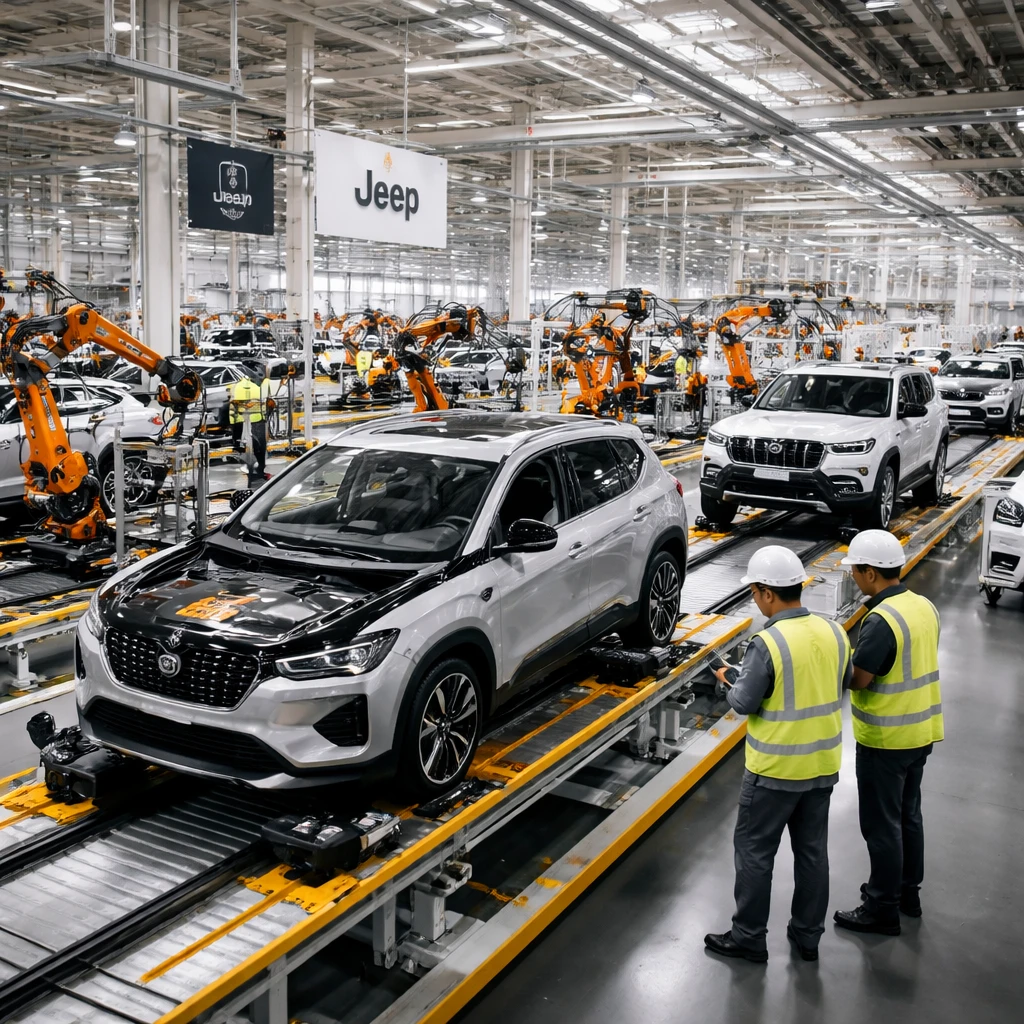
Stellantis NV and China’s Dongfeng Motor Group have signed a deal to produce Peugeot- and Jeep-branded electric vehicles at their Dongfeng Peugeot Citroën Automobile Co. (DPCA) joint venture plant in Wuhan, with production planned to start in 2027. The arrangement expands a partnership that the companies said spans 34 years.
The agreement envisages a combined investment exceeding 8 billion yuan - roughly equivalent to €1 billion - and Stellantis is expected to contribute about €130 million of that total. The DPCA Wuhan facility is slated initially to build two all-new Peugeot-branded new energy vehicles and two Jeep-branded off-road new energy vehicles intended for the Chinese market as well as for global export, according to the announcement.
Peugeot’s models are to be derived from concept cars the company unveiled at the 2026 Beijing Auto Show. Alongside the investment agreement, the partners executed a non-binding memorandum of understanding aimed at deepening cooperation - focused on achieving greater scale, sharing technical expertise and developing joint research and development capabilities.
“With a track record of more than 30 years of collaboration and shared automotive expertise, Stellantis and Dongfeng are ready to further leverage their strengths and introduce all-new vehicles with cutting-edge EV technologies from brands that customers worldwide trust and love,” Stellantis chief executive Antonio Filosa said in a statement.
Dongfeng Group Chairman Qing Yang said the agreement would forge “a new path featuring complementary strengths and win-win outcomes for all parties” and inject “strong momentum into DPCA’s transformation.”
Local industrial policy in Hubei province and support from the Wuhan municipal government back the project. Implementation of the plan remains conditional: execution of the relevant agreements - which include economic and operational terms - and the fulfilment of customary conditions and approvals are required before the program can move forward.
The combined investment and the product slate position the DPCA Wuhan plant to produce four distinct new-energy models from two legacy brands, with manufacturing aimed at serving both domestic buyers in China and export markets. The companies framed the effort as a step to deepen a long-running collaboration through shared manufacturing and R&D capabilities.
Background and next steps
The partners did not provide further operational details in the announcement beyond the planned model line-up, the expected timing of production from 2027 and the broad financial commitments. Further specifics - including final contractual terms, approvals and implementation milestones - remain to be completed under the agreements and customary conditions cited by the companies.