
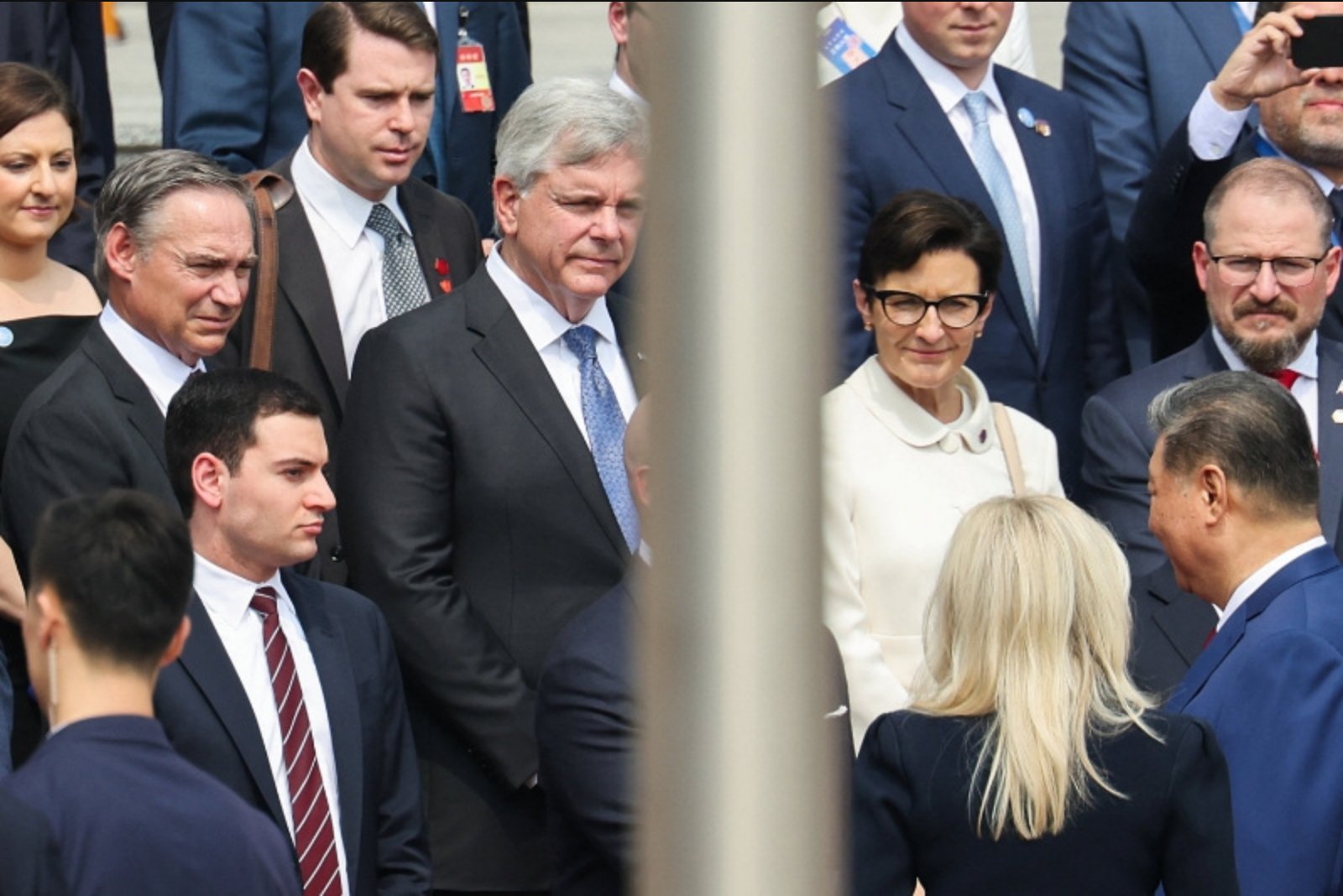
BEIJING, May 15 - GE Aerospace Chief Executive Larry Culp was seen departing a meeting at the headquarters of China’s National Development and Reform Commission (NDRC) on Friday, according to a witness present in the capital. The appearance at the powerful state planner's Beijing offices comes in the wake of high-level discussions between US President Donald Trump and Chinese President Xi Jinping.
President Trump told Fox News that, following his discussions in Beijing on Thursday, China had agreed to buy 200 Boeing commercial jets. That reported purchase would mark China’s first acquisition of US-made commercial airliners in nearly a decade. Because GE Aerospace is the primary supplier of engines for Boeing’s commercial aircraft, the company stands to benefit from the announced purchase.
Market participants, however, had anticipated an order closer to roughly 500 jets. The reported deal size fell well below that expectation, and both Boeing and GE Aerospace saw their shares decline after the announcement.
Culp was accompanied on the wider trip by Boeing CEO Kelly Ortberg as part of a business delegation that includes more than a dozen executives from large US conglomerates. The delegation is traveling with President Trump on what has been described as his first state visit to China in nearly a decade.
GE Aerospace did not immediately provide a response to a request for comment about the purpose of Culp’s visit to the NDRC.
Context and implications in brief:
- The reported 200-jet purchase represents a resumption of US commercial aircraft sales to China after an extended hiatus - a development that intersects with aerospace manufacturing and supply chains.
- As Boeing’s primary engine partner, GE Aerospace is a direct beneficiary of any uplift in Boeing deliveries tied to the reported order, though the scale of benefit is tied to the ultimate size and timing of aircraft purchases.
- The delegation’s composition - more than a dozen leaders of major US conglomerates - highlights the business dimensions of the state visit, with multiple corporate interests potentially affected by bilateral agreements.