
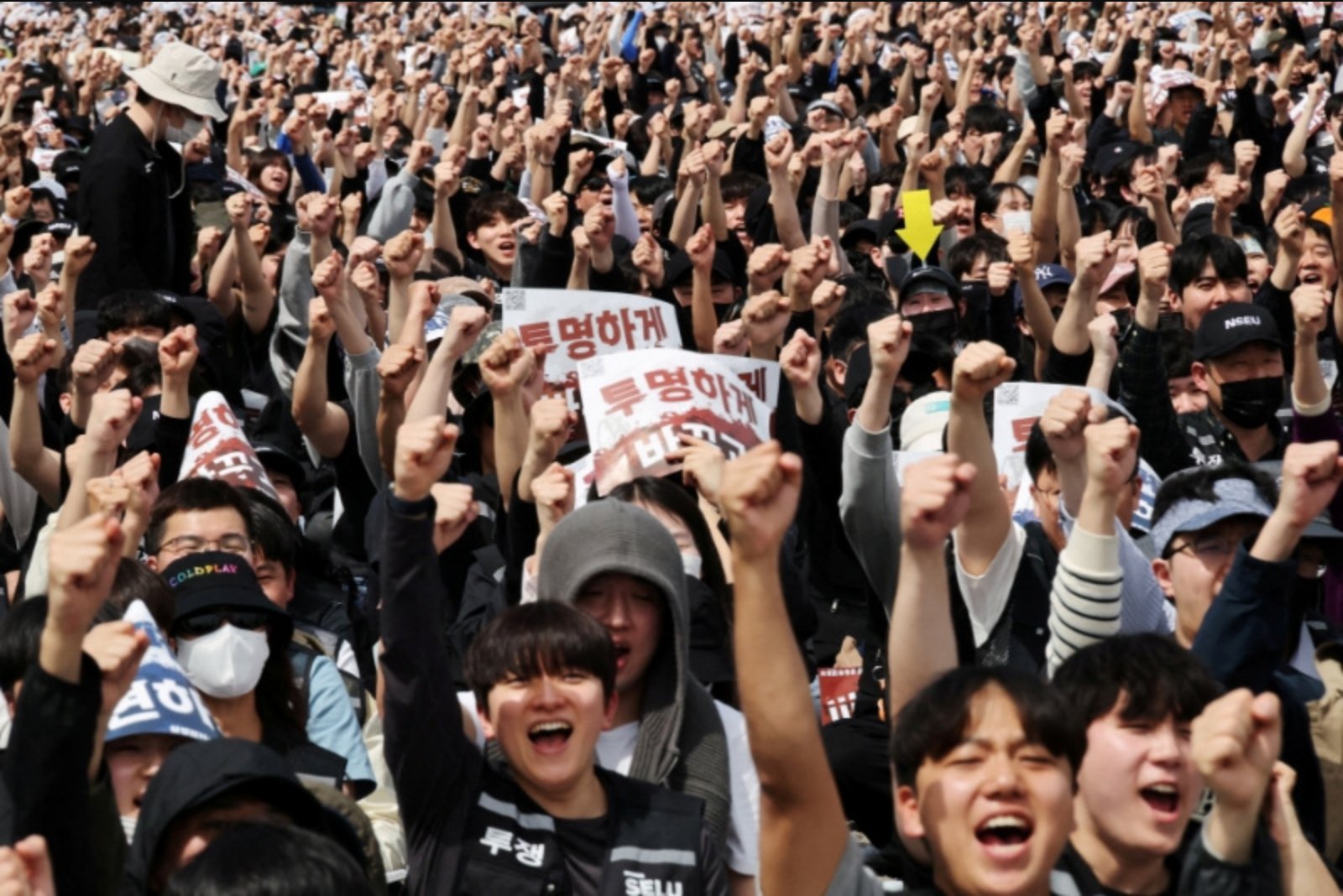
Samsung Electronics’ South Korean labour union on Friday reiterated its commitment to an 18-day strike scheduled to begin on May 21, despite the company making an offer to resume pay negotiations without conditions. The development contributed to a sharp sell-off in Samsung stock, which fell by as much as 5.9% amid investor concern about production disruption at the world’s largest memory chipmaker.
This week’s government-mediated talks over pay and bonus structures between Samsung and the union failed to reach agreement, raising the prospect of industrial action. The union said it would be open to renewed negotiations only after June 7, while maintaining its plan to proceed with the May 21 strike that it says could affect the company’s manufacturing operations.
Analysts cited mounting uncertainty around the extent to which a strike could interrupt output and whether Samsung would be able to honour delivery commitments to customers as drivers of the stock decline. "There appears to be rising concerns over delivery reliability if the strike takes place and sentiment that rivals could benefit from the uncertainty," said Ryu Young-ho, a senior analyst at NH Investment & Securities. Ryu also suggested that the prospect of a strike was growing because the company appeared not to be presenting fresh bargaining proposals to the union.
In a brief statement, Samsung Electronics confirmed it had proposed unconditional talks to the union but did not immediately provide additional comment.
South Korea’s Labour Commission has urged both parties to hold another round of government-mediated discussions on Saturday in a bid to head off the planned walkout. The union had previously said it would only enter talks if Samsung submitted a detailed proposal addressing its demands by 0100 GMT on Friday.
The union has expressed particular anger over what it describes as a large gap in bonus pay compared with rival chipmaker SK Hynix, and warned that more than 50,000 workers could participate in the planned work stoppage next week.
Senior South Korean government officials have publicly urged that a strike be avoided, citing potential damage to the broader economy. Officials including the prime minister and the finance minister warned that a Samsung stoppage could pose substantial risks to economic growth, export performance and financial markets.
Industry Minister Kim Jung-kwan said on Thursday that a strike would cause irreparable harm to the economy and that emergency arbitration might be unavoidable. Under South Korean law, only the labour minister can invoke emergency arbitration powers. Labour Minister Kim Young-hoon has emphasized the importance of continued dialogue between the company and the unions.
Market participants have been revising their assessments of the potential scale of disruption. In a report, JPMorgan suggested that the production impact of a strike could be larger than earlier estimated, reflecting the union’s expectation of broader worker participation. JPMorgan put the potential hit to Samsung’s operating profit at between 21 trillion won and 31 trillion won, or $14.08 billion to $20.79 billion, and estimated sales losses at roughly 4.5 trillion won.
Shares of Samsung Electronics were trading down 5.2% at 0305 GMT on the trading session referenced, compared with a 3.4% decline in the benchmark KOSPI index.
The situation has drawn close attention from investors, policymakers and industry watchers because of Samsung’s central role in global memory chip supply chains and the potentially wide-reaching effects of a prolonged stoppage. Both parties have at present signalled willingness to talk, but the union’s stated timeline and the unresolved disagreements over bonuses and pay have kept market nerves on edge.