
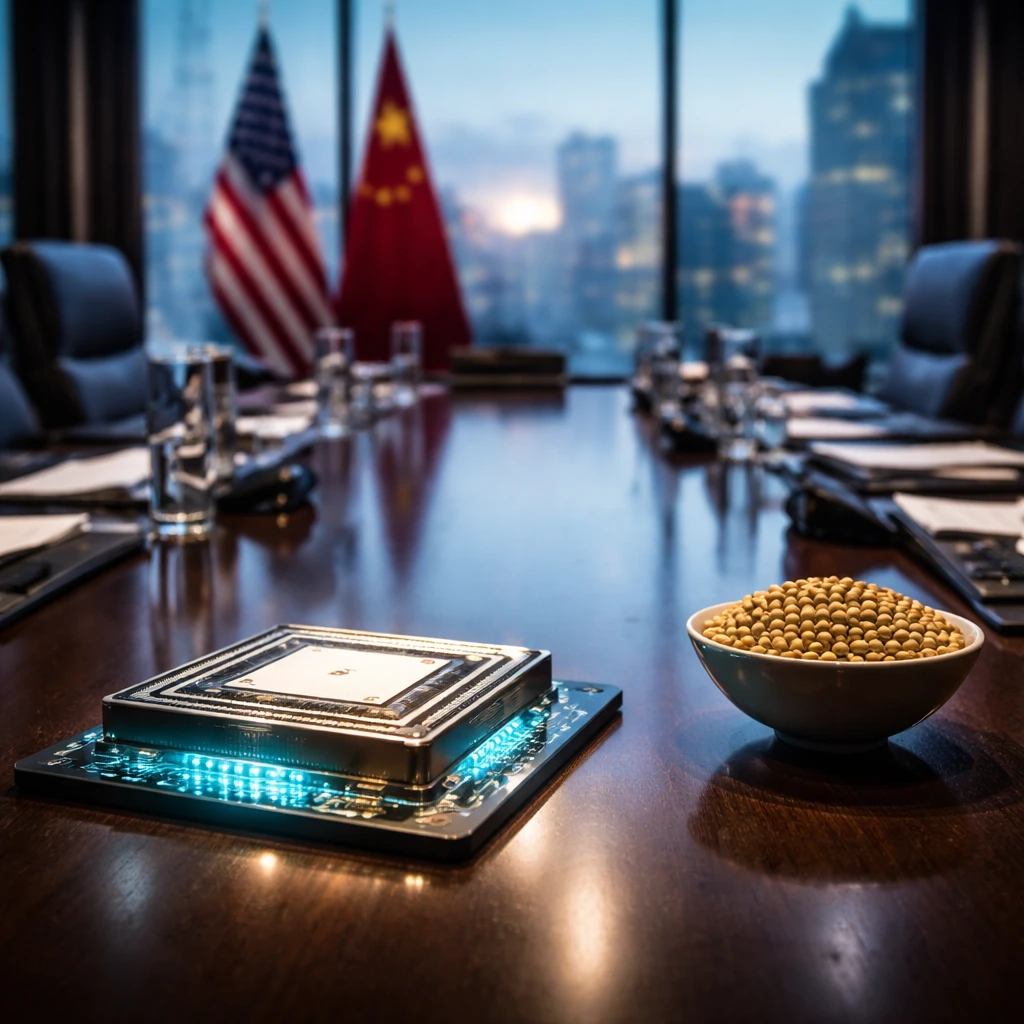
In a recent update regarding the diplomatic engagement between Washington and Beijing, U.S. Trade Representative Jamieson Greer has clarified that the ongoing strict export controls on semiconductor technology were not a major component of the recent bilateral meetings. Speaking to Bloomberg TV on Thursday, Greer explicitly stated that these restrictions did not serve as a primary topic of discussion during the talks.
Key Economic and Market Developments
The recent diplomatic interactions have highlighted several specific areas of economic activity and interest:
- Agricultural Trade Dynamics: Beyond the technology sector, Greer indicated an expectation that China will increase its commitments to purchasing large quantities of American agricultural products. He specifically noted that Beijing is currently maintaining its previous purchase commitments regarding soybeans.
- Semiconductor Corporate Engagement: While export controls were not a central theme of the official bilateral talks, Jensen Huang, the CEO of Nvidia, did discuss his company with Chinese representatives. However, Greer provided no specific details concerning the nature of those discussions and noted that the decision to acquire Nvidia chips rests with China.
- Trade-Focused Diplomacy: There is an indication from Greer that the sensitive issue regarding Taiwan is not expected to impact the board of trade, even though China has identified the island as a primary focus during current negotiations.
Market Impact: These developments suggest a bifurcated focus in U.S.-China relations, where agricultural trade may see stabilization or growth, while the high-stakes semiconductor sector remains governed by existing restrictive policies despite the presence of major tech CEOs at the summit.
Risks and Market Uncertainties
Several factors present ongoing uncertainty for markets and specific industrial sectors:
- Technological Sovereignty and Competition: There is an escalating push from China toward domestic independence in artificial intelligence. This is evidenced by major AI developers, such as DeepSeek, utilizing Huawei chips to develop their latest models. This shift poses a risk to the long-term market share of U.S. chipmakers if China successfully builds its own ecosystem.
- Regulatory and Sales Uncertainty: While Reuters reported that NVIDIA Corporation has received approval to sell its H200 AI chip—its second-most powerful model—to ten Chinese firms, no sales have been recorded to date. This creates uncertainty for the semiconductor sector regarding the actual realization of revenue from these approvals.
- Geopolitical Volatility: Although President Trump expressed optimism, the underlying tension regarding export controls (which were tightened last year to prevent China from accessing advanced AI technology) and the "Taiwan issue" remains a latent risk that could influence trade stability.
Sector Impact: The semiconductor and artificial intelligence sectors face direct risks from both regulatory tightening and the emergence of domestic Chinese competitors like Huawei, while the agricultural sector remains sensitive to shifts in Beijing's purchasing commitments.