
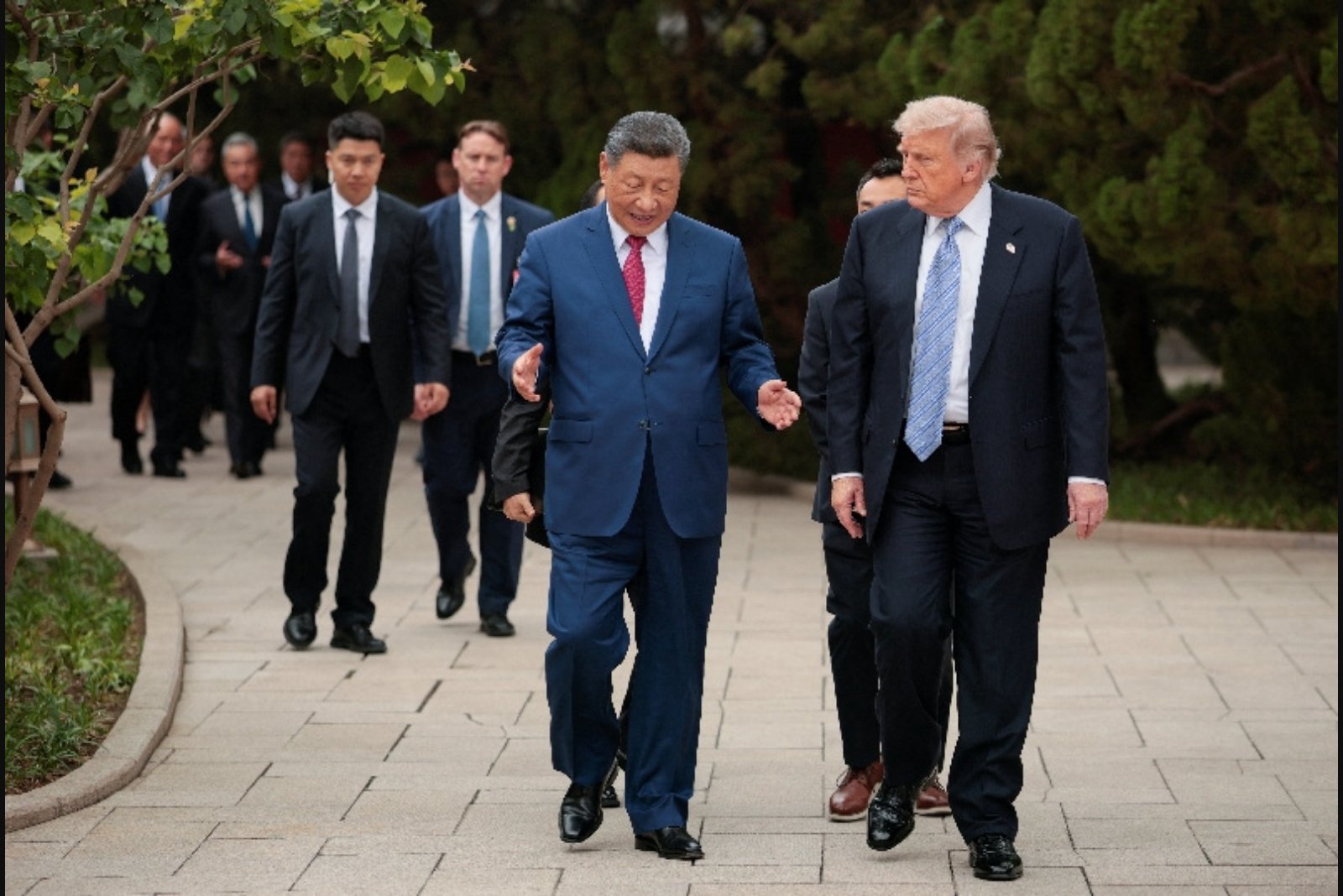
U.S. President Donald Trump told American media that his patience with Iran is waning and that he and Chinese President Xi Jinping had reached agreement during talks in Beijing that Iran cannot be permitted to possess a nuclear weapon and that the Strait of Hormuz must be reopened to commercial traffic.
Speaking after a second day of meetings that covered the Iran war, Taiwan, trade and other subjects, Trump said the two leaders had resolved a number of issues he viewed as difficult. The comments came as the region continues to experience disruptions to global energy supplies and heightened maritime risk.
According to Trump, Iran effectively closed the strait to most shipping in response to U.S.-Israeli attacks that began on February 28, producing an unprecedented interruption to energy flows. China, described as close to Iran and its principal oil customer, was a focal point of the discussions because of its ability to influence Tehran through trade and political ties.
Trump said the United States had suspended its own attacks on Iran last month but had implemented a blockade of Iranian ports. He added that he and Xi had agreed the strait should be open. The White House readout of the meetings noted that Xi had expressed opposition to the militarisation of the waterway and to any arrangement that would impose a toll on ships using it - a measure Iran has threatened.
In an interview aired on Fox Newsprogram "Hannity," Trump said he would not remain much more patient and urged Iran to "make a deal." He also commented on Irans hidden stockpile of enriched uranium, saying it would be unnecessary to seize it except for public relations reasons. "I dont think its necessary except from a public relations standpoint," he said. "I just feel better if I got it, actually. But its, I think, its more for public relations than it is for anything else."
On military transfers, Trump said Xi had told him China would not send military equipment to Iran, a point Trump described on the same program as "a big statement." The White House also said Xi had shown interest in buying more American oil to reduce Chinas future reliance on the strait.
Chinas foreign ministry did not publicly recount details of Xis exchanges with Trump on Iran, but it did issue a terse statement expressing frustration with the conflict. "This conflict, which should never have happened, has no reason to continue," the ministry said.
Diplomacy appears stalled
Efforts to negotiate an end to the conflict have been at an impasse. According to the accounts in the talks, Iran has refused to halt its nuclear program or surrender its stockpile of enriched uranium, while Tehran denies any intention to build a nuclear weapon. Both sides rejected recent proposals last week, contributing to a hold in diplomacy.
U.S. officials are seeking Chinese support to help end a conflict that has become politically costly in the run-up to U.S. midterm elections. Analysts quoted in the discussions, however, expressed doubt that Xi would push Iran to the point of severing military support, given Tehrans strategic utility as a counterweight to U.S. influence in the region.
U.S. Treasury Secretary Scott Bessent, speaking from Beijing in an interview on CNBC, said he expected China would "do what they can" to help reopen the strait, which the White House characterised as being in Chinas interest. Before the conflict, roughly one-fifth of global oil and liquefied natural gas shipments transited the waterway, underlining its importance to energy markets.
Maritime incidents escalate
The security situation at sea has continued to deteriorate. In the latest incidents, an Indian cargo vessel transporting livestock from Africa to the United Arab Emirates sank on Wednesday off the coast of Oman. India condemned the attack and said all 14 crew members had been rescued. The maritime security firm Vanguard assessed the vessel appeared to have been struck by a missile or drone, triggering an explosion.
Separately, the British maritime security agency UKMTO reported that "unauthorised personnel" boarded a ship anchored off the UAE port of Fujairah and were steering it toward Iran. Vanguard said a company security officer reported the vessel had been taken by Iranian personnel while at anchor. Fujairah, the UAEs only oil port on the Gulf of Oman located just outside the Strait of Hormuz, allows some shipments to reach markets without transiting the chokepoint - a logistical contingency that has grown in relevance as the straits security has become increasingly uncertain.
Regional and political fallout
The conflict has produced extensive casualties and secondary violence across the region. Thousands of Iranians were killed in the initial U.S. and Israeli air strikes during the opening weeks of the war, and thousands more have died in Lebanon since fighting resumed between Israel and Hezbollah, the Iran-backed group.
Talks between Lebanese and Israeli officials in Washington on Thursday were described by a senior State Department official as productive and positive, with negotiations set to continue on Friday.
Trump framed his objectives for initiating the campaign as threefold: to dismantle Irans nuclear program, to remove its capacity to attack neighbouring states, and to create conditions that would facilitate the overthrow of Irans government by its own citizens.
In testimony to a U.S. Senate committee on Thursday, a senior U.S. admiral said Irans ability to threaten its neighbours and U.S. regional interests had been "significantly degraded." That official, Admiral Brad Cooper, declined to directly address reporting that Iran had retained substantial missile and drone capabilities.
Domestically, Irans rulers face a political environment shaped by the governments forceful response to earlier anti-government protests this year. The administration has encountered no organised domestic opposition since the war began, and its control of the strait has enhanced Tehrans negotiating leverage. Iran is seeking relief from sanctions, reparations for wartime damage and formal acknowledgement of its control over the waterway.
As leaders met in Beijing, the convergence on two central points - preventing Iran from acquiring a nuclear weapon and re-opening the Strait of Hormuz - sets a narrow framework for further diplomacy. Yet with key proposals rejected and maritime attacks continuing, the pathway to a negotiated settlement remains uncertain and contingent on actions by multiple regional and global actors.