
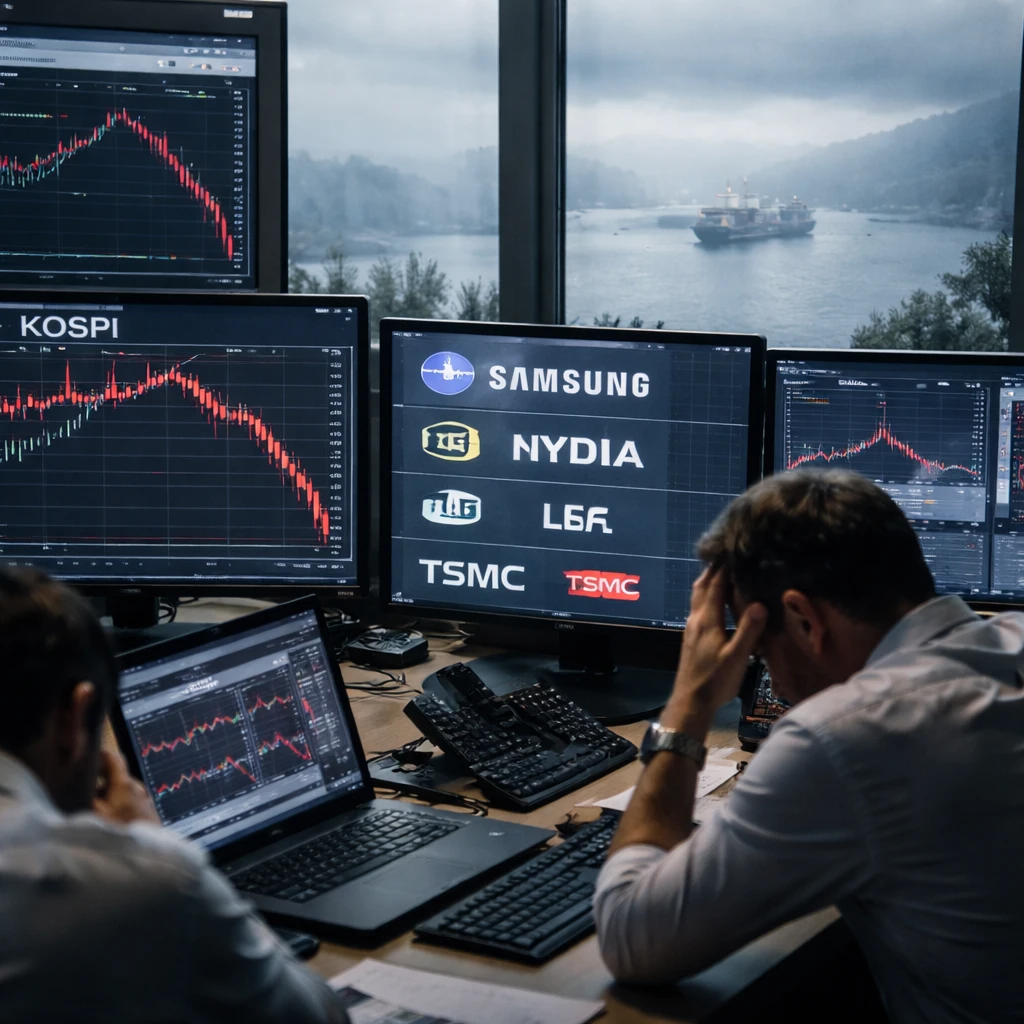
Semiconductor stocks around the world moved lower on Friday, driven by a heavy pullback in South Korean markets and rising geopolitical uncertainty as talks between the United States and Iran showed little forward progress.
Early U.S. session weakness included a 2.3% premarket drop for Micron, which extended to more than 3% by 04:34 ET. Nvidia retreated 2.3%, Broadcom fell 2.8%, AMD declined 3.4% and Intel dropped 5%. Dutch equipment maker ASML registered a 4.5% fall as well.
The selloff mirrored broad losses across Asian bourses, where South Korea's KOSPI plunged by more than 6% after moving off a recent record high north of 8,000. The index's steep slide was amplified by heavy declines in its two largest components by market capitalization.
Samsung Electronics tumbled 8.6% following the labour union's confirmation of plans for an 18-day strike beginning May 21, a development that rattled sentiment across the global chip supply chain. SK Hynix dropped 7.7%. Together, those two companies account for a record 42.2% weighting in the KOSPI, according to Manulife Investment Management.
European semiconductor names also retreated Friday, with ASML, ASM International and BE Semiconductor slipping 4.6%, 4.2% and 2.7%, respectively.
Separately, investors were monitoring the second day of talks between U.S. President Donald Trump and Chinese President Xi Jinping in Beijing. The two leaders reportedly agreed on the need to keep the Strait of Hormuz open - a strategic shipping lane that was effectively shut down by Iran after U.S.-Israeli strikes began on February 28, triggering significant disruption to global energy supplies.
President Trump said on Thursday that his patience with Iran was wearing thin after discussions with Xi and after reports that Iranian personnel had seized a vessel off the United Arab Emirates. The United States had paused direct strikes on Iran last month but has since imposed a blockade on Iranian ports.
Efforts to negotiate an end to the conflict appear stalled, with Iran refusing to abandon its nuclear program or surrender its stockpile of enriched uranium, according to reports from the talks. That diplomatic impasse, coupled with the prospect of extended industrial action at Samsung, has contributed to a wave of selling in chip-related equities.
Contextual note - Market participants reacted to both supply-side risks in semiconductor manufacturing and elevated geopolitical tensions that affect shipping lanes and energy flows. The combined effect pressured chip stocks across U.S., European and Asian markets.