
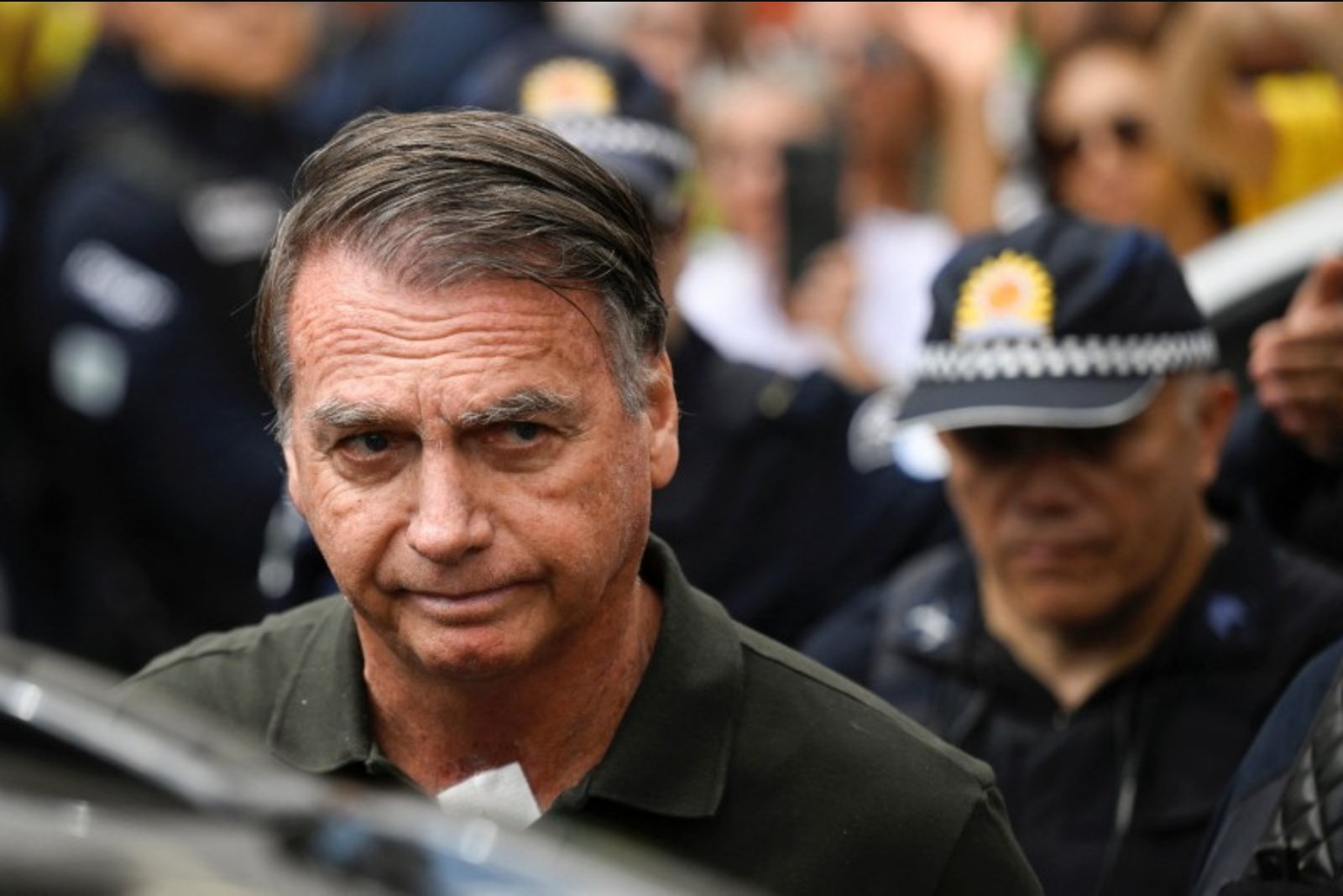
The upcoming film "Dark Horse," a dramatized account of Jair Bolsonaro's life that casts American actor Jim Caviezel in the lead role, has been caught up in a political funding controversy that reaches into Brazil's financial and electoral arenas.
Presented by its makers as a tense account of its subject's struggles, the production was this week implicated in allegations that a jailed banker, Daniel Vorcaro, promised substantial financial support to Senator Flavio Bolsonaro, the former president's son and his preferred contender for the presidency later this year.
According to a report by news website The Intercept Brasil, which cited documents and message traffic it examined, Vorcaro pledged $24 million to aid production of the film. The report said roughly half of that sum had already been paid. The account included an audio recording and various texts purportedly exchanged between the senator and the banker in which they addressed each other as "brother."
A source close to the Federal Police investigation confirmed that messages between the senator and the banker were among the records seized by police.
Senator Flavio Bolsonaro acknowledged that he had secured a funding arrangement with Vorcaro, but he insisted the contract was for private sponsorship of a private film about his father's story and unrelated to the Federal Police probe into Vorcaro. "What happened was a son seeking private sponsorship for a private film about his own father's story," the senator said in a statement, adding that his meeting with the banker occurred before news of the investigation emerged. "I did not offer any benefits in return," he said.
The scandal centers on the collapse of Banco Master, the bank once controlled by Vorcaro, whose arrest in March followed allegations that he led a multibillion-dollar fraud operation. The bank's failure has consumed Brazil's political conversation, with actors across the political spectrum attempting to distance themselves from Vorcaro while also accusing opponents of links to the bank.
Senator Bolsonaro has publicly denied ties to Vorcaro, saying attempts to connect him with Banco Master have been politically motivated. He has pointed to an earlier meeting between Vorcaro and President Luiz Inacio Lula da Silva and challenged narratives tying his family to the bank. Polling places Senator Bolsonaro and President Lula nearly tied ahead of the October presidential election, though analysts note the scandal has likely harmed the senator's position.
Production company GOUP Entertainment, which is producing "Dark Horse," said the film had more than 10 investors but denied receiving any funds from Vorcaro or his companies. The producer also did not disclose the film's overall budget but confirmed that Senator Bolsonaro had approached private investors for contributions. The senator himself said Vorcaro stopped honoring scheduled payments and that he and others had therefore sought additional backers.
"Dark Horse" is slated for release in September, one month before Brazil's presidential vote in October. American director Cyrus Nowrasteh described the film to Deadline last month as a "tense political thriller about power, media and faith under fire," inspired by Bolsonaro's life and featuring Caviezel in the title role.
Filming wrapped in December, and a few weeks later Caviezel posted a message wishing a merry Christmas to the former president, who has since been sentenced to 27 years in prison for plotting a coup after his 2022 election defeat. In that post Caviezel wrote, "Pray with me for our brother Jair and his family." Representatives for Caviezel and Nowrasteh did not provide comment when asked.
The Intercept Brasil account included a text exchange from October, which investigators say was among seized records, in which the senator invited Vorcaro to meet with Caviezel and Nowrasteh for dinner. The banker appeared to offer his home as a venue, and the senator replied he could host the gathering. It is not clear whether that meeting ever occurred.
While the film's producers did not provide budget figures, a commitment of $24 million would position "Dark Horse" among the most costly Brazilian productions on record. By way of comparison, Brazil's Oscar nominee earlier this year cost $5 million, and a recent film by a prominent Brazilian director was reported to have cost roughly $9 million. Another recent Caviezel project, set in Colombia, has been reported elsewhere as having a production budget of about $14.5 million.
Critics of the former president have reacted to the controversy with visible satisfaction. Kleber Mendonca Filho, director of Brazil's current Oscar nominee and a vocal critic of Jair Bolsonaro, posted on social media that the revelations were a positive moment for Brazilian cinema made through conventional means, contrasting the alleged large-scale funding with the modest budgets of other independent projects.
As the story continues to unfold, key questions remain about the exact monetary trail of the alleged payments, the full slate of investors backing "Dark Horse," and the potential political repercussions as Brazil heads into a closely contested election. Authorities have seized communications that may shed light on those transactions, and participants in the film's financing have offered differing accounts of what was promised, paid, or ultimately unfulfilled.
The episode sits at the intersection of culture, finance and politics: a high-profile movie production touches on electoral dynamics, alleged financial misconduct, and debates about the role of private sponsorship in politically charged artistic projects. For now, stakeholders on multiple sides insist either that they received no tainted funds or that arrangements were purely private and separate from ongoing criminal inquiries.