
Economy May 15, 2026 06:57 AM

Finnish president says US will keep NATO presence despite recent tensions

Alexander Stubb tells Vilnius forum that American forces remain essential for addressing Russian nuclear threats, even as troop movements in Europe stir debate

By Maya Rios

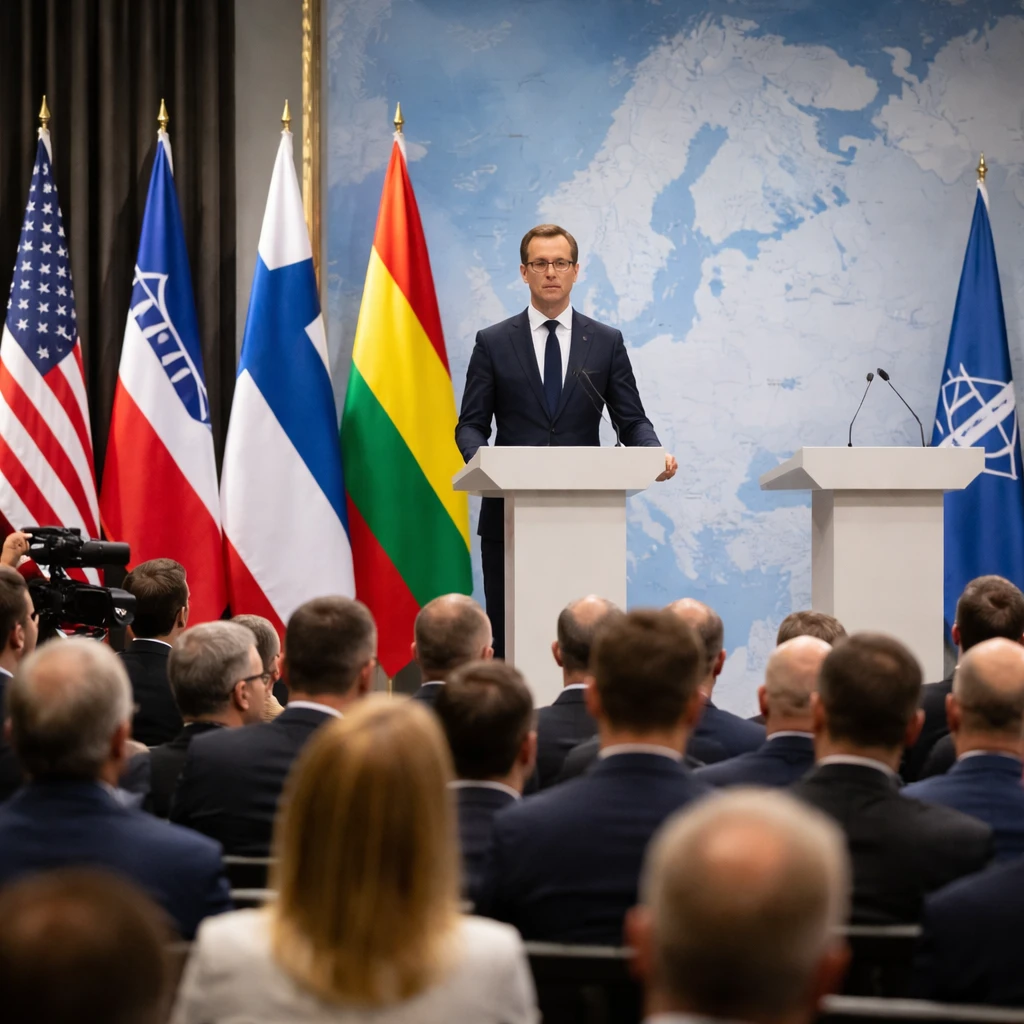
Speaking at the Lithuania-Finland Business Forum in Vilnius, Finnish President Alexander Stubb argued the United States will retain its NATO presence because of strategic interests in Europe, pointing to the proximity of Russian nuclear forces. His comments came alongside remarks from Lithuanian President Gitanas Nauseda and after reports of recent U.S. troop deployment changes in Europe.

Finnish president says US will keep NATO presence despite recent tensions

Key Points

  • Finnish President Alexander Stubb said the United States will retain its NATO presence in Europe due to strategic interests and proximity to Russian nuclear forces - sector impacted: defense.
  • Stubb noted most of Russia’s nuclear weapons are concentrated on the Kola peninsula and in Murmansk, about 100 kilometers from Finland’s border, and said they are aimed at major U.S. cities - sector impacted: national security and defense markets.
  • Reports indicate U.S. plans to send about 4,000 soldiers to Poland were cancelled and President Donald Trump has announced withdrawals of at least 5,000 troops from Germany, suggesting potential wider reductions from roughly 85,000 U.S. forces in Europe - sector impacted: defense and geopolitical risk for markets.

Finnish President Alexander Stubb said Friday at the Lithuania-Finland Business Forum in Vilnius that the United States will continue its presence in NATO because strategic interests in Europe make withdrawal unlikely.

Stubb framed the issue around geography and military reality, noting that much of Russia’s nuclear arsenal is located in areas he named as the Kola peninsula and Murmansk, roughly 100 kilometers from Finland’s border. He stressed the immediate threat those forces represent to major American cities.

"They are pointed at New York, Washington DC, and LA," Stubb said at the conference.

Also speaking at the forum, Lithuanian President Gitanas Nauseda urged NATO members to remain united. He characterized NATO as the most effective military-based organization in centuries and called for cohesion among allied governments.

Stubb further highlighted a divergence between rhetoric and enacted policy when discussing recent statements about U.S. force posture in Europe. "The United States is not going to leave the alliance," he said. "America needs Europe."


Stubb’s remarks came after reports that the United States scrapped plans to send roughly 4,000 army soldiers to Poland. They followed earlier announcements from President Donald Trump that he would pull at least 5,000 troops out of Germany and had suggested a wider reduction of the approximately 85,000 U.S. military personnel stationed across Europe.

The president’s public criticisms of European NATO members have focused on allied defense spending levels and, more recently, on European responses to his actions in the Middle East. In that context, Trump has faulted some allies for their stances regarding what he described as his attack on Iran.

Stubb’s intervention at the Vilnius forum underscores a central argument among allied capitals: that the United States retains strategic reasons to remain actively engaged within NATO structures and on the continent, even amid political debates about troop levels and burden-sharing.

The conference setting brought together political leaders to reiterate commitments to collective defense and to discuss the gap that can exist between public political declarations and concrete military policy decisions.

Risks

  • Uncertainty about actual troop deployments versus political statements, reflecting a gap between rhetoric and enacted policy - affects defense planning and military contractors.
  • Potential for strained relations among NATO members due to criticism over defense spending and differing reactions to U.S. actions in the Middle East, which could complicate alliance cohesion - impacts defense and diplomatic sectors.
  • Reported changes or cancellations in troop movements introduce short-term uncertainty for regional security dynamics and for markets sensitive to geopolitical risks - affects defense stocks and regional investment sentiment.

More from Economy

Trump Says No Commitment on Taiwan After China Visit; Decision Pending on $14 Billion Arms Sale May 15, 2026 Czech National Bank Says It Will Hike Rates If Middle East Conflict Pushes Up Core Inflation May 15, 2026 Italy Revises April Inflation Lower; HICP Shows 2.8% Annual Gain May 15, 2026 Rising U.S. Debt May Limit Warsh’s Plan to Shrink the Fed’s Footprint May 15, 2026 Powell’s Lasting Mark May Be His Outreach to Congress, Not Just Rate Moves May 15, 2026