
Overview
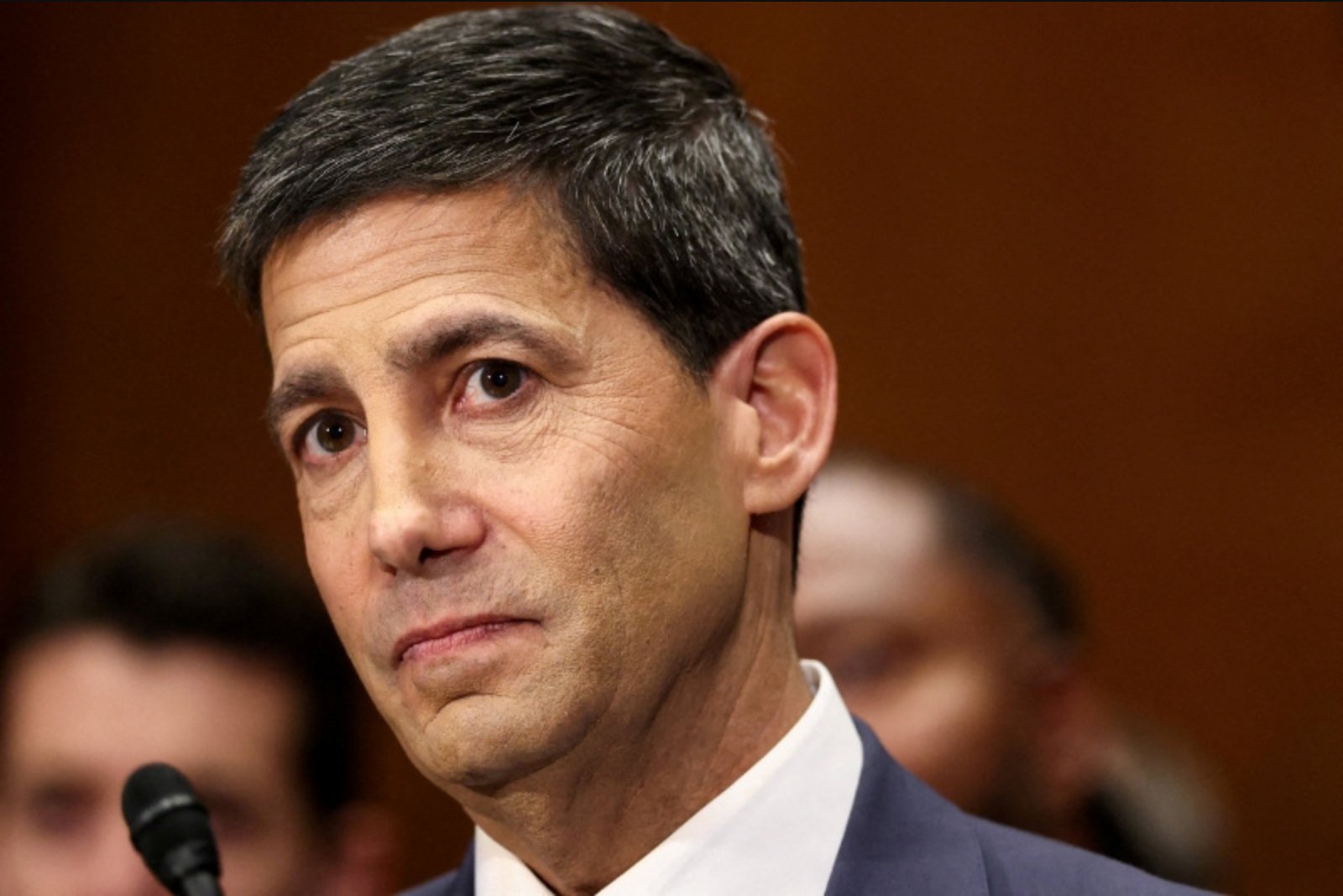
Incoming Federal Reserve chair Kevin Warsh, confirmed by the U.S. Senate to replace Jerome Powell, has argued for shrinking the central bank's active role in markets and returning to a more traditional stance of monetary policy. That strategy aims to keep the Fed focused on fighting inflation and avoid distorting asset markets by extensive intervention. But several economists and former Fed officials caution that rising federal debt and a potential erosion of Treasuries' special status could constrain how much the Fed can pare back its holdings without affecting borrowing costs across the economy.
Market constraints on a smaller Fed balance sheet
Warsh's approach - reducing the Fed's "footprint" in financial markets - faces practical limits, according to analysts. Hanno Lustig, a finance professor at Stanford University's Graduate School of Business, said the market for Treasuries could show structural gaps as the Fed steps back. Those gaps would either push long-term interest rates higher - harming businesses, households and the government's own borrowing costs - or compel the Fed to intervene and help hold borrowing rates down.
Lustig, citing recent research, said top developed markets like the United States have lost their "convenience yield" - the implicit rate benefit accorded to government debt in countries with risk-free standing and independent central banks. He urged clear communication from policymakers when yields move in response to fiscal shocks, noting that labeling such moves as mere "hiccups" could mask the need for central bank purchases to smooth market functioning. "In order to have real price discovery in the Treasury market, we need a central bank that will not intervene," Lustig added at a recent conference held at Stanford's Hoover Institution.
How the Fed's balance sheet works and where Warsh sees problems
Warsh has long criticized the Fed's pattern of expanding its balance sheet during crises or bank funding stress without transparent rules about which securities to buy, in what amounts, and how to unwind the positions afterward. Instead of following a clear plan, the Fed's holdings have often changed through a combination of probing liquidity operations and broad-based interventions - responses the incoming chair has found problematic.
Quantitative easing - the Fed's purchase of longer-term securities when the policy rate has reached the effective lower bound - replaces assets in the financial system with cash, which tends to lower longer-term interest rates and support spending and growth. The Fed's balance sheet therefore serves as a powerful, theoretically unlimited tool. The central bank's asset stock expanded to around $9 trillion at the 2022 peak, later fell, and currently stands at about $6.7 trillion as the Fed manages reserves to keep banks flush. That amount has been rising slowly again to maintain ample liquidity.
Debate within policy circles
There is no broad consensus on how large-scale Fed asset purchases translate into economic outcomes. While many policymakers agree these measures work to some degree, questions remain over when and how the balance sheet should be used. Ellen Meade, a former senior Fed adviser now on the faculty at Duke University, said a review of balance sheet policy is overdue and could take nine to 12 months, involving staff memos, briefings and committee deliberations before any agreement is reached.
Other officials see risks in shrinking holdings too far. Fed Governor Christopher Waller argued that large asset holdings principally provide liquidity for banks and warned that reducing reserves to the point where banks must compete for them would be "extremely inefficient and stupid." A Brookings Institution survey of 29 top Fed and economic analysts found most respondents believe the size of the Fed's balance sheet does not presently threaten U.S. economic growth or financial stability.
Fiscal backdrop complicates the calculus
Beyond internal Fed debates, rising federal deficits create a broader constraint. The Congressional Budget Office projects a federal deficit equal to 5.8% of gross domestic product for fiscal year 2026, compared with a 50-year average of 3.8%. Higher interest costs are a key driver of that increase, which in turn affects the supply and demand dynamics for Treasury securities.
Research from the St. Louis Fed supports concerns about a weakening Treasury advantage. Economists YiLi Chien and Kevin Bloodworth concluded that as the Fed began scaling back its balance sheet in 2022, the convenience yield on U.S. Treasuries fell by roughly 40 basis points. In practical terms, that meant the United States had to offer investors about 40 basis points more to borrow, reducing Treasuries' implicit rate advantage.
Those dynamics pose a difficult choice for Warsh. To reduce the Fed's holdings further without pushing yields higher, the central bank may need to coordinate closely with the Treasury on debt issuance and other measures. Alternatively, Warsh could accept that higher yields are the price of large deficits - a stance that would edge into the fiscal realm the incoming chair has criticized as "mission creep."
Quantifying the trade-offs
Bill Nelson, a former Fed staffer and now chief economist at the Bank Policy Institute, analyzed scenarios in which the central bank used regulatory and other tools to shrink its balance sheet by an additional $2 trillion. He found the effect on the policy rate depends heavily on how the reduction is implemented and how the Treasury responds. The outcome could range from a 0.84-percentage-point lowering of the policy rate to a possible increase, underscoring the uncertainty anchored in operational design and fiscal interactions.
Voices urging disciplined boundaries
Some observers see Warsh's emphasis on a smaller balance sheet as resonant with a broader desire for a more restrained central bank. Jeffrey Lacker, who headed the Richmond Fed when Warsh was a governor, said Warsh's commentary "resonates strongly" with those who favor limiting the central bank's involvements that resemble debt management. Lacker contended that if the Fed pulls back from such activities, it would clarify market expectations and help bolster Treasury market resilience, forcing the Treasury to "face the music" on fiscal matters.
Implications for markets and policy
Analysts and former officials paint a picture of constrained choices. If the Fed reduces its balance sheet aggressively without sufficient private demand for Treasuries, long-term rates could rise, influencing borrowing costs for businesses and households and increasing the government's interest bill. If the Fed steps in to smooth rates, it would undercut the objective of returning to a more conventional, smaller-footprint central bank.
The tension between a desire for limited market intervention and the realities of elevated fiscal borrowing creates a narrow path for Warsh. He must weigh the priority of a disciplined, transparent balance-sheet framework against the risk that Treasuries may no longer confer the same implicit benefits that helped stabilize markets in past cycles.
Conclusion
Warsh inherits a complex set of trade-offs. His stated preference for a smaller, less interventionist Fed aims to restore clearer, rate-focused monetary policy. Yet rising deficits and a decline in Treasuries' convenience yield mean that any meaningful reduction in the Fed's balance-sheet presence will require careful design, clear communication, and possibly closer coordination with fiscal authorities to avoid unintended spikes in borrowing costs or renewed Fed market support.