
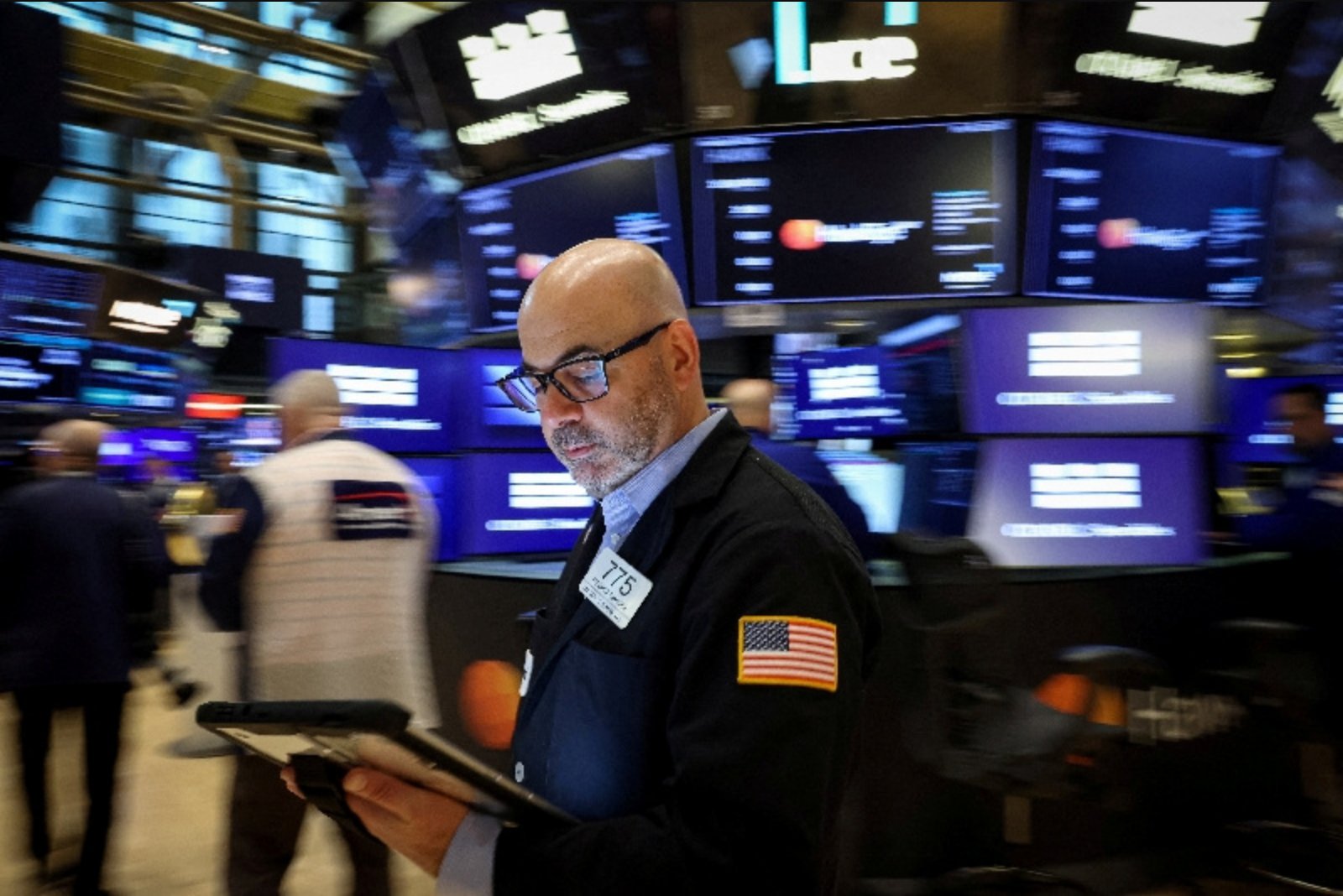
Two themes that have been moving U.S. markets - the rapid expansion of artificial intelligence-related spending and the strain of inflation on household outlays - will be in the spotlight next week as Nvidia and several major retailers release quarterly results.
Stock benchmarks have continued a climb this week, with the S&P 500 and the technology-focused Nasdaq Composite reaching new highs. Market participants are weighing two developments that have been exerting outsized influence on price action - the surge in AI-driven chip demand and a jump in energy costs tied to the conflict in Iran - which have been unfolding almost on parallel tracks, according to Allen Bond, a portfolio manager at Jensen Investment Management.
"There is not a lot of overlap in the two narratives, but one day to the next, the developments ... can really drive the market," Bond said.
Since its year-to-date low in late March, the S&P 500 has rebounded by roughly 18% and is registering more than a 9% gain for 2026. That sharp advance has prompted some investors to expect a pause. A concern cited by several market watchers is that a relatively small group of stocks have led the recent return, leaving a large swath of the index behind.
Data from LSEG indicated that only about one-fifth of S&P 500 components had outperformed the index since the March 30 low as of Thursday morning. Patrick Ryan, chief investment strategist at Madison Investments, cautioned that the concentration of leadership is not necessarily a sign of market health.
"There are really a smaller set of names driving the overall index returns again," Ryan said. "It’s not necessarily a healthy market when you have that many stocks being left behind."
Nvidia on the calendar
Nvidia is scheduled to report results on Wednesday. The company and the semiconductor sector more broadly have been key drivers of the recent market advance, reflecting intense demand from technology firms building data centers and other AI infrastructure.
Nvidia shares have climbed more than 40% since the March low. The Philadelphia SE semiconductor index has gained about 70% in the same period. Over a longer span, Nvidia’s AI-related products have been a major engine for the stock, which has risen more than 1,900% since the start of the most recent bull market in October 2022.
Investors and strategists will be looking to Nvidia’s report for signs that justify the sharp appreciation in its valuation and the company’s prominent position in the market for chips used in AI workloads. Bond said the company’s results will be treated as an indicator of the overall health of the semiconductor industry.
"What we need to see from Nvidia is evidence that justifies the increase in the stock price and justifies their position and their benefit from this increased spending in data centers," Bond said. "The results will be looked at ... as a signal into the health of the rest of the industry."
Another focus will be whether competitors are chipping away at Nvidia’s market share. Yung-Yu Ma, chief investment strategist at PNC Financial Services Group, said the narrative is likely to center on Nvidia’s ability to sustain its leadership.
"It’s probably going to be more a story of, is Nvidia able to defend its leadership position as well as it has been able to the past few years?" Ma said.
Retailers to report on consumer spending
Investor attention will also turn to retail earnings. Walmart, the world’s largest retailer, is due to post quarterly results on Thursday, and other major chains reporting next week include Home Depot, Target and TJX Cos.
Market participants are particularly attuned to comments about recent spending patterns as consumers absorb higher costs. Data released this week showed elevated monthly readings for both consumer and wholesale prices, and the Producer Price Index for April recorded its largest increase since March 2022. Gasoline prices have also climbed, with the U.S. national average topping $4.50 a gallon earlier this month for the first time in nearly four years, a development that could weigh on household budgets.
PNC’s Ma said investors will want clarity from retailers on whether consumer behavior has shifted in response to rising costs. He emphasized that the resilience of household spending is a key determinant for retail earnings performance.
"At some point, these costs are going to catch up with consumers and are going to start to moderate spending," Ma said. "That is probably what is more at stake for the retail earnings is, how resilient is the consumer?"
What market participants will watch
- How Nvidia’s revenue and guidance reflect demand for AI-related chips and data center spending.
- Whether comments from Walmart and other retailers indicate any recent change in consumer spending patterns amid higher energy and producer prices.
- Signs that the recent market rally is broad-based versus being led by a limited number of high-performing stocks.
Investors monitoring valuations may also weigh tools that assess whether fast-rising names like Nvidia still present attractive risk-reward profiles. One such approach referenced by market commentators is the use of valuation models and fair-value calculators to evaluate whether a stock is reasonably priced after a rapid run-up.
Overall, next week’s earnings flow is expected to provide fresh evidence on two intertwined but distinct forces shaping the market: the strength of AI-driven capital spending in technology and the resilience of consumer demand in the face of inflationary pressures tied to energy costs.