
Stock Markets April 22, 2026 05:29 AM

Kevin Warsh Emphasizes Fed Independence, Calls for Measured Balance-Sheet Reduction at Senate Hearing

Nominee urges clearer communications, a revised inflation framework and coordination with Treasury while acknowledging a narrow window to hit price-stability goals

By Caleb Monroe
Kevin Warsh Emphasizes Fed Independence, Calls for Measured Balance-Sheet Reduction at Senate Hearing

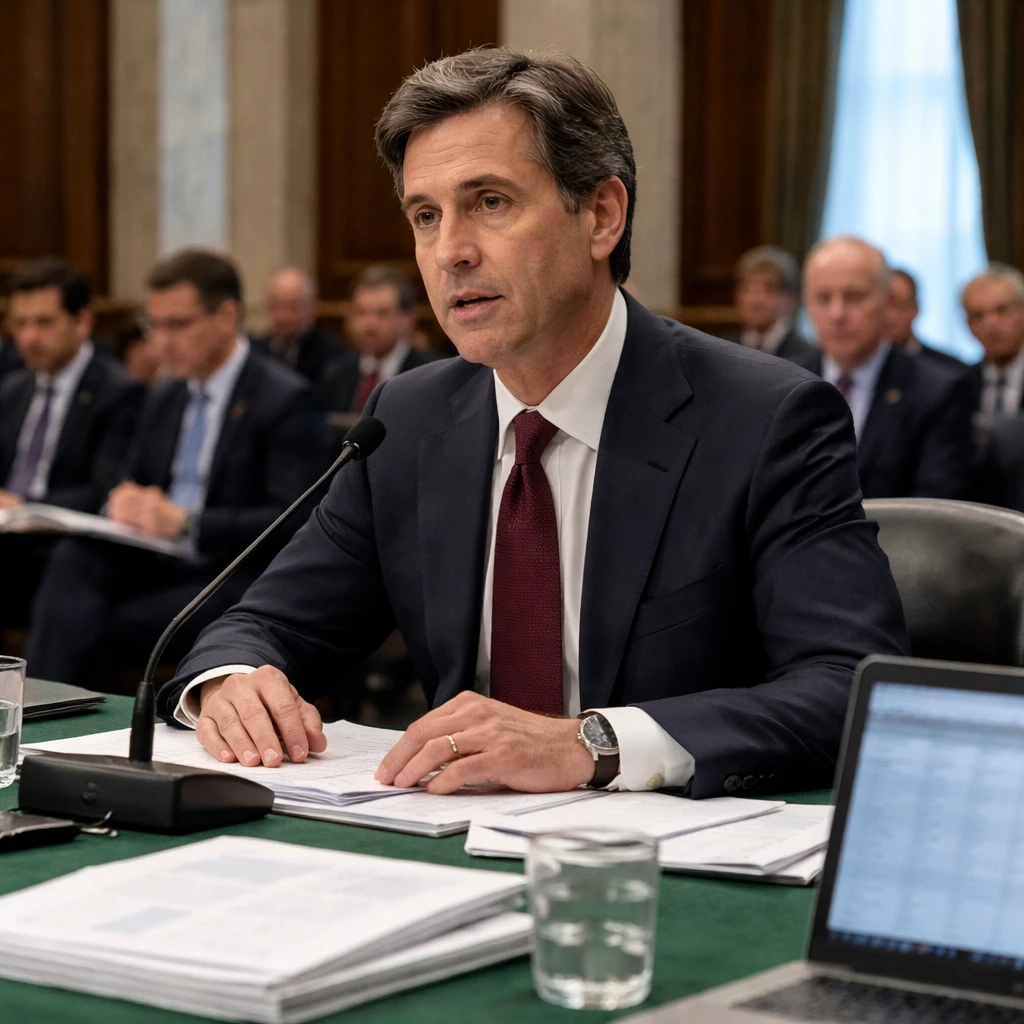
At his Senate Banking Committee confirmation hearing, Federal Reserve Chair nominee Kevin Warsh stressed his commitment to Fed independence and said he has not pre-committed to policy moves. He advocated for a slow, deliberate reduction of the Fed's balance sheet with prior market signaling and Treasury coordination, recommended changes to how the Fed frames and communicates policy, and proposed using trimmed-mean and median inflation measures rather than core PCE. Warsh said inflation is improving but requires additional work and that the labor market is broadly near full employment. Senator Tillis pledged to oppose the confirmation pending a Department of Justice investigation into Chair Powell, a stance that could stall the nomination if not joined by Democrats in committee.

Key Points

  • Warsh affirmed his commitment to Federal Reserve independence and said he has not pre-committed to policy actions.
  • He favors a slow, deliberate reduction of the Fed's balance sheet with advance market signaling and coordination with Treasury, plus reforms to the Fed's communication practices.
  • Warsh recommends shifting toward trimmed-mean and median inflation measures, citing lower readings versus core PCE; he also noted AI is enhancing supply-side productivity.

Kevin Warsh, President Bush's former economic adviser and current nominee to lead the Federal Reserve, told the Senate Banking Committee on Wednesday that he takes the institution's independence seriously and has not pre-committed to any particular policy path.

During his confirmation hearing, Warsh outlined several policy preferences while emphasizing deliberate action. He said the Fed should shrink its balance sheet slowly and with clear signals to markets in advance, and that this process should be coordinated with the Treasury Department. He also argued for reform to the Fed's framework and to how it communicates, contending that Fed officials are communicating too often.

On price stability, Warsh said the trajectory of inflation has been improving but that additional work is still necessary. He warned that the Fed has a short window to return inflation to target levels and attributed the current above-target inflation to policy errors made in 2021 and 2022.

Warsh proposed adopting a new inflation framework that places greater weight on trimmed-mean and median measures of inflation rather than relying principally on core personal consumption expenditures. He cited specific readings for those measures: the Dallas Fed's trimmed-mean inflation at 2.3 percent year-over-year and 2.0 percent on a six-month annualized basis, and the Cleveland Fed's median inflation at 2.8 percent year-over-year and 2.2 percent on a six-month annualized basis. He contrasted those figures with core PCE, which he noted was 3.0 percent year-over-year and 3.4 percent on a six-month annualized basis.

On labor markets, Warsh described conditions as broadly close to full employment. He also raised the role of artificial intelligence in the current economic backdrop, saying AI appears to be augmenting the economy's supply side and could produce sizable productivity gains. He said the Fed needs to assess the magnitude and implications of the present productivity upturn.

The hearing included an explicit political obstacle for the nomination. Republican Senator Thom Tillis said he will oppose Warsh's confirmation until the Department of Justice completes its investigation into current Fed Chair Jerome Powell. Tillis's opposition from a single Republican on the committee could block the nomination if no committee Democrats join in supporting Warsh.


Context limitations: The information above reflects Warsh's statements and the committee exchange during the hearing. It does not include further developments or external analysis beyond those remarks.

Risks

  • Senator Tillis's pledge to oppose the nomination until the Department of Justice investigation into Chair Powell is resolved could stall the confirmation if no committee Democrats support Warsh - this affects leadership continuity at the Fed and could influence markets and policy making.
  • Inflation remains above target with a short window to reach goals, creating uncertainty for monetary policy decisions - this impacts interest-rate-sensitive sectors and financial markets.
  • Warsh's call to change the Fed's communication cadence and framework introduces uncertainty about future guidance and forward guidance practices, with potential effects on market expectations and Treasury market functioning.

More from Stock Markets

Australia Orders Major Gaming Platforms to Disclose Child Protection Measures Apr 22, 2026 Structural Narrowness Limits Depth of Any UK Market Rally Apr 22, 2026 Cboe to divest Canadian and Australian equities venues to TMX for $300 million Apr 22, 2026 Bank Indonesia Holds Policy Rate at 4.75% While Focusing on Rupiah Strength Apr 22, 2026 CDC Withholds Vaccine Effectiveness Report From Agency Journal Apr 22, 2026